Key Takeaways
- Free shipping typically drives higher conversion rates (up to 80% of shoppers expect it), while percentage discounts offer more flexibility and better margins on high-ticket items
- Your optimal discount strategy depends on your average order value, profit margins, and customer acquisition costs—not what competitors are doing
- Free shipping works best for low-to-medium priced products with healthy margins, while percentage discounts excel for higher-value items and new customer acquisition
- Combining both strategies strategically (tiered free shipping thresholds with percentage discounts) can maximize revenue while protecting your bottom line
- Testing and measuring customer lifetime value, not just immediate conversion rates, reveals the true ROI of each discount type
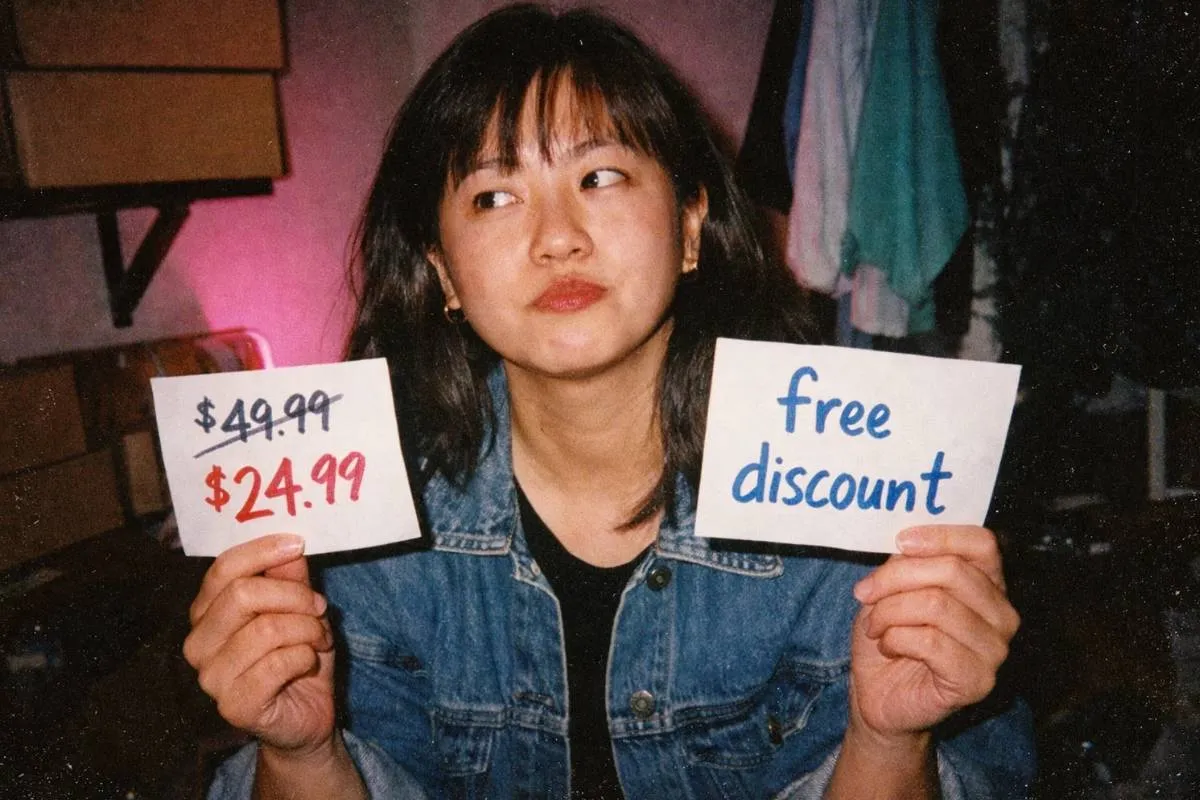
Free Shipping vs Percentage Discount: Which Drives More Sales in 2026?
You're staring at your ecommerce dashboard, and the numbers aren't where you want them to be. Cart abandonment is hovering around 70%, and you know you need to do something to push hesitant shoppers over the finish line. The question is: should you offer free shipping or a percentage discount?
This isn't just a tactical decision—it's a strategic choice that impacts your profit margins, customer acquisition costs, and long-term business sustainability. In 2026, with ecommerce competition fiercer than ever and customer expectations at an all-time high, understanding the nuances between free shipping vs percentage discount strategies can make or break your bottom line.
In this comprehensive guide, we'll break down the psychology behind each approach, analyze the data that matters, and help you determine which discount strategy aligns with your business goals. Whether you're running a boutique fashion store or scaling a multi-category marketplace, you'll walk away with actionable insights to optimize your promotional strategy.
Understanding the Psychology Behind Discount Preferences
Before diving into the tactical implementation, let's explore why shoppers respond differently to free shipping versus percentage discounts. Understanding the psychological drivers behind these preferences will help you make more informed decisions about your promotional strategy.
The Mental Accounting Effect
Shoppers engage in what behavioral economists call "mental accounting"—they categorize expenses into different mental buckets. Shipping costs fall into a particularly painful category because they're perceived as a "loss" rather than a gain. You're paying for something intangible, something that doesn't add value to the product itself.
When you offer free shipping, you're eliminating this psychological pain point entirely. Research consistently shows that shoppers are willing to pay higher product prices to avoid shipping fees, even when the total cost is identical. This phenomenon explains why 80% of consumers in current surveys say free shipping influences their purchase decisions.
The Perceived Value of Percentage Discounts
Percentage discounts operate on different psychological principles. They trigger the "deal-seeking" behavior that makes shoppers feel smart and savvy. When customers see "20% off," they immediately calculate the savings and feel they're getting a bargain.
However, percentage discounts have a critical weakness: their perceived value varies dramatically based on the product price. A 20% discount on a $30 item saves $6—not particularly exciting. That same 20% on a $300 item saves $60, which feels substantial. This is why understanding your average order value (AOV) is crucial when choosing between free shipping vs percentage discount strategies.
The Data: What Current Research Tells Us
Let's move beyond theory and examine what the data reveals about these two promotional strategies in 2026's ecommerce landscape.
Conversion Rate Impact
Multiple studies from 2025 and early 2026 demonstrate that free shipping consistently outperforms percentage discounts for conversion rates in most product categories. The Baymard Institute's latest research shows that unexpected shipping costs remain the number one reason for cart abandonment, cited by 48% of shoppers who abandon their carts.
When you remove shipping fees, you eliminate this primary friction point. Ecommerce stores that implement free shipping typically see conversion rate increases between 10-30%, depending on their baseline and product category.
Percentage discounts also boost conversions, but the impact varies more significantly based on the discount depth. A 10% discount might lift conversions by 5-10%, while a 25% discount could drive 15-25% improvements. However, these deeper discounts come at a steeper cost to your margins.
Average Order Value Considerations
Here's where the picture becomes more nuanced. While free shipping drives higher conversion rates, percentage discounts often lead to higher average order values—but only when structured correctly.
Consider this scenario: You offer 20% off all orders. A customer planning to spend $100 now gets $20 off, paying $80. Your revenue decreases by 20% on that transaction.
Now consider free shipping with a $75 minimum. That same customer might add an extra item to reach the threshold, increasing their cart from $60 to $80. You've increased your revenue while building customer satisfaction. This strategy, often called a customer retention tactic, creates a win-win scenario.
When Free Shipping Makes the Most Sense
Free shipping isn't universally superior—it works best under specific business conditions. Let's explore when this strategy should be your go-to promotional tool.
Product Price Points and Margins
Free shipping works exceptionally well when you're selling products in the $20-$100 range with healthy profit margins (40% or higher). In this sweet spot, you can absorb shipping costs without decimating your profitability, and the psychological benefit to customers is substantial.
For example, if you're selling a $50 product with a $30 cost of goods sold (60% margin), absorbing a $5 shipping cost still leaves you with $15 profit—a 30% margin. That's sustainable for most businesses, especially when you factor in the conversion rate boost.
Competitive Landscape
In 2026, customer expectations around shipping have been heavily influenced by major retailers. If your competitors offer free shipping as standard, you're at a significant disadvantage without it. This is particularly true in commodity categories where products are largely interchangeable.
However, if you're selling unique, differentiated products, you have more flexibility. Customers will pay for shipping when they can't find your products elsewhere. This is where building strong word-of-mouth marketing becomes invaluable—when customers advocate for your brand, they're less price-sensitive.
Cart Abandonment Challenges
If your analytics show that customers are consistently abandoning carts at the checkout page (where shipping costs appear), free shipping is likely your solution. This is especially true if your shipping costs are relatively high compared to your product prices.
Implement free shipping as a test for 30 days and monitor not just conversion rates, but also customer lifetime value. Sometimes the customers acquired through free shipping become repeat buyers, making the initial margin sacrifice worthwhile.
When Percentage Discounts Are the Better Choice
Despite free shipping's popularity, percentage discounts remain powerful tools in specific scenarios. Here's when you should lean toward percentage-based promotions.
High-Ticket Items
For products priced above $200, percentage discounts often outperform free shipping. Why? Because the absolute dollar savings become significant enough to overshadow shipping costs.
Consider a $500 product with $15 shipping. Offering free shipping saves the customer $15. Offering 10% off saves them $50—more than three times the benefit. In this scenario, the percentage discount is clearly more compelling, and it might even allow you to maintain your shipping revenue. Industry context matters too—categories like beauty have established discount norms. See how beauty affiliate programs structure their offers to balance conversion with brand perception.
New Customer Acquisition
When you're focused on acquiring new customers rather than maximizing immediate profit, percentage discounts can be more effective. A compelling "20% off your first order" offer creates urgency and gives first-time buyers a low-risk way to try your products.
This strategy works particularly well when paired with a referral program, where satisfied customers can share that same discount with friends, creating a viral acquisition loop. If you're on Shopify and want to build this acquisition loop, here's how to start an affiliate program on Shopify step by step.
Inventory Management
Percentage discounts give you more control over what sells. Need to move winter inventory in March? Apply a 30% discount to those specific items. Free shipping doesn't allow this product-level targeting—it benefits all purchases equally.
For seasonal businesses or those dealing with perishable inventory, this flexibility is invaluable. You can strategically discount slow-moving SKUs while maintaining full margins on bestsellers.
Hybrid Strategies: Combining Both Approaches
The free shipping vs percentage discount debate doesn't have to be binary. Many successful ecommerce businesses in 2026 use sophisticated hybrid strategies that leverage the strengths of both approaches.
Tiered Free Shipping Thresholds
One of the most effective hybrid strategies is tiered free shipping with percentage discounts for specific customer segments. Here's how it works:
Set a free shipping threshold slightly above your current average order value. For example, if your AOV is $65, set free shipping at $75. This encourages customers to add items to their cart, increasing revenue per transaction.
Then, offer percentage discounts to specific segments—new customers get 15% off their first order, VIP customers get 20% off during their birthday month, and email subscribers get early access to seasonal sales. This segmentation ensures you're not giving away margin unnecessarily while still providing compelling incentives across your customer base.
Dynamic Discounting Based on Customer Lifetime Value
Advanced ecommerce operations use customer data to personalize discount strategies. High-value repeat customers might receive free shipping on all orders (because their lifetime value justifies the cost), while one-time buyers receive percentage discount offers designed to convert them into repeat purchasers. This same personalization logic applies to partner channels—learn how to personalize affiliate offers for different partner types to maximize ROI across your referral network.
This approach requires robust customer data and segmentation capabilities, but the ROI can be substantial. You're investing your promotional dollars where they'll generate the highest return, rather than applying one-size-fits-all discounts.
Seasonal and Campaign-Specific Strategies
Consider varying your approach based on the calendar and your business objectives. During peak shopping periods (November-December in 2026), free shipping might be table stakes—everyone offers it, so you need to match. During slower months, percentage discounts can create urgency and drive sales without permanently conditioning customers to expect free shipping year-round.
Calculating the True Cost of Each Strategy
To make an informed decision between free shipping vs percentage discount, you need to understand the actual financial impact of each option. Let's break down the math.
Free Shipping Cost Analysis
Your free shipping cost depends on several variables:
- Average shipping cost per order: This varies by package size, weight, and destination. In 2026, typical costs range from $5-$15 for domestic shipping.
- Shipping as percentage of AOV: If your AOV is $80 and average shipping is $8, shipping represents 10% of order value.
- Conversion rate lift: If free shipping increases conversions by 20%, you need to calculate whether the additional revenue offsets the shipping costs.
Here's a simple formula: (AOV × Conversion Rate Increase) - Average Shipping Cost = Net Benefit per Order
If your AOV is $80, conversion rate increases from 2% to 2.4% (20% lift), and shipping costs $8, you're gaining $16 in revenue per 100 visitors (0.4 additional conversions × $80) while spending $19.20 in shipping (2.4 conversions × $8). In this scenario, free shipping costs you $3.20 per 100 visitors in the short term.
However, this calculation ignores customer lifetime value. If those additional customers make repeat purchases, the initial loss becomes profitable over time.
Percentage Discount Cost Analysis
Percentage discounts are more straightforward to calculate but have hidden costs:
- Direct margin impact: A 20% discount reduces your gross margin by 20% on every discounted transaction.
- Customer conditioning: Frequent percentage discounts train customers to wait for sales, potentially reducing full-price purchases.
- Brand perception: Deep discounts can devalue your brand in customers' minds, making it harder to maintain premium pricing.
Calculate your break-even point: If your gross margin is 50% and you offer 20% off, your new margin is 30%. You need to increase transaction volume by at least 67% just to maintain the same gross profit dollars. That's a high bar to clear.
Testing and Optimization: Finding Your Sweet Spot
The only way to definitively answer the free shipping vs percentage discount question for your business is through rigorous testing. Here's how to approach it systematically.
Setting Up A/B Tests
Run controlled A/B tests where you split traffic evenly between free shipping and percentage discount offers. Keep all other variables constant—same products, same messaging, same traffic sources. Run the test for at least two weeks to account for day-of-week variations in shopping behavior.
Don't just measure conversion rates. Track these key metrics:
- Conversion rate
- Average order value
- Revenue per visitor
- Gross profit per visitor (accounting for discount/shipping costs)
- Customer acquisition cost
- 30-day and 90-day repeat purchase rates
The last metric is crucial. A strategy that drives lower immediate profits but higher customer lifetime value is often the better long-term choice.
Segmentation Testing
Don't assume one strategy works universally across your customer base. Test different approaches for:
- New vs. returning customers
- Different traffic sources (email, social, paid search, organic)
- Different product categories
- Different price points
- Geographic regions (shipping costs vary dramatically)
You might discover that free shipping works best for new customers from paid advertising, while percentage discounts drive more revenue from email subscribers. This granular insight allows you to optimize each channel independently. For influencer-driven traffic, your discount strategy should align with your overall influencer marketing budget to ensure sustainable CAC across all partnership channels.
Implementation Best Practices
Once you've decided on your strategy, implementation details matter enormously. Here are current best practices for 2026.
Communicating Your Offer Clearly
Visibility is everything. If customers don't see your free shipping or discount offer, it won't influence their behavior. Display your promotion prominently:
- Header banner on every page
- Product pages with clear messaging
- Cart page with threshold indicators ("Add $15 more for free shipping!")
- Checkout page as a final reminder
For percentage discounts, use urgency and scarcity. "20% off ends Sunday" or "Limited time: 25% off spring collection" creates FOMO (fear of missing out) that drives immediate action.
Setting Strategic Thresholds
If you're using minimum order thresholds for free shipping, set them strategically. The optimal threshold is typically 20-30% above your current average order value. This encourages upsells without being so high that customers abandon their carts.
Use real-time data to adjust thresholds seasonally. During high-volume periods, you might lower thresholds to maximize conversions. During slower periods, raise them to protect margins.
Mobile Optimization
With mobile commerce representing over 70% of ecommerce traffic in 2026, your discount strategy must be mobile-optimized. Free shipping messages should be visible without scrolling. Discount codes should auto-apply on mobile devices (manual entry on small screens creates friction).
Consider mobile-specific offers. "Show this text at checkout for free shipping" can drive in-store traffic if you have physical locations, bridging online and offline channels.
Frequently Asked Questions
Is free shipping or a percentage discount better for increasing sales?
Free shipping typically drives higher conversion rates for products under $100, while percentage discounts work better for high-ticket items above $200. The optimal choice depends on your average order value, profit margins, and customer acquisition strategy. Testing both approaches with your specific audience is the only way to determine which performs better for your business.
How much does free shipping really cost my ecommerce business?
The cost of free shipping varies based on your average package weight, dimensions, and shipping destinations. Most ecommerce businesses spend between $5-$15 per domestic shipment in 2026. Calculate your cost by dividing total monthly shipping expenses by number of orders. Then compare this to your average order value and profit margins to determine if free shipping is sustainable for your business model.
What's the ideal minimum order value for free shipping?
Set your free shipping threshold 20-30% above your current average order value. If your AOV is $60, a threshold of $75-$80 encourages customers to add items without being unrealistically high. Monitor your data monthly and adjust the threshold based on seasonal patterns and customer behavior changes.
Do percentage discounts devalue my brand?
Frequent, deep percentage discounts can condition customers to wait for sales and perceive your products as lower quality. However, strategic discounts for specific purposes—new customer acquisition, seasonal clearance, or loyalty rewards—maintain brand value when used sparingly. The key is avoiding constant discounting that becomes expected rather than special.
Can I offer both free shipping and percentage discounts together?
While you can combine both offers, doing so significantly impacts your margins and may not be sustainable long-term. A better approach is using tiered strategies: free shipping above a certain threshold for all customers, plus percentage discounts for specific segments (new customers, VIP members, or seasonal promotions). This maximizes the psychological benefit while protecting profitability.
How do I calculate if free shipping is more profitable than a percentage discount?
Compare the gross profit per visitor for each strategy. For free shipping: (AOV × conversion rate) - (average shipping cost × conversion rate) = gross profit per visitor. For percentage discounts: (AOV × (1 - discount percentage) × conversion rate) = gross profit per visitor. The strategy with higher gross profit per visitor is more profitable, assuming similar customer lifetime values.
What discount strategy works best for customer retention?
For customer retention, free shipping on repeat purchases typically outperforms percentage discounts because it rewards loyalty without conditioning customers to expect price reductions. Consider offering free shipping to customers after their second purchase, or implementing a loyalty program where free shipping is a permanent benefit for members. This approach maintains your pricing integrity while providing tangible value to repeat customers.
Should my discount strategy change during peak shopping seasons?
Absolutely. During competitive periods like November-December, free shipping becomes table stakes as most retailers offer it. Consider differentiating with faster free shipping (2-day instead of 5-7 day) or extending your return window instead of deeper discounts. During slower months, percentage discounts can create urgency and drive sales without permanently changing customer expectations around shipping costs.
Conclusion: Making the Right Choice for Your Business
The free shipping vs percentage discount debate doesn't have a universal answer—it has your answer, based on your unique business circumstances. Free shipping excels at removing psychological friction and driving conversions for low-to-medium priced products, while percentage discounts provide flexibility and better economics for higher-ticket items.
The most sophisticated ecommerce businesses in 2026 don't choose one or the other—they strategically deploy both based on customer segment, product category, and business objectives. They test rigorously, measure comprehensively, and optimize continuously.
Start by analyzing your current numbers: What's your average order value? What are your profit margins? What does your customer lifetime value look like? Then run controlled tests with both strategies, measuring not just immediate conversions but long-term customer value.
Remember that your promotional strategy doesn't exist in isolation. It's part of a broader customer acquisition and retention ecosystem. Whether you choose free shipping, percentage discounts, or a hybrid approach, make sure it aligns with your overall brand positioning and business model.
Ready to take your ecommerce strategy to the next level? Start testing today, measure what matters, and let data—not assumptions—guide your decisions. Your bottom line will thank you.