Key Takeaways
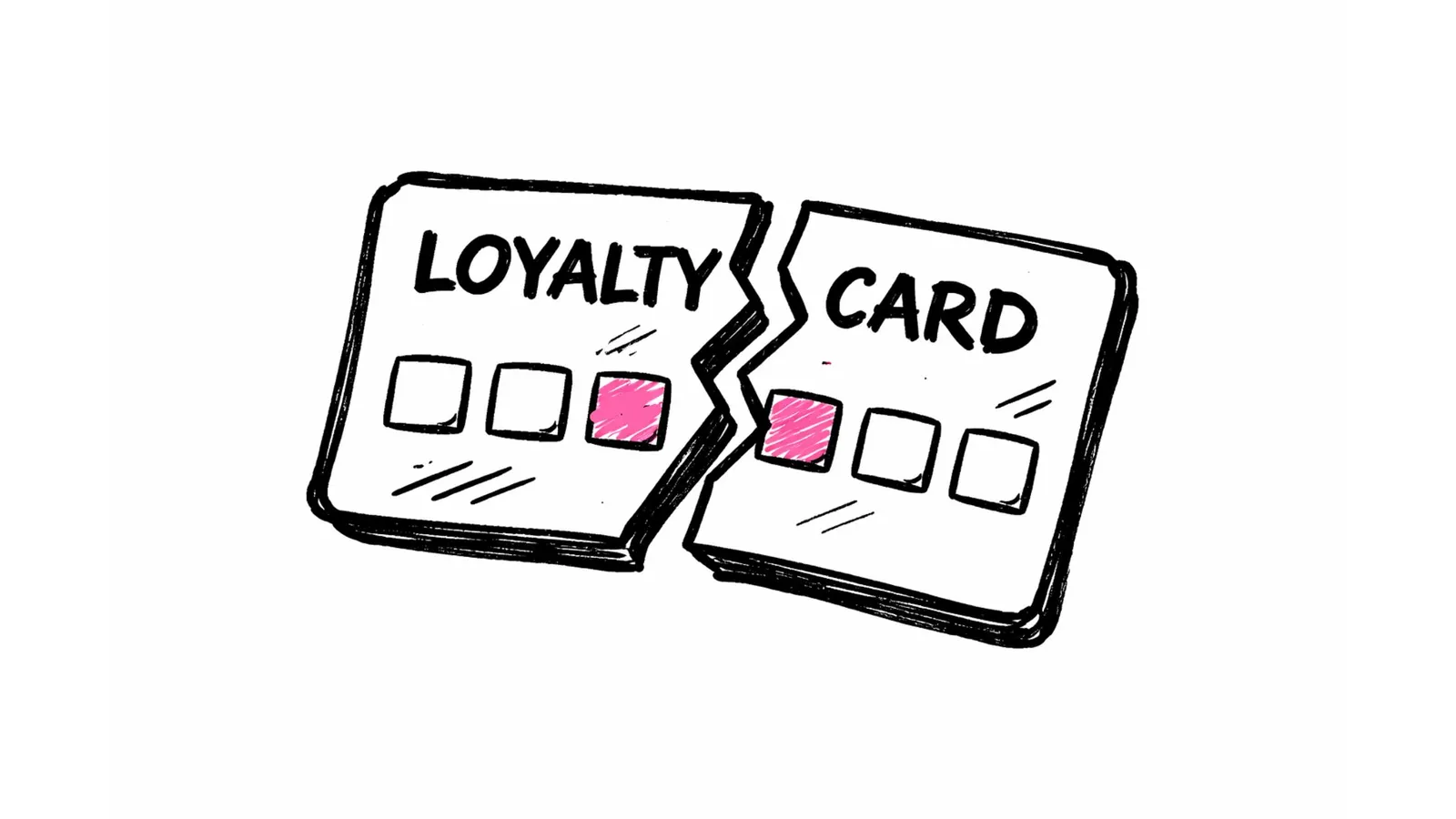
- A loyalty program with high enrollment but low redemption is worse than no program at all — it trains customers to ignore you.
- If your program members spend the same as non-members, your rewards structure is subsidizing behavior that would have happened anyway.
- The fastest diagnostic: check your redemption rate. Below 20% means your rewards aren't motivating anyone.
- Loyalty programs fail most often from neglect, not bad design — treating them as "set and forget" is the single biggest mistake.
- A referral program can rescue a stalling loyalty program by turning passive point-collectors into active advocates.
You launched a loyalty program because the math seemed obvious. Bain & Company's research shows that increasing customer retention by just 5% can boost profits by 25% to 95%. So you picked a platform, set up a points system, maybe designed a cute tier structure. Then you moved on to other priorities.
That was the mistake.
Most loyalty programs don't fail spectacularly. They fail quietly — costing you money while creating the illusion of engagement. The signs are easy to miss if you're not looking. Here are five that should worry you, ranked by how much damage they're doing while you're not paying attention, plus the specific fix for each.
1. Your Redemption Rate Is in the Gutter
This is the single most telling metric, and most brands never check it. Your redemption rate is the percentage of earned rewards that customers actually use. If it's below 20%, you have a problem. If it's below 10%, you don't have a loyalty program — you have a points graveyard.
Why does this matter more than enrollment or even repeat purchase rate? Because unredeemed points represent a complete failure of the value exchange. You're asking customers to change their behavior (buy more, buy more often) in exchange for rewards. If they never claim those rewards, one of two things is true: either the rewards aren't worth the effort, or customers have forgotten the program exists entirely. Both are bad.
Here's what makes it worse. Unredeemed points sit on your books as a liability. You're carrying the cost of a promise you made but haven't delivered on — and getting nothing in return.
The fix: Start by auditing your reward thresholds. If a customer needs to spend $500 to earn a $5 discount, the math doesn't feel worth it to them, even if it's technically competitive. According to Antavo's Global Customer Loyalty Report, programs with experiential rewards (early access, exclusive products) consistently outperform pure discount models. Lower your first redemption threshold so customers taste the reward early — that first redemption is what hooks them. Then send a targeted email to everyone sitting on unredeemed points. You'll be surprised how many people simply forgot.
2. Members Spend the Same as Non-Members
Pull this report right now: average order value and purchase frequency for loyalty members versus non-members. If those numbers are roughly the same, your program is subsidizing existing behavior. You're giving discounts to people who would have bought anyway.
This is the most expensive way a loyalty program can fail. It looks successful on paper — you have members, they're buying — but you're just adding cost to transactions that didn't need an incentive. It's like paying someone to do something they were already going to do for free.
The uncomfortable truth? Many programs fall into this trap because they enroll customers after purchase. Someone buys, gets prompted to join the loyalty program, and then... continues buying at exactly the same rate they would have. The program captured existing customers. It didn't create new behavior.
The fix: Restructure your tiers so that the real benefits kick in above the customer's current spending pattern. If your average member spends $80 per order, the meaningful reward should unlock at $100. You're not trying to reward what they already do — you're trying to pull them toward more. That's the kind of behavioral lift you should be looking for from your loyalty members too. If you're not seeing it, your incentive structure needs work.
3. Enrollment Is High but Engagement Is Dead
Big enrollment numbers feel good. They're also meaningless if 70% of your members haven't interacted with the program in six months.
This is the "gym membership" problem. People sign up with good intentions, earn a few points on their first purchase, and then the program becomes invisible. They stop checking their balance. They ignore your loyalty emails. Their account exists, but they've mentally checked out. You've got a database of names, not a community of advocates.
The root cause is almost always the same: the program doesn't give members a reason to come back between purchases. If the only interaction is "buy stuff, earn points," you've created a relationship with no relationship in it. Points are transactional. Engagement requires something more.
The fix: Add non-purchase engagement opportunities. Let members earn points for writing reviews, following on social media, or referring friends. Speaking of referrals — pairing your loyalty program with a referral program can be the difference between passive members and active advocates. The members who refer are also the members who stay. A program that rewards advocacy, not just spending, gives people reasons to engage between purchases. Also: segment your inactive members and run a reactivation campaign with a bonus points offer before you write them off entirely.
4. Your Program Churn Mirrors (or Exceeds) Your Overall Customer Churn
The whole point of a loyalty program is retention. So if members are leaving the program — or leaving your brand — at the same rate as non-members, the program isn't doing its job. Full stop.
This one sneaks up on you because most brands track overall churn without isolating loyalty member churn. When you finally split the data, the result can be sobering. Your loyalty program should be creating a measurable retention gap: members should churn significantly less than non-members. If they don't, you're spending money on a program that isn't retaining anyone.
There's a darker version of this sign too. Some programs actually accelerate churn by overpromising at enrollment and underdelivering afterward. If your sign-up page promises "exclusive perks and VIP access" but the actual experience is a 2% discount and a monthly email, you've created a trust deficit. That's harder to recover from than if you'd never launched the program.
The fix: First, establish your baseline. Calculate 90-day retention for loyalty members versus non-members. If the gap is less than 10 percentage points, you need to intervene. Look at when members churn — is it right after they hit a tier ceiling? Right after they redeem a big reward? These patterns tell you where the experience breaks. Then examine your onboarding sequence. According to research from Bond Brand Loyalty, program satisfaction is heavily front-loaded: members who have a strong first 30 days are dramatically more likely to stay. If your onboarding is a single welcome email, that's your problem.
5. You Can't Attribute Any Revenue to the Program
Ask yourself this: if you shut down your loyalty program tomorrow, would revenue decline?
If you hesitated, that's the answer.
A surprising number of ecommerce brands run loyalty programs without ever measuring incremental revenue. They know how many members they have. They might know the redemption rate. But they cannot tell you, in dollars, what the program generated that wouldn't have happened otherwise. Without that number, you're flying blind — and probably spending more than you should.
This isn't about vanity metrics like "total revenue from loyalty members." Of course your loyalty members generate revenue — they're your customers. The question is whether the program caused additional revenue. Did it increase frequency? Lift average order value? Extend customer lifetime? If you can't isolate the program's contribution, you can't justify its cost, and you definitely can't optimize it.
The fix: Set up a control group. Take a random 10-15% slice of your customer base and exclude them from loyalty communications and rewards for 90 days. Compare their spending behavior against active loyalty members during the same period. This is the only clean way to measure whether your program creates incremental revenue or just takes credit for organic behavior. Yes, it feels risky to "withhold" the program from some customers. Do it anyway. The data will either justify doubling your loyalty budget or save you from wasting it. For context on what good ROI looks like in customer programs, consider that Branch Basics has generated over $1.5 million from their referral program — proof that when you get the incentives right, the revenue attribution is crystal clear.
Quick Reference: The 5 Warning Signs
1. Low Redemption Rate
Red Flag: Below 20% of earned rewards are redeemed
Root Cause: Rewards feel unreachable or irrelevant
First Move: Lower the first redemption threshold and email inactive point-holders
2. No Spending Lift
Red Flag: Member AOV and frequency match non-member behavior
Root Cause: Program captures existing behavior instead of creating new behavior
First Move: Set reward tiers above current average spending patterns
3. Dead Engagement
Red Flag: 70%+ of members inactive for 6+ months
Root Cause: No reason to interact between purchases
First Move: Add non-purchase earning opportunities (reviews, referrals, social)
4. Member Churn Matches Overall Churn
Red Flag: Less than 10-point retention gap between members and non-members
Root Cause: Overpromise at enrollment, underdeliver afterward
First Move: Rebuild your first-30-days onboarding experience
5. No Revenue Attribution
Red Flag: Can't quantify incremental revenue from the program
Root Cause: No control group, no measurement framework
First Move: Run a 90-day holdout test with 10-15% of customers
Frequently Asked Questions
How long should I wait before deciding my loyalty program is failing?
Give a new program at least 90 days before drawing conclusions — customer purchase cycles need time to play out. But if you're past the six-month mark and can't point to measurable improvements in retention or AOV, it's time to act rather than wait.
Should I scrap my loyalty program entirely or try to fix it?
Fix it first. Shutting down a program alienates the members who are engaged, and relaunching later creates trust issues. Restructure rewards, improve onboarding, and run a 90-day test against a control group before making the kill decision.
Are points-based programs outdated?
Not outdated, but insufficient on their own. Points work as a foundation, but programs that add experiential rewards — early access to products, members-only content, or community features — consistently outperform pure points models in engagement and retention.
What's the difference between a loyalty program and a referral program?
A loyalty program rewards repeat purchases from existing customers. A referral program rewards customers for bringing in new customers. They solve different problems, but the strongest retention strategies use both — loyalty keeps customers buying, referrals turn them into a growth channel.
How much should I budget for a loyalty program?
Most ecommerce brands allocate 1-3% of revenue to loyalty program costs (rewards, platform fees, marketing). The better question is whether your program returns more than it costs — which brings you back to sign #5 and the importance of attribution.
Can a small ecommerce store benefit from a loyalty program?
Yes, but only if your purchase frequency supports it. If customers buy once a year, points accumulation is too slow to motivate anyone. For low-frequency stores, a referral program often delivers faster results because it doesn't depend on repeat purchases from the same customer.
Conclusion
A loyalty program is not a checkbox. It's a financial commitment that should produce measurable returns — higher retention, increased spending, and customers who actively choose you over competitors. If yours isn't delivering those outcomes, the five signs above will tell you exactly where it's breaking down.
Start with the easiest diagnostic: pull your redemption rate and compare member versus non-member spending. Those two data points alone will tell you whether you have a program worth optimizing or a cost center disguised as a strategy. Then fix the biggest gap first. One meaningful change — lowering a redemption threshold, adding referral rewards, rebuilding onboarding — will move the needle faster than a complete overhaul.