Key Takeaways
- ReferralCandy is the best starting point for most Shopify stores — it handles both referral and affiliate programs in one app, so you're not running two tools
- GoAffPro and UpPromote offer the strongest free plans if you want to test pure affiliate marketing before committing
- Commission flexibility (percentage, flat-rate, tiered) matters more than any other single feature when choosing an app
- Don't pay for enterprise tools like Refersion or Tapfiliate until you have 50+ active affiliates generating consistent sales
Affiliate marketing spending in the U.S. is projected to reach $12 billion by the end of 2025, according to Statista. Shopify merchants want a piece of that — but most pick their affiliate app based on whatever ranks first in the App Store search results.
Bad strategy.
I evaluated these eight apps on four criteria: commission structure flexibility, affiliate recruitment tools, Shopify checkout compatibility, and whether the free plan is actually usable or just a demo in disguise. The ROI potential is real — stores regularly see 10x+ returns from well-run affiliate programs. But only if you pick the right tool for your stage and needs.
Here's what's worth installing in 2026, ranked.
1. ReferralCandy — Best for Shopify Stores
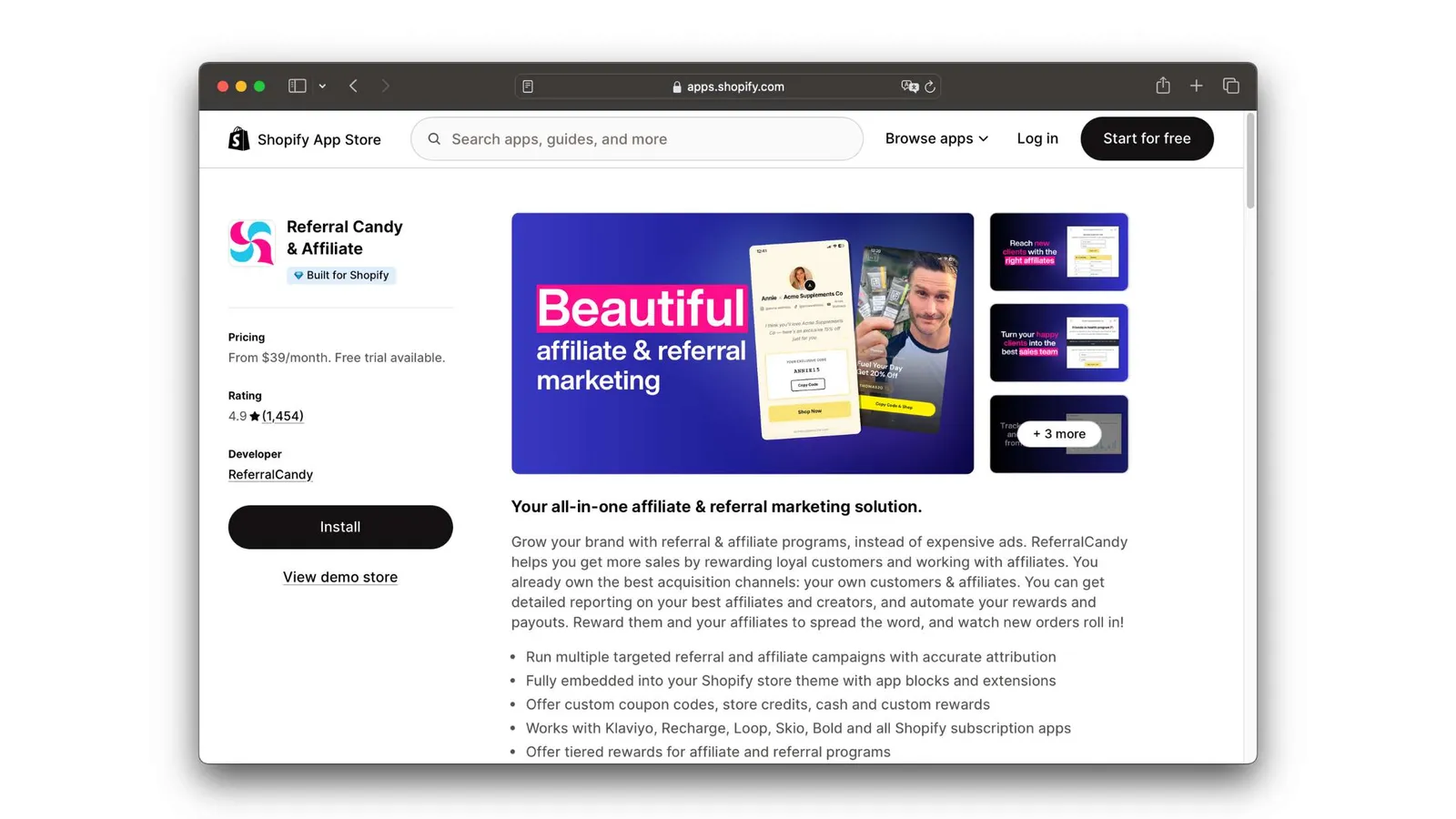
Most Shopify merchants don't need a pure affiliate platform. Instead what they need is a way to turn happy customers into advocates and manage affiliate partners without running two separate apps. That's exactly what ReferralCandy does.
The all-in-one concept is what makes ReferralCandy win. Customer buys, shares a link, friend gets a discount, customer gets a reward. Fully automated, no manual approvals. The affiliate layer sits on top of that, letting you bring in influencers, bloggers, and partners with custom commission structures. One dashboard for both programs.
For affiliate programs, ReferralCandy offers tiered cash rewards, custom coupon codes, an affiliate dashboard, and comprehensive analytics. Payout flexibility is actually one of its strongest points, through its integration with Tremendous, merchants can reward affiliates with PayPal, bank transfers, or Venmo, all the way to Amazon gift cards or prepaid Visa cards. Hundreds of options, no manual transfers.
Where it could not be the best option? Only if you need deep affiliate-only features sub-affiliate networks, or a built-in affiliate marketplace, a dedicated affiliate platform will offer more. But for the 80% of Shopify stores that want referrals and affiliates working together — this is the tool to start with and scale.
If you're looking to start an affiliate program alongside a referral program, ReferralCandy removes the need to stitch together multiple tools.
Tip: Use cash rewards or store credits over coupon rewards if your average order value is above $80. Customers perceive cash as more valuable, and it doesn't train them to wait for discounts.
2. UpPromote — Best Affiliate-First Platform
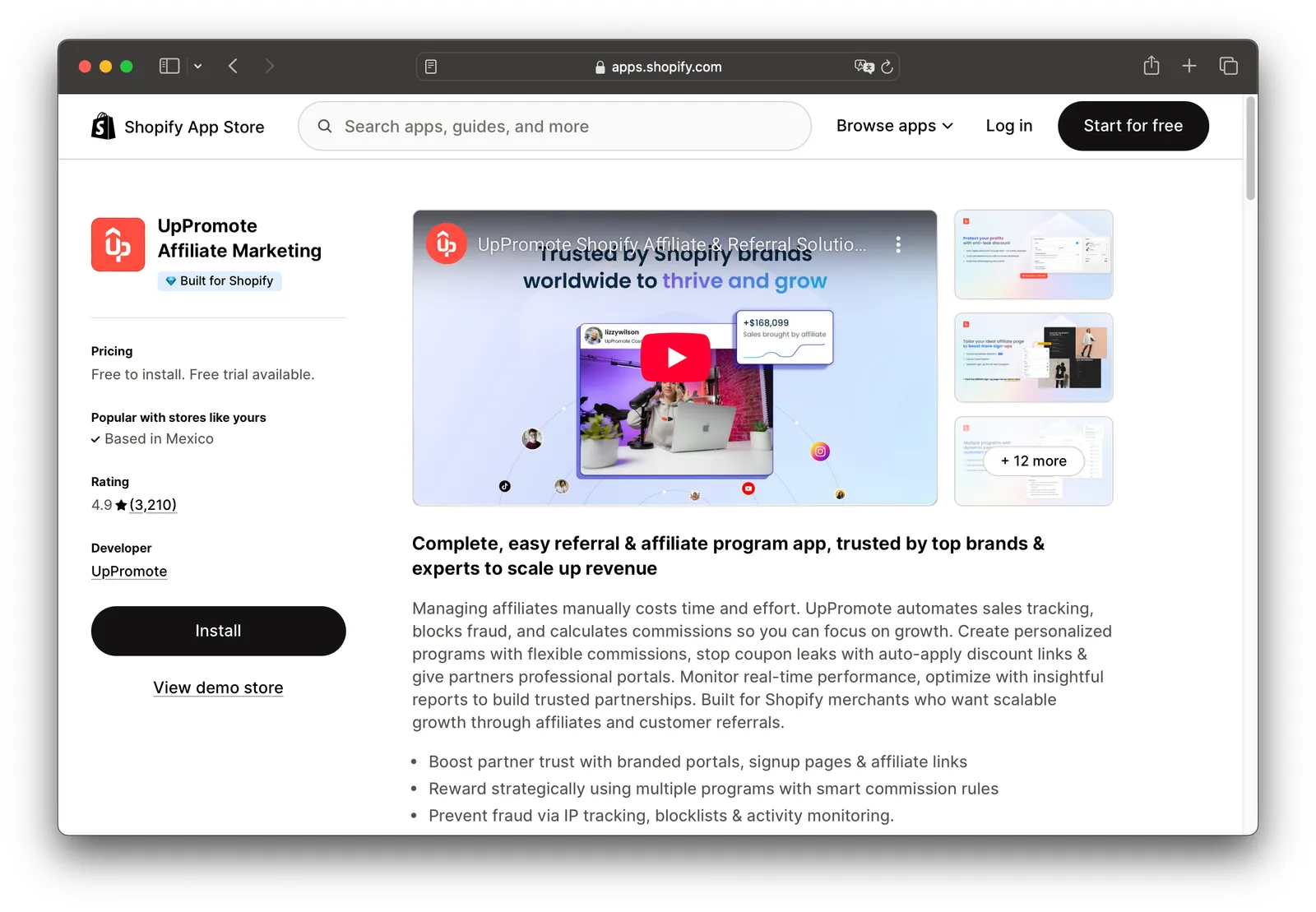
If your strategy is pure affiliate marketing — recruiting external partners, influencers, and publishers to drive sales on commission — UpPromote is the strongest dedicated option on Shopify.
What makes it stand out: the marketplace. UpPromote runs its own network where affiliates browse and apply to programs. Most other apps expect you to recruit affiliates yourself — cold outreach, social media posts, hoping someone notices. UpPromote gives you a discovery channel built in.
The free plan covers up to 200 orders per month with basic commission structures. That's not a demo. That's a real program for a growing store. Paid plans unlock tiered commissions, auto-tier upgrades, and custom affiliate registration pages when you're ready to scale.
Tip: Use the marketplace listing to attract affiliates passively. Write a clear program description with specific commission percentages. Vague listings ("competitive rates!") get ignored.
3. GoAffPro — Best Free Option
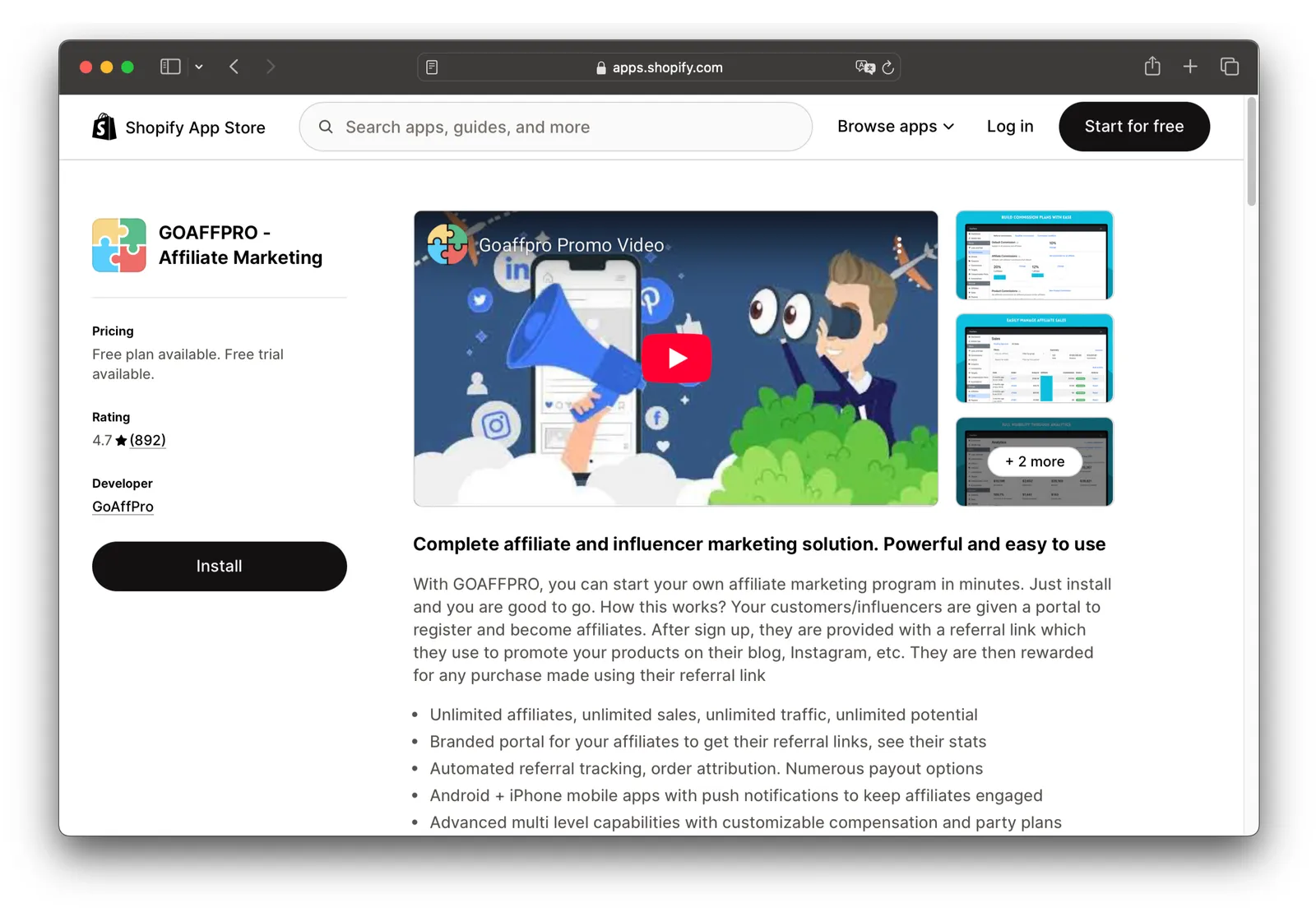
GoAffPro's free tier is unusually generous. Unlimited affiliates. Unlimited sales tracking. Multi-level marketing support. No revenue caps.
The catch? The interface looks like it was designed in 2019 and hasn't been updated since. Navigation is clunky. The dashboard lags with large affiliate counts. But if your budget is zero and you need affiliate tracking that works — this is it.
The premium plan adds branded affiliate portals, advanced analytics, and multi-store support. Worth the upgrade once you're past 20 active affiliates, mostly because the free plan's reporting is bare-bones.
One thing GoAffPro does better than most: multi-tier commission structures come standard. If your business model involves tiered payouts, most apps either don't support it or charge enterprise pricing. GoAffPro includes it for free.
Tip: Don't enable MLM tiers unless your program genuinely needs them. Multi-tier commissions confuse affiliates and complicate your accounting for zero benefit unless you're running a direct sales model.
4. Social Snowball — Best for Passive Affiliate Recruitment
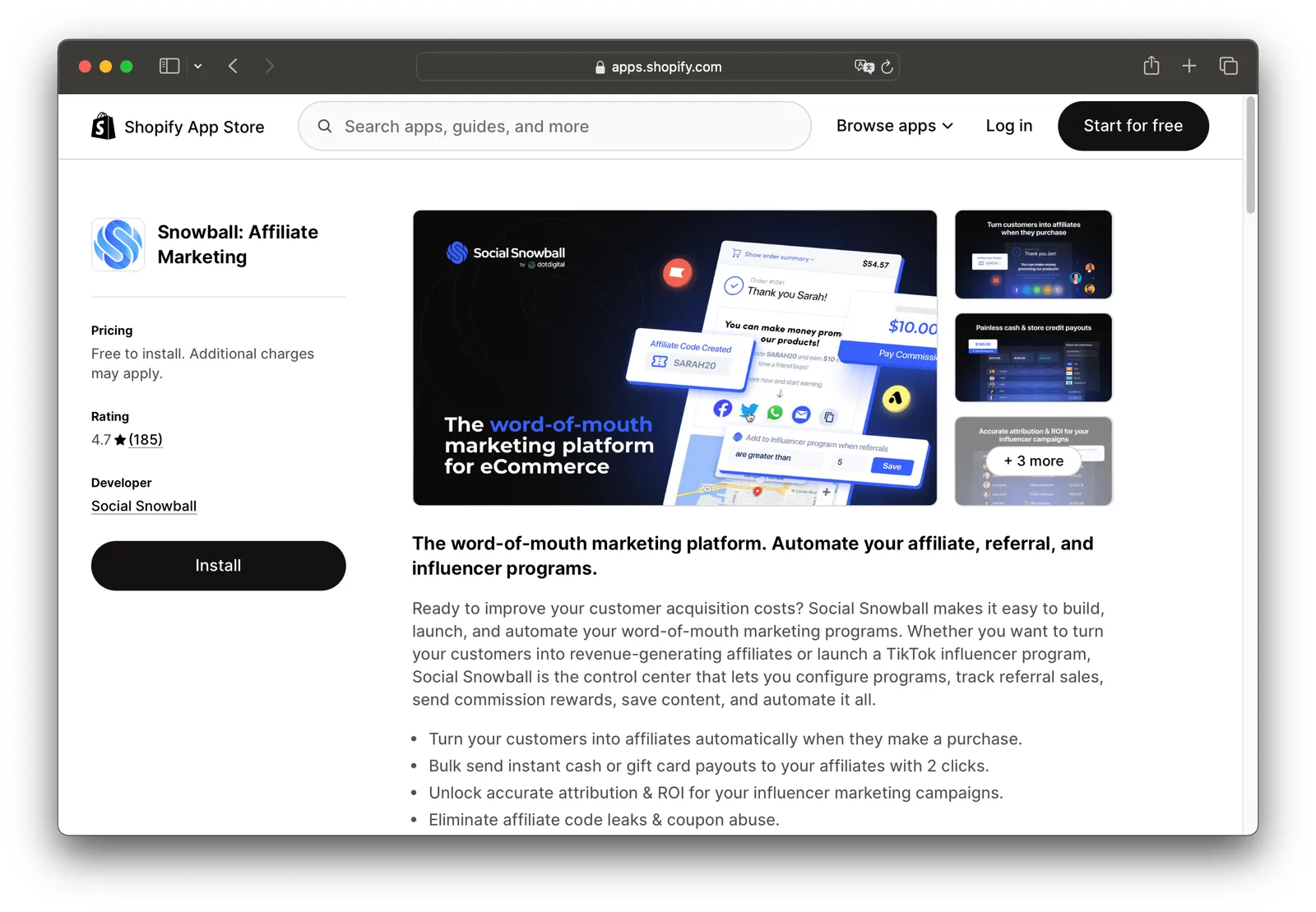
Here's the idea: every customer who buys from your store automatically becomes an affiliate. No application. No approval process. They get a unique referral link in their order confirmation, and if someone buys through it, they earn a commission.
Social Snowball removes one of the biggest friction points in affiliate marketing: recruitment. Instead of building a program and hoping people join, you're turning your existing customer base into a distribution channel.
The flip side: pricing puts it out of reach for brand-new stores. But if you're doing consistent volume and your customers genuinely love your product, the return can add up — if your customers actually share.
Tip: Customize the post-purchase enrollment message. The default is generic. A personalized message referencing their specific purchase converts significantly better than a boilerplate "share and earn."
5. Refersion — Best for High-Volume Programs
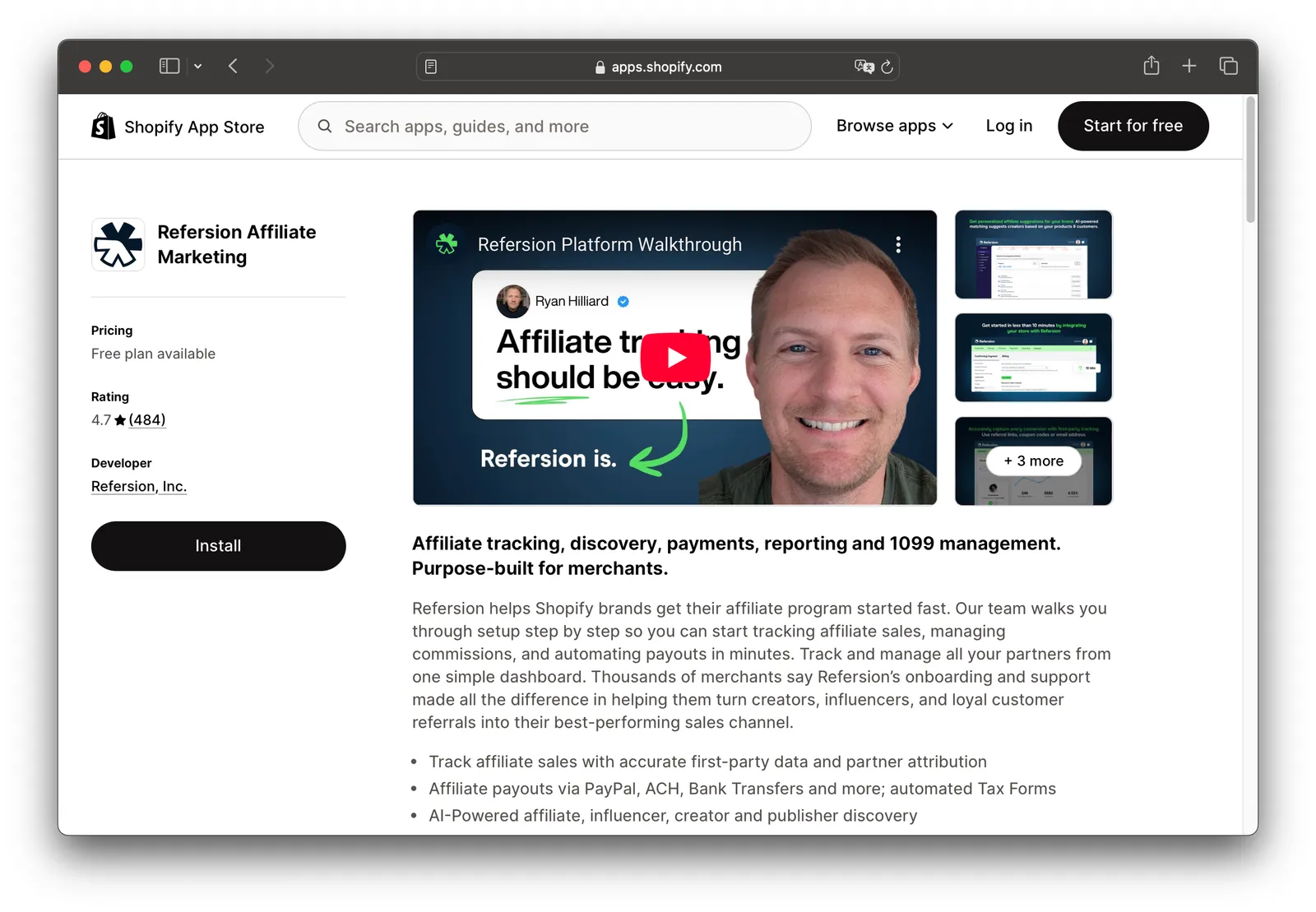
Refersion is what you graduate to when your affiliate program outgrows the apps above.
It handles thousands of affiliates, complex commission structures with first-click and last-click attribution, and integrates with major affiliate networks so you can recruit from established marketplaces alongside your direct affiliates. The reporting is granular enough for a finance team to audit.
The flip side: it's overkill for a store with 15 affiliates. The features that justify the cost — network integrations, advanced attribution, API access — only matter at scale. Refersion also handles 1099 tax form generation, which becomes relevant once you're paying enough affiliates to trigger IRS reporting requirements. Most smaller apps punt on this entirely.
Tip: Don't sign up for Refersion until you've validated your affiliate program with a cheaper tool. The feature set is impressive, but you're paying for infrastructure you won't use until you have 50+ active affiliates generating consistent revenue.
6. Tapfiliate — Cleanest Interface and Reporting
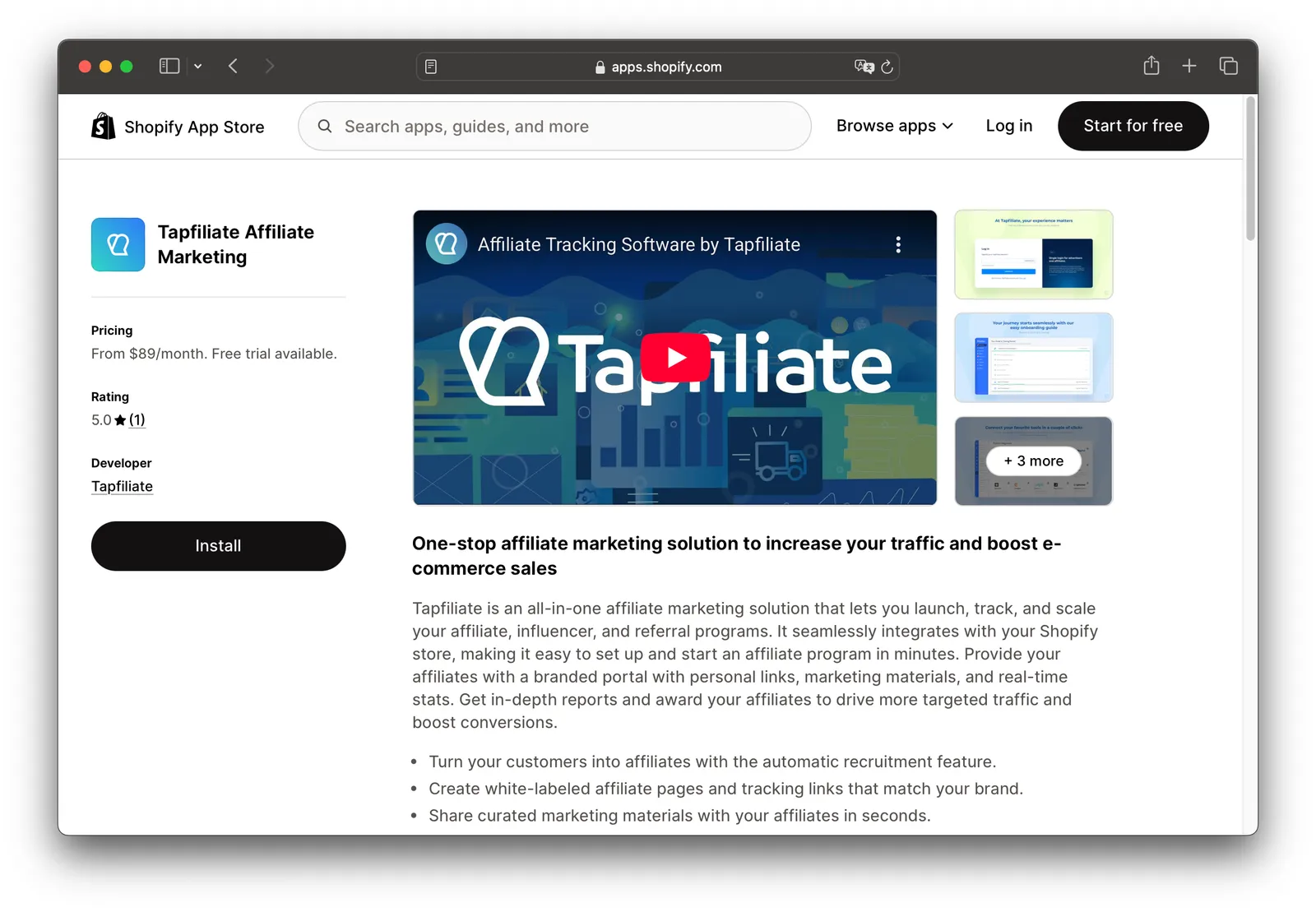
Tapfiliate is a SaaS affiliate platform that integrates with Shopify — it's not Shopify-native, which is both its strength and weakness.
The strength: it works across your entire business. Sell on Shopify, run a SaaS product, and offer an online course? Tapfiliate tracks affiliates across all three from one dashboard. The interface is modern, reporting is visual, and setting up commission structures feels intuitive rather than form-heavy.
The weakness: because it wasn't built specifically for Shopify, some Shopify-specific features like automatic discount code generation require workarounds. It's a generalist, not a specialist.
Tip: Tapfiliate is the right choice if you sell across multiple platforms. If Shopify is your only channel, a Shopify-native app will integrate more tightly with less configuration.
7. LeadDyno — Best for Hands-Off Setup
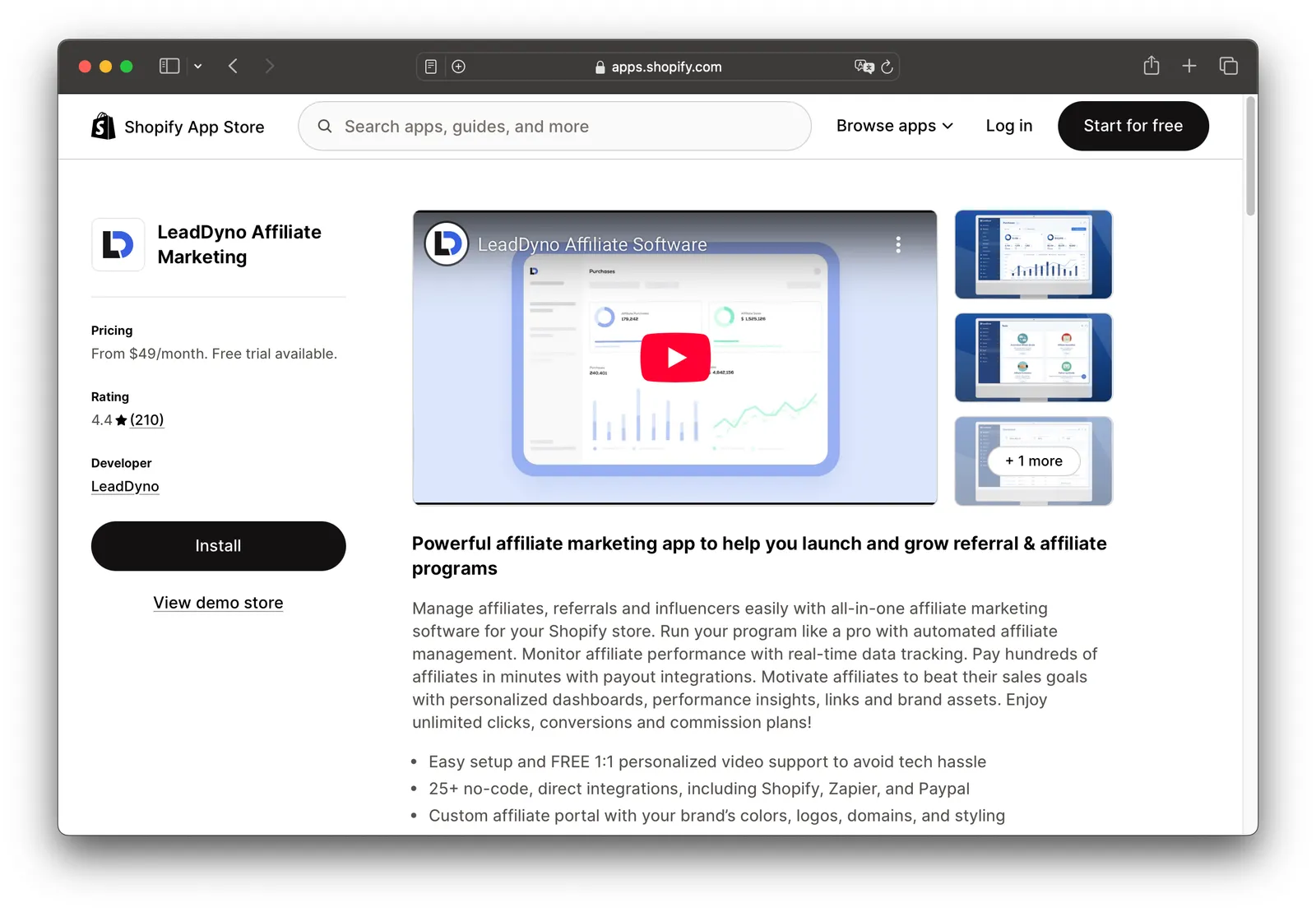
LeadDyno's pitch: install it, follow the setup wizard, and have a working affiliate program in 15 minutes. That's roughly accurate.
The onboarding walks you through commission setup, affiliate page creation, and email templates step by step. For store owners who aren't technical and don't want to spend an afternoon configuring tracking pixels — LeadDyno reduces the barrier to launching.
The affiliate dashboard is simple enough that your partners won't email you asking how to find their links. That matters more than you'd think. Half the battle with affiliate programs is keeping affiliates active, and a confusing dashboard kills engagement faster than low commission rates do.
Tip: Use LeadDyno's automated welcome email sequence. Affiliates are most motivated in the first 48 hours after signing up. An automated sequence with creative assets and talking points capitalizes on that window before enthusiasm fades.
8. Affiliatly — Simplest and Cheapest Paid Option
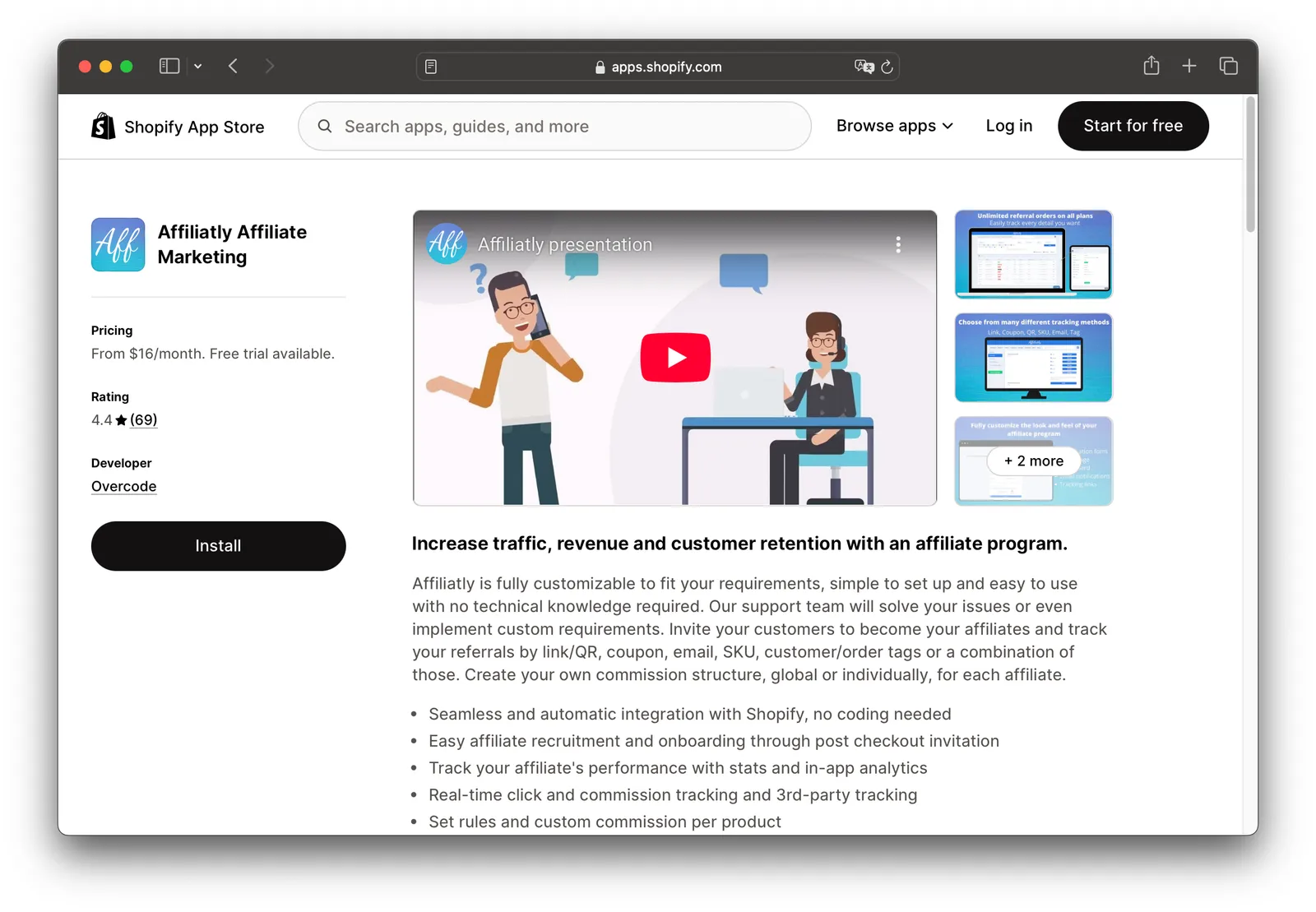
Affiliatly doesn't try to compete on features. It tracks affiliate clicks, attributes sales, and calculates commissions. That's it.
Plans scale by affiliate count, not by feature tier — so you're never locked out of functionality. Every plan gets the same capabilities. No marketplace. No network integrations. No AI-powered anything.
If you want a straightforward tool that gives 10–20 brand ambassadors unique tracking links without the overhead of a full affiliate platform, Affiliatly is that tool. It does one thing, and it does it reliably.
Tip: Affiliatly's simplicity is a feature, not a limitation — but only if your needs are genuinely simple. If you plan to scale past 50 affiliates, start with GoAffPro's free plan instead. You'll outgrow Affiliatly faster than you expect.
Quick Comparison
Frequently Asked Questions
Can I run an affiliate program on Shopify for free?
Yes. GoAffPro offers a genuinely unlimited free plan, and UpPromote's free tier handles up to 200 orders per month. Both are functional enough to validate whether affiliate marketing works for your store before paying for anything.
What's the difference between a referral program and an affiliate program?
Referral programs reward existing customers for referring friends. Affiliate programs pay external partners — bloggers, influencers, review sites — for driving sales. Some apps handle both; most specialize in one.
What commission rate should I offer affiliates?
Most Shopify stores selling physical products offer 10–20%. Digital products and subscriptions can go higher, typically 20–40%. The right rate depends on your margins, average order value, and what competitors in your niche are offering.
Do these apps work with Shopify's checkout extensions?
All eight apps listed here are compatible with Shopify's current checkout. Tracking accuracy varies — first-party cookie-based tracking tends to be more reliable than third-party pixel-based approaches, especially as browsers continue restricting third-party cookies.
How many affiliates do I need before upgrading from a free plan?
The number matters less than their activity level. Twenty active affiliates generating sales will stress your tracking and payout workflows faster than 200 dormant ones. Upgrade when managing commissions manually becomes a time sink — usually around 30–50 active partners.
Can I use multiple affiliate apps at the same time?
Technically yes. Practically, don't. Running two tracking systems creates attribution conflicts, double-counts sales, and confuses your affiliates. Pick one app and commit.
Conclusion
For most Shopify stores, ReferralCandy is the best starting point — it handles both referral and affiliate programs, which is what the majority of merchants actually need. If your strategy is purely affiliate-driven, UpPromote gives you the strongest dedicated platform with a usable free plan. And if budget is the constraint, GoAffPro's free tier is generous enough to validate whether affiliate marketing works for your product before you pay for anything.
The worst affiliate app is the one you spend three weeks evaluating and never install.