Strong Shopify loyalty programs do more than award points for purchases. Some return store credit, some create VIP status, and others use exclusive access, subscriptions, community participation, or branded rewards to give customers a reason to return. The right model depends on what you sell, how frequently customers buy, and what your customers value beyond a discount. A $12 hand sanitizer brand and a $300 luggage brand should not run the same program, and the best ones on Shopify clearly don't.
Below are 15 live loyalty programs worth studying, organized into five models: simple repeat-purchase programs, VIP tiers, community programs, brand-specific rewards, and hybrid systems. For each one, we cover how it works, why it fits that brand's economics, what you can copy, and where the model has real drawbacks.
Key takeaways
- A loyalty program should reward a specific behavior — a second purchase, a subscription, a review — not engagement in general.
- Reward value has to feel meaningful relative to your average order value and purchase frequency. A $5 coupon reads differently after a $20 order than after a $500 one.
- The strongest programs add status, access, community, convenience, or recognition on top of (or instead of) discounts.
- Measure incremental repeat purchasing and margin after rewards, not points issued or members enrolled.
Simple programs built around repeat purchasing
1. Jaxon Lane: keep a small program in motion with limited-time earning events
Program model: Points with tiers.
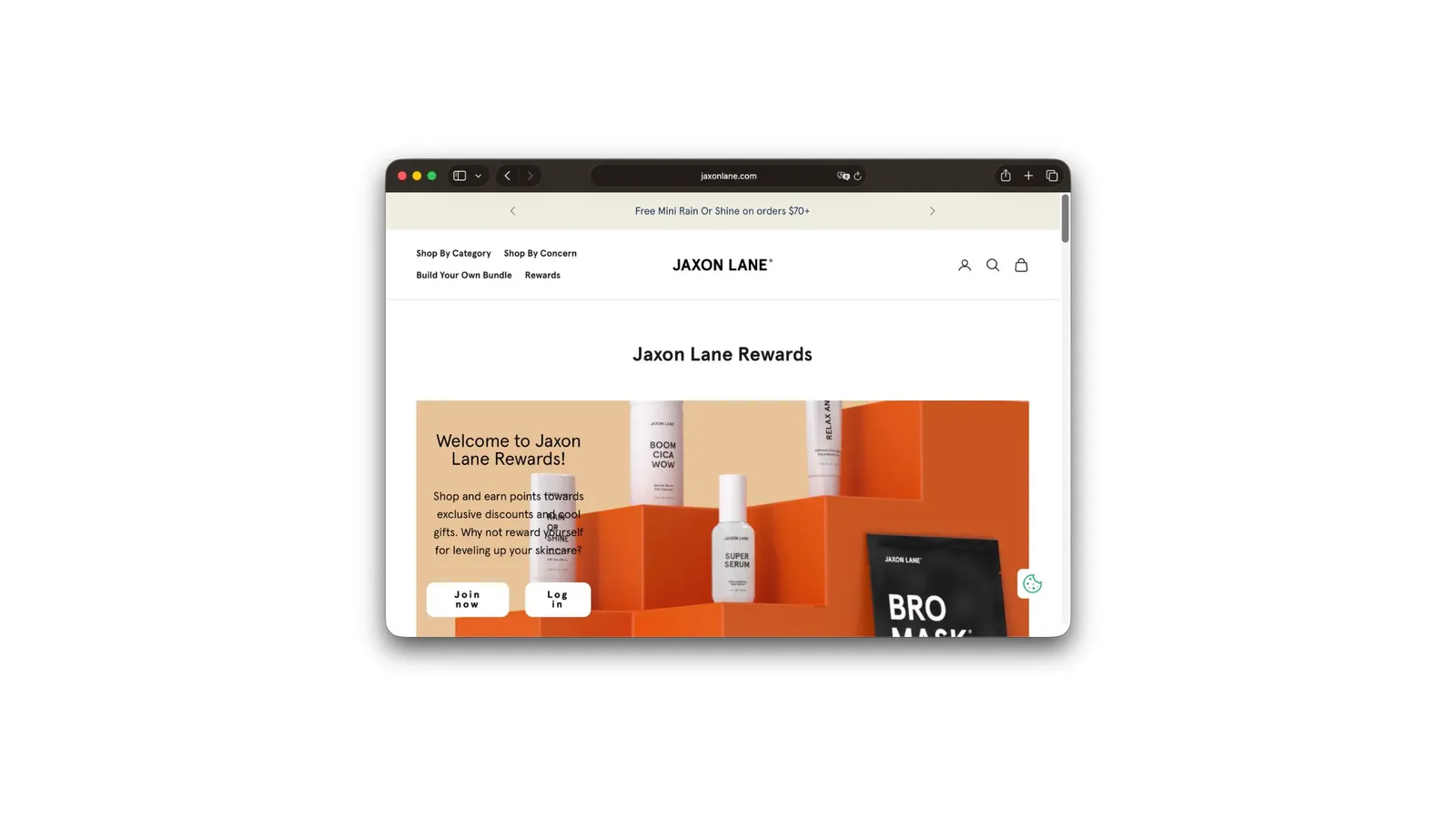
Jaxon Lane Rewards follows a familiar shape: 100 points for creating an account, points on every purchase, and redemption for discounts and gifts. What makes it worth studying is how the brand keeps the program visible. A site-wide banner currently promises double points for Gold Tier members and subscribers through the end of the month, which turns a quiet points balance into a reason to order now rather than later.
For a men's skincare brand with products mostly in the $20–$40 range and a natural replenishment cycle, a light program with periodic urgency fits better than a heavy tier ladder. Any Shopify store can copy the mechanic: run short, clearly dated multiplier events instead of raising the base earn rate. The drawback is dependency — if the only reason to buy this month is double points, the program starts training customers to wait for the next event.
2. Touchland: make the redemption math obvious
Program model: Simple points.
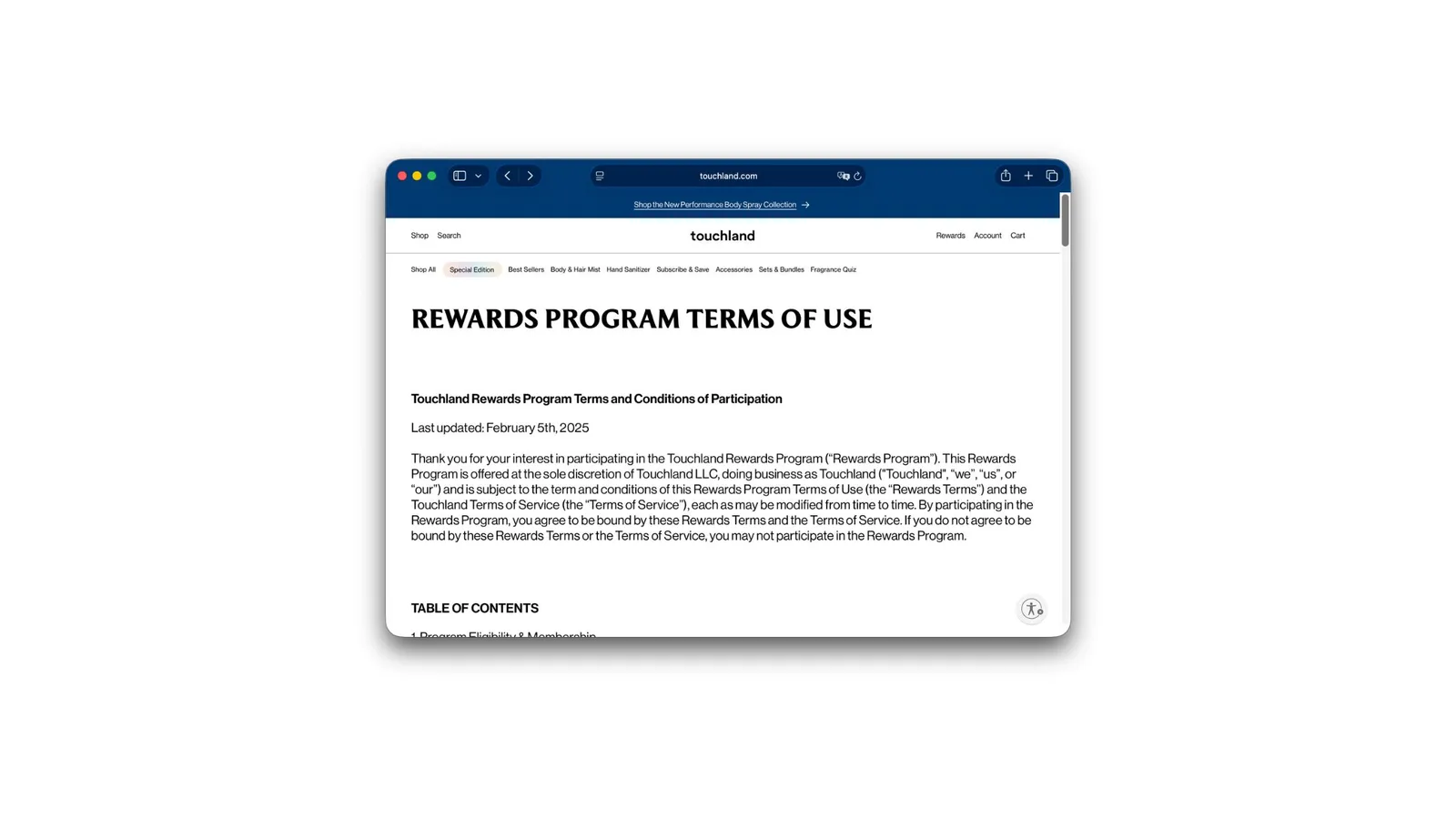
Touchland's rewards program gives 1 Touch Point per dollar spent, plus points for account creation, reviews, photo uploads, social follows, and referrals. Redemption is stated plainly in the program's published terms: 50 points for $5 off, 100 points for $10 off. Points expire 12 months after they're earned, and one reward applies per purchase.
For a brand whose hero product is a $12 hand sanitizer bought again and again, that clarity is the strategy. A customer can compute their progress instantly — five orders, five dollars — with no conversion tables or tier charts in the way. The copyable tactic is the transparency itself: publish your earn rate and redemption values where customers and search engines can read them. The drawback is that a pure discount loop offers no status or identity, so the program's pull is capped at the value of the coupon.
3. Chubbies: tiers customers can actually reach
Program model: Points with low-threshold tiers.
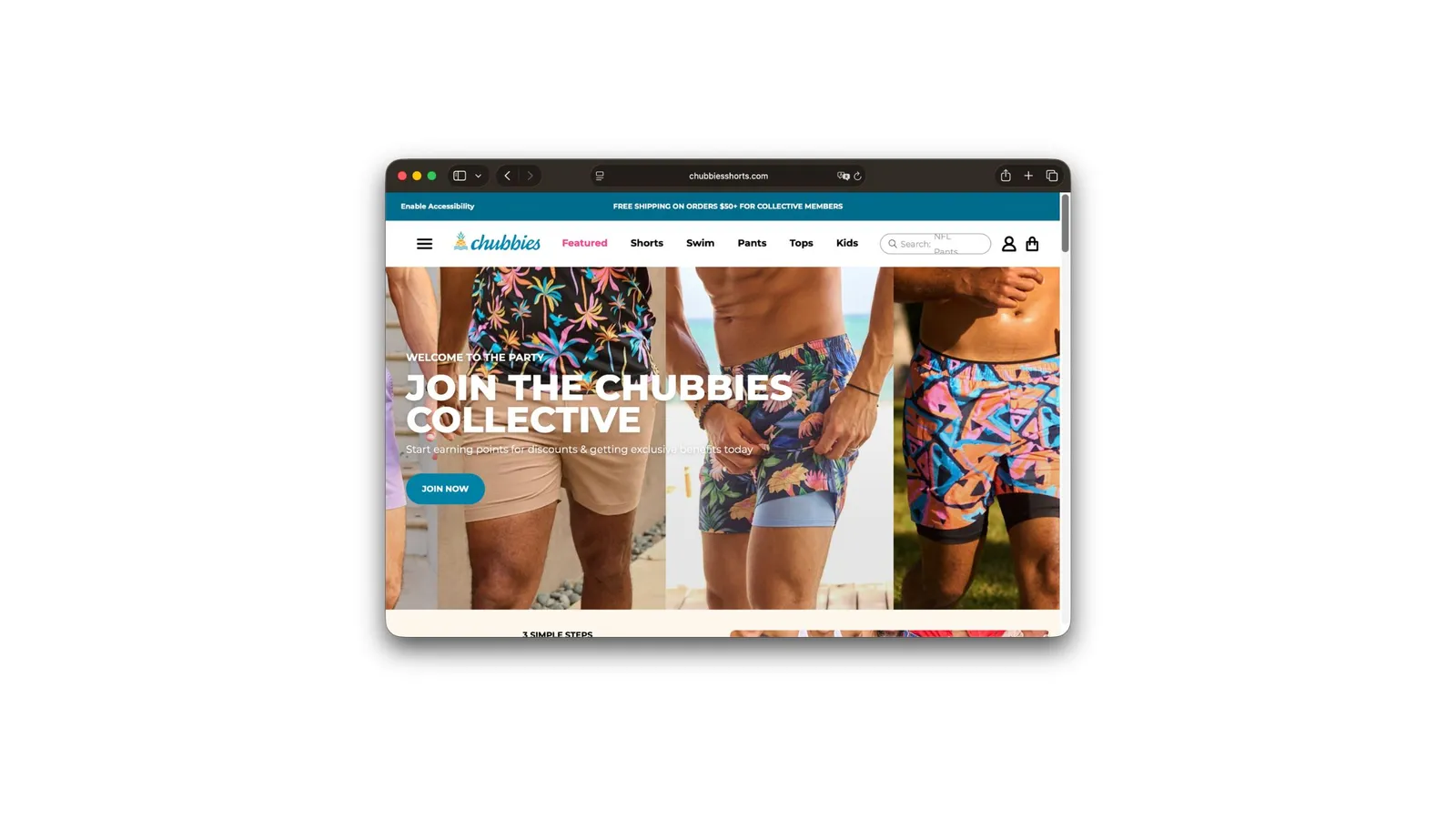
The Chubbies Collective awards 1 point per dollar spent online or in Chubbies retail stores, plus bonuses for app downloads, social follows, and product reviews. Its three tiers are deliberately modest: Weekend Professional unlocks at $150 in rolling 12-month spend, Weekend Hall of Famer at $300. Perks include free US shipping on orders over $50, a birthday reward, early access to new products, and monthly member specials.
With shorts around $65, one or two orders a year moves a customer up a tier — the thresholds match how often people actually buy apparel. That is the lesson: set tier thresholds from your real purchase-frequency data, not from what sounds prestigious. A tier nobody reaches motivates nobody. The drawback is the 12-month point expiry, which quietly erases value for the occasional buyer the program most needs to re-activate.
VIP tiers that create status
4. Monos: when the product is bought rarely, sell access instead of coupons
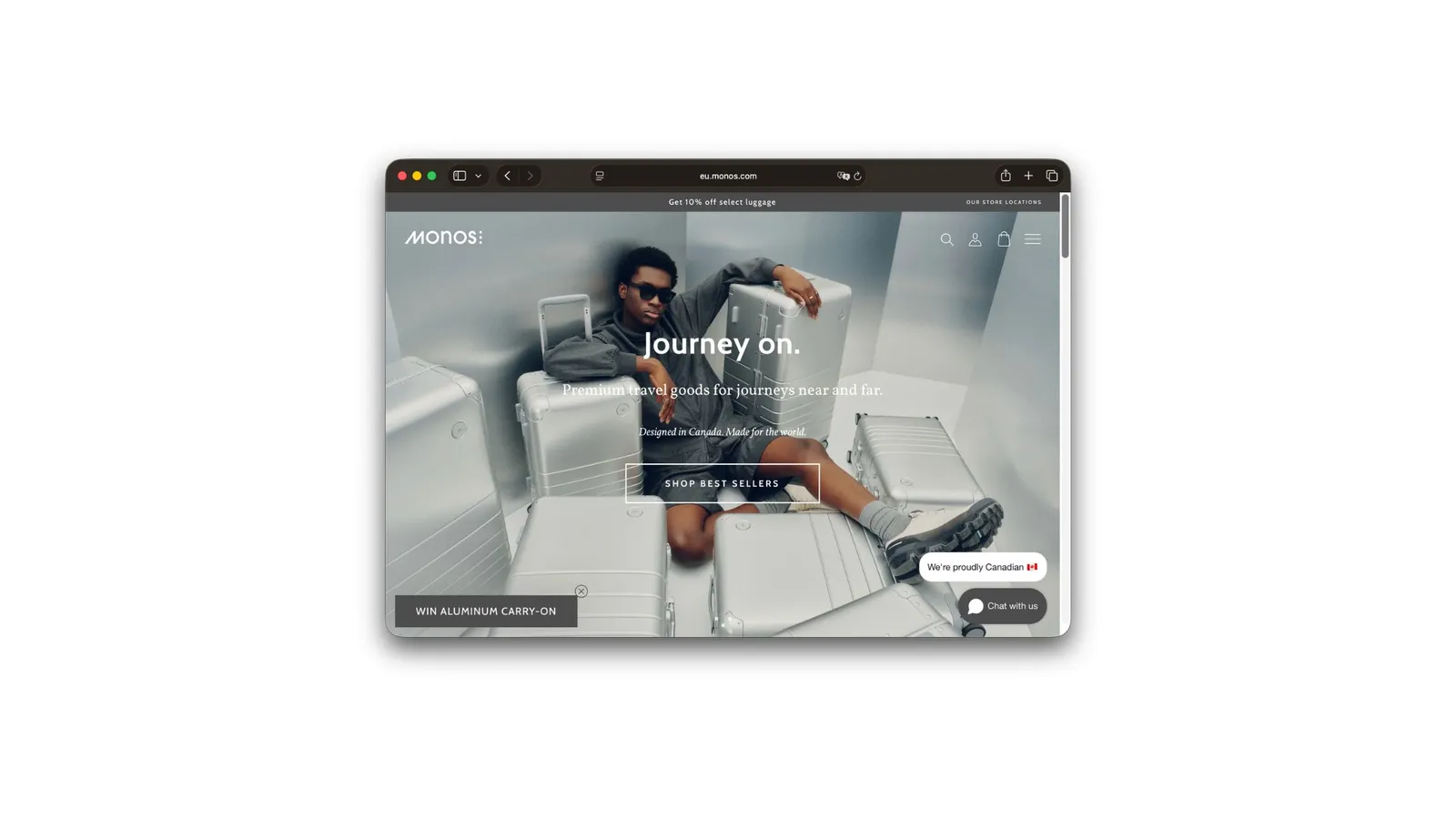
Program model: Points with member perks.
Monos sells premium luggage — carry-ons start around $255 — which means most customers buy once and then not again for years. Wayfarer Rewards, adapts to that reality. Members earn 1 Monos Mile per dollar with no expiry, get access to double-points events, a 100-point birthday reward, and a give-$20-get-$20 referral offer. The more telling perks are non-monetary: exclusive access to sales and product launches, and member-only products.
Points that never expire respect a multi-year purchase cycle, and access-based perks give members a reason to stay connected between purchases. The copyable move for any high-AOV store: let the referral offer and launch access carry the program between rare orders. The drawback is engagement — with years between purchases, most members will interact with the program rarely, so it must be cheap to run.
5. Eddie Bauer: tier on this year's spend, not lifetime history
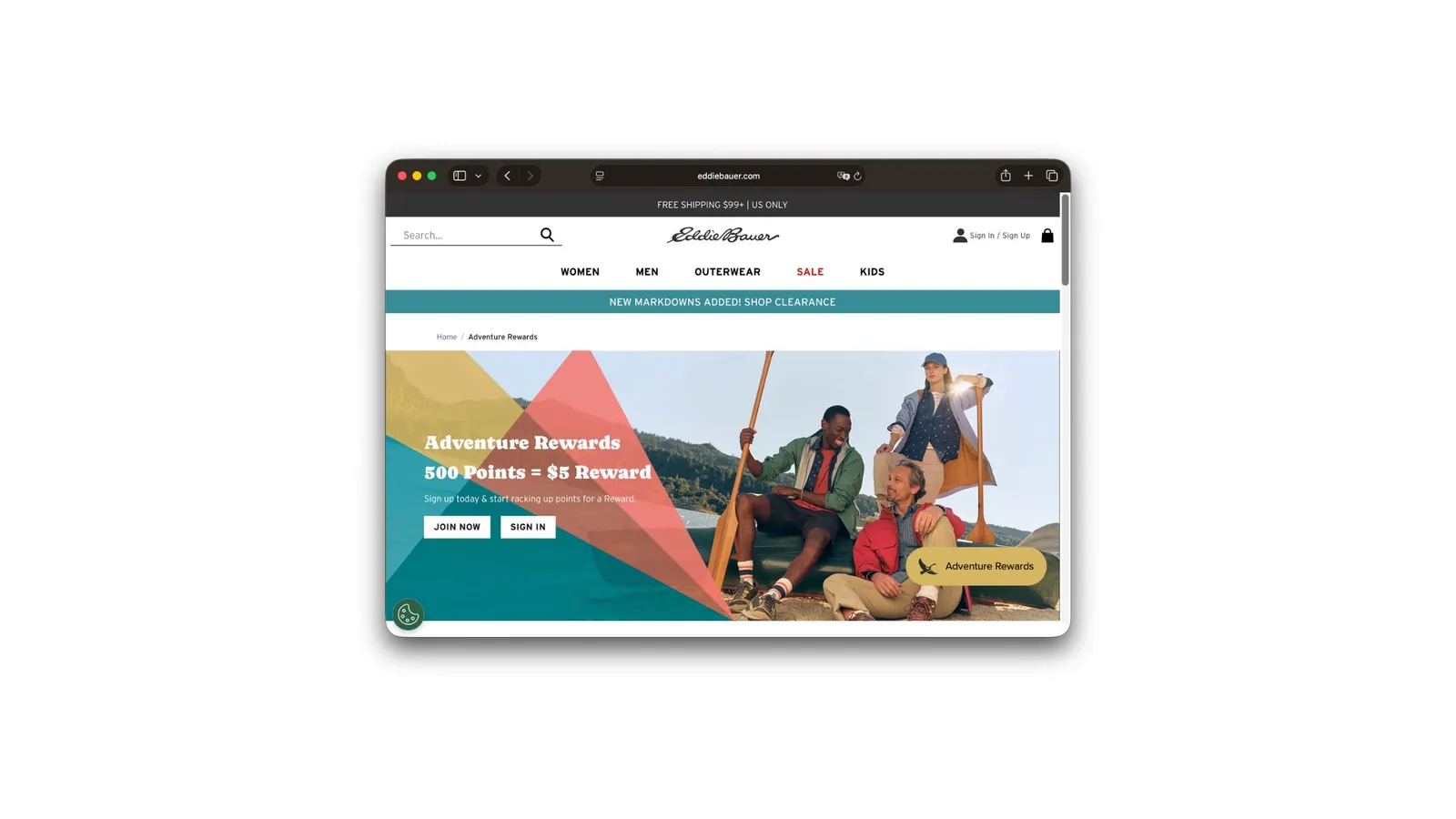
Program model: Spend-based VIP tiers.
Eddie Bauer Adventure Rewards uses three tiers set by annual spend: Adventurer earns 3 points per dollar, Explorer (from $300 a year) earns 4, and Guide (from $600) earns 5, with 500 points converting to a $5 reward. Tiers also ladder the free-shipping threshold down from $99 to $50 and add early access to select sales and member-only bonus point events.
Basing tiers on annual spend rather than lifetime totals rewards customers who are loyal now, and gives lapsed ones a clean reason to re-concentrate their outdoor-gear buying with one retailer. For a brand competing with department stores and Amazon on identical categories, that concentration is the whole game. The copyable tactic is the escalating earn rate — loyalty literally pays better per dollar as spend grows. The drawback is a modest baseline: 3 points per dollar works out to roughly 3% back, which on its own won't change behavior. The shipping and access perks have to do the heavier lifting.
6. Brooklinen: make the top tier feel like service, not just savings
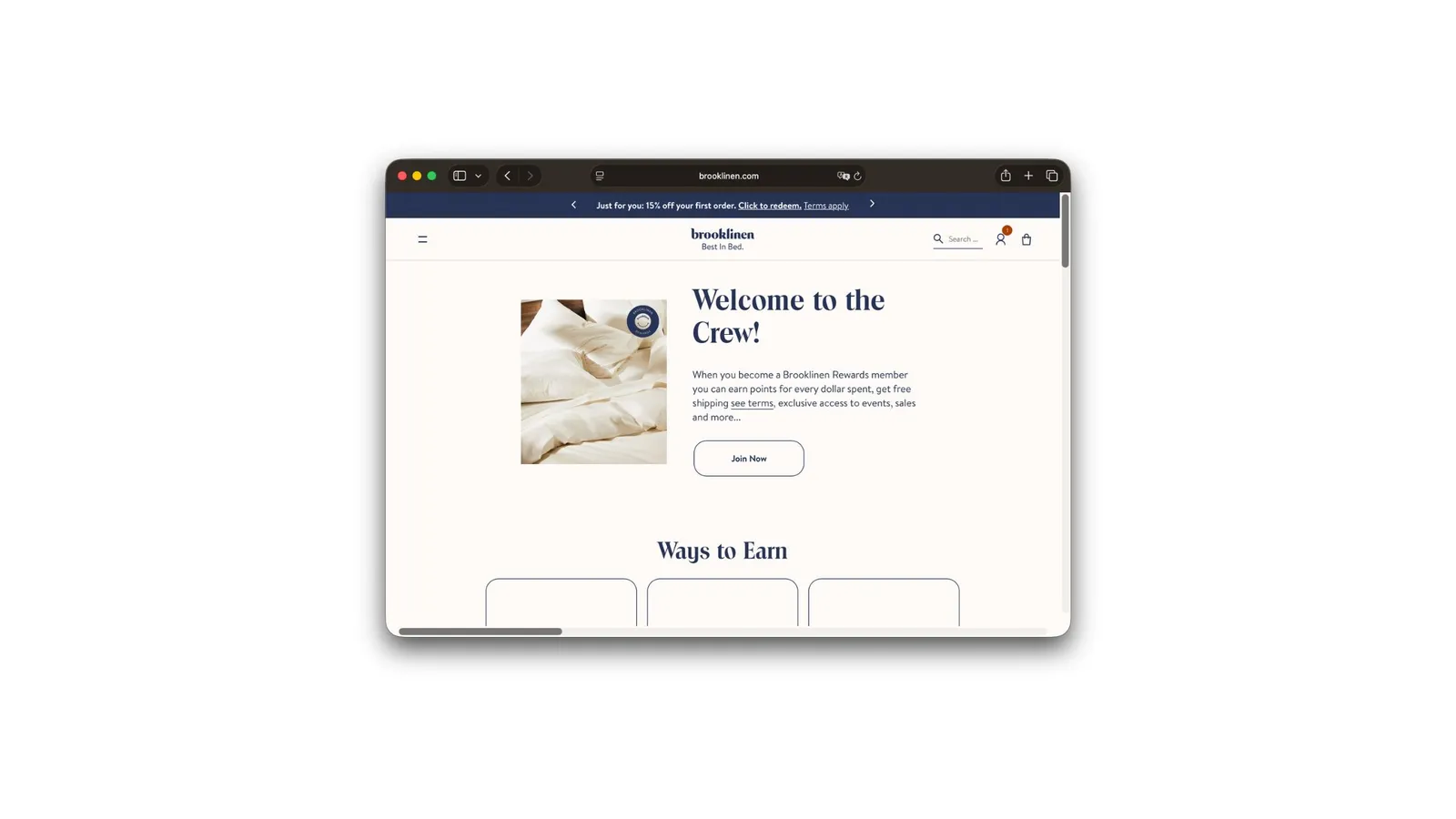
Program model: Points with spend tiers.
Brooklinen Rewards gives every member 2 points per dollar and 200 points per review, with Silver, Gold ($250+ annual spend), and Platinum ($750+) tiers. What distinguishes it is what the upper tiers actually contain: Gold adds an extended return window, and Platinum adds priority customer service and input into future launches, alongside birthday bonuses and first access to new products and sales.
For premium home goods — towel sets at $89, quilts over $265 — those service perks fit the customer better than a deeper discount would. Someone spending $750 a year on bedding cares more about frictionless returns and being heard than about another 5% off. The copyable idea is to put operational generosity in the top tier: returns, support priority, early input. These cost little at low volume and signal genuine standing. The drawback is that $750 is a serious threshold, and members who miss it may feel the best parts of the program were never really for them.
Community and insider-access programs
7. Ouai: reward participation, not just purchases
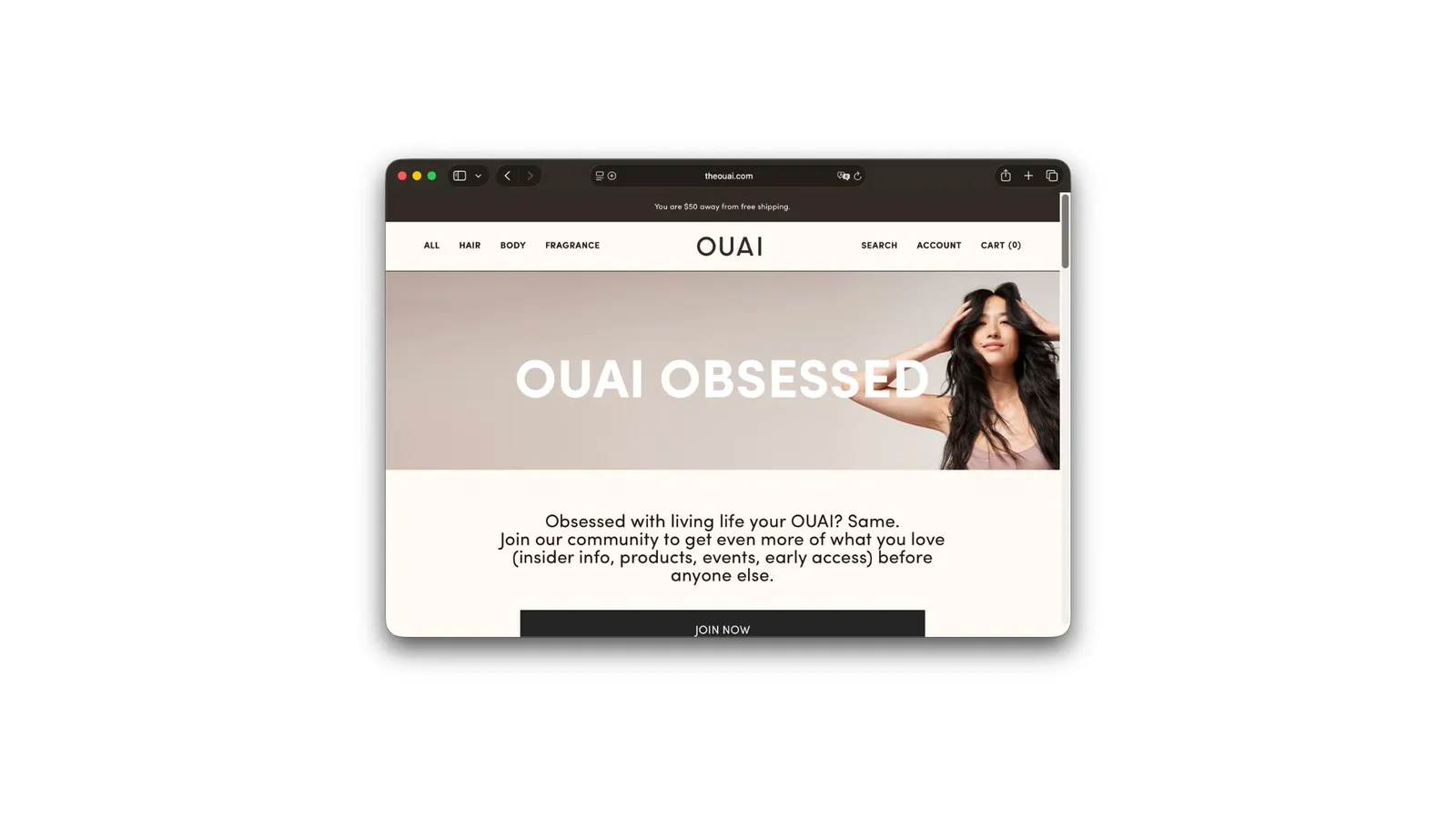
Program model: Community rewards.
Ouai Obsessed runs on the TYB community platform rather than a conventional points app. Members complete brand challenges — trying products, giving feedback, sharing content — to earn coins they can spend like cash, alongside the perks the program actually leads with: insider information, early access to products and events, and exclusive content.
Ouai is a prestige haircare brand with a genuine fan base, and the program treats those fans as contributors rather than coupon-holders. Feedback challenges double as product research, and the community produces content the brand would otherwise pay for. The copyable tactic works even without a platform: create structured ways for your best customers to participate — beta tests, feedback panels, content challenges — and attach a reward. The drawback is honesty about fit. If your customers buy your product but don't identify with your brand, a community program will feel like a homework assignment, and an empty community is worse than none.
8. Naturium: reward the routine, not the transaction
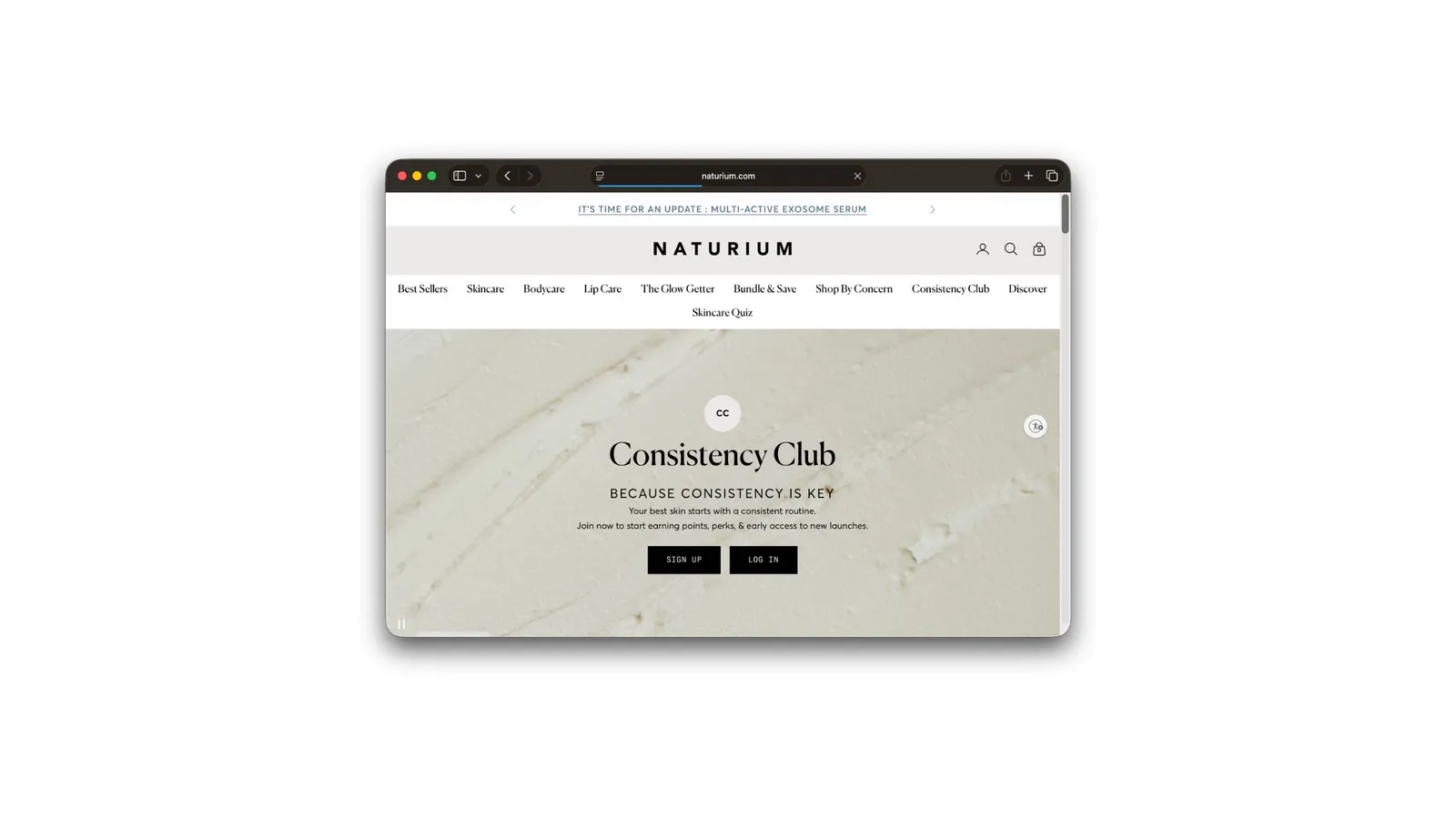
Program model: Points with tiers and repeat-purchase milestones.
Naturium's Consistency Club is named after the behavior it wants: sticking to a skincare routine. Members earn 1 point per dollar, with published redemption values (100 points = $5 in credit) and a rewards shop of member-exclusive minis. The distinctive mechanic is milestone rewards for repurchasing the same product — buy an essential twice for 200 points, four times for a free mini, eight times for a free full-size product. Subscription orders earn bonus points, a skin quiz earns points, and spend tiers at $300 and $500 a year unlock early launch access and members-only sales.
For affordable skincare with items clustered under $40, everything points at routine formation, which is where skincare economics live. The copyable tactic is milestone rewards on repeat purchases of the same SKU. The drawback is complexity — points, tiers, milestones, a rewards shop, and a quiz is a lot of program to explain.
9. Blume: sometimes you replace the program, not tune it
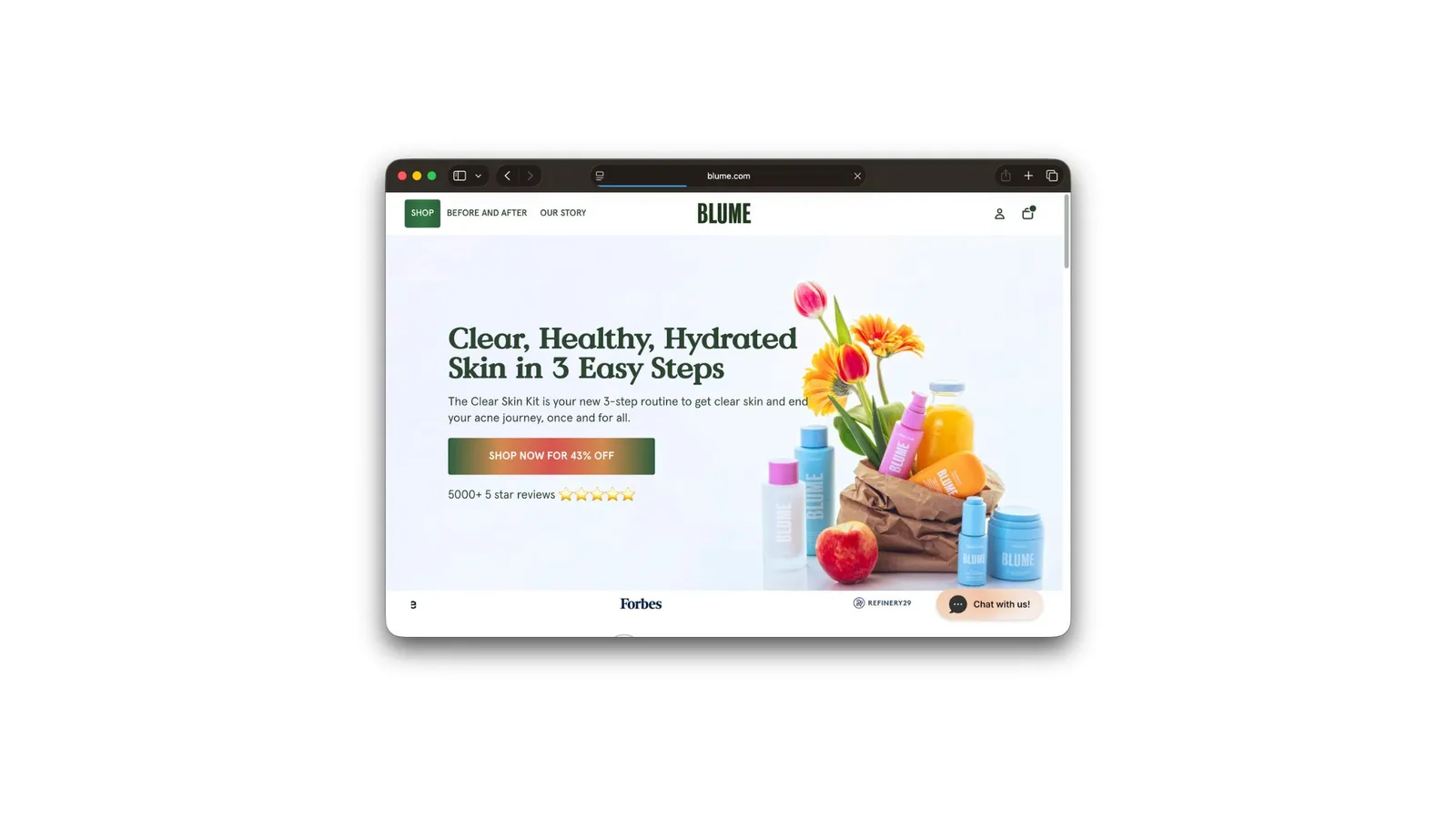
Program model: Community rewards.
Blume used to run a classic points program — Blume Bucks, earned on orders and social follows. Today, per the brand's own FAQ, its loyalty motion lives on TYB: members join challenges to earn coins redeemable at checkout or in the TYB app, plus access to launches, events, and PR kits. The old points pages are gone; the community replaced them.
That migration is the lesson. Blume sells skincare to a young, community-native audience that engages daily but doesn't necessarily order monthly, and a per-dollar points program rewards none of that engagement. Rather than bolting community features onto a points core, Blume swapped models entirely. The copyable insight: if your program's mechanics reward a behavior your customers rarely perform, redesign around the behavior they actually do. The drawback is disruption — retiring a points program means sunsetting balances customers feel they own, which has to be handled carefully or it burns exactly the people the program existed for.
Brand-specific rewards that go beyond generic discounts
10. Liquid Death: redeem for identity, not price cuts
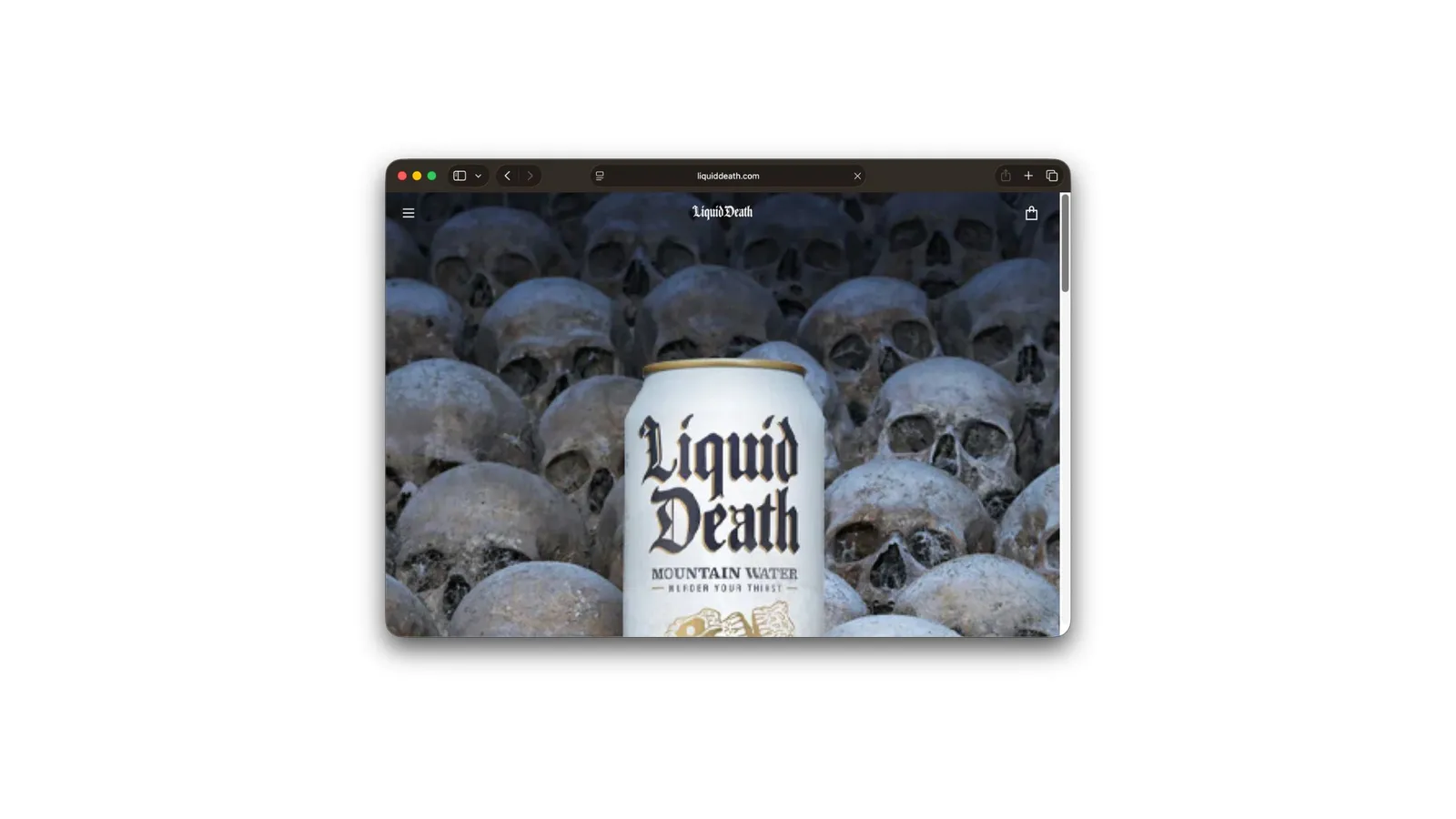
Program model: Points with merch-only redemption.
Liquid Death's Skulls program awards 1 Skull per dollar on the store, plus bonuses for follows, reviews, referrals — and 5 Skulls for every retail receipt uploaded within 30 days, so a case bought at a gas station still counts. Redemption is the sharp part: Skulls buy exclusive merch, not discounted water. The brand's separate paid membership, the Country Club, is currently offline for what its FAQ calls an overhaul for 2026.
For a canned-water brand whose real product is the joke, merch redemption is exact-fit economics: a $20 shirt costs far less than $20 in margin-destroying discounts, and every redeemed item is walking advertising. The copyable tactic is making branded merch a first-class redemption option. The drawback is prerequisites — this only works if people actually want to wear your logo, and most brands overestimate that.
11. K-Swiss: a merch catalog and early access stretch points further than coupons
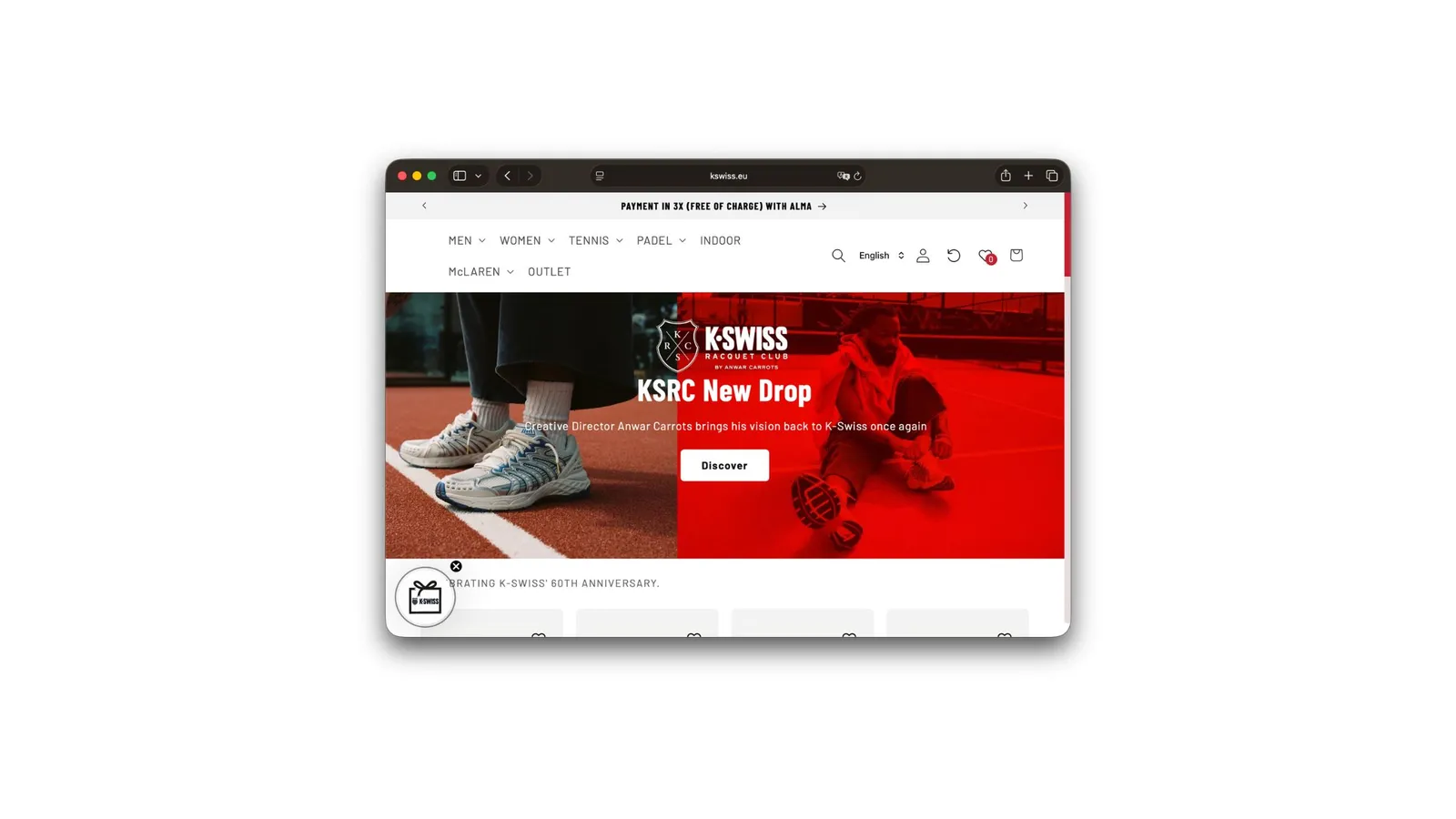
Program model: Points with tiers.
Club K-Swiss runs tiered earning — 2 points per dollar at Bronze, 3 at Silver (700 points), 4 at Gold (2,000) — with vouchers from 500 points ($5) up to 2,500 ($25). Alongside the vouchers sits a points-for-merch catalog (branded wristbands, court hats, visors) and, for Silver and Gold members, early access to sale events and exclusive product releases, plus an annual free gift at Gold.
Sneakers cluster around $90–$130 and are bought a few times a year, so pure coupon math is slow: a Bronze member needs roughly four pairs to earn a $10 voucher. The merch catalog and early access give points a second, faster use and give sneaker customers what they actually prize — getting the release first. The copyable tactic is offering redemption options at multiple price points so small balances still buy something real. The drawback is that higher-value vouchers carry $150–$250 minimum-order thresholds, which turns a reward back into a spend requirement.
12. Girlfriend Collective: reward the values your customers bought into
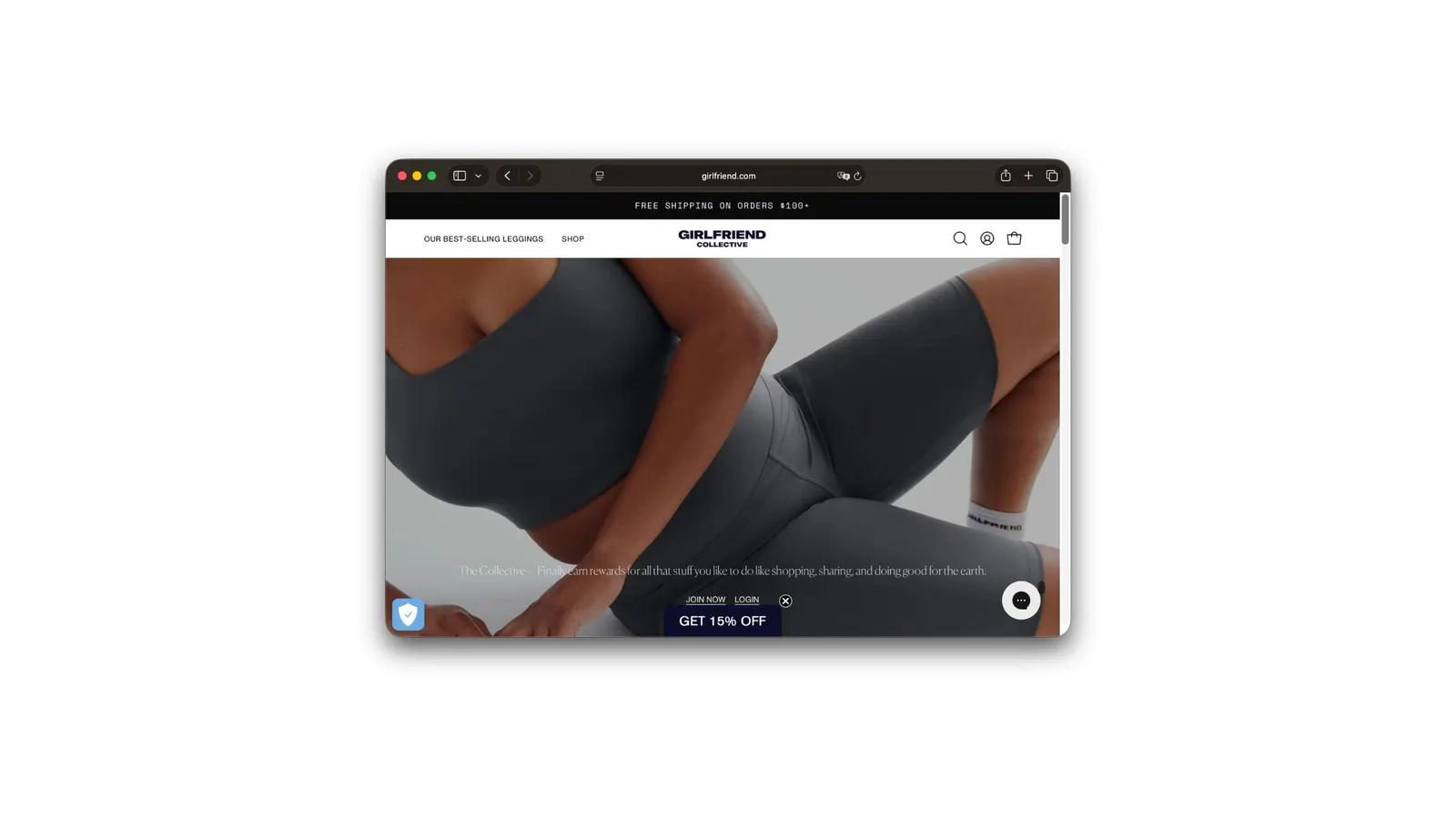
Program model: Points plus a recycling take-back program.
Girlfriend Collective runs two connected loops. The Collective is a tiered points program — earn on purchases, level up for perks, refer friends for points, spend points on discounts or in an exclusive merch shop. ReGirlfriend, run with recycling partner SuperCircle, credits customers for mailing in old garments — including clothes from other brands — with credit per item redeemable on future orders.
Girlfriend built its activewear brand on recycled materials, so rewarding recycling is the program agreeing with the marketing. Customers get paid in credit for acting on the value that made them buy in the first place, and every take-back envelope sets up the next order. The copyable idea: find the non-purchase behavior that expresses your brand's values and attach real credit to it. The drawback is operational weight — reverse logistics and a recycling partner are a far bigger commitment than a points widget.
Hybrid programs that combine several mechanics
13. Death Wish Coffee: let the subscription and the points program feed each other
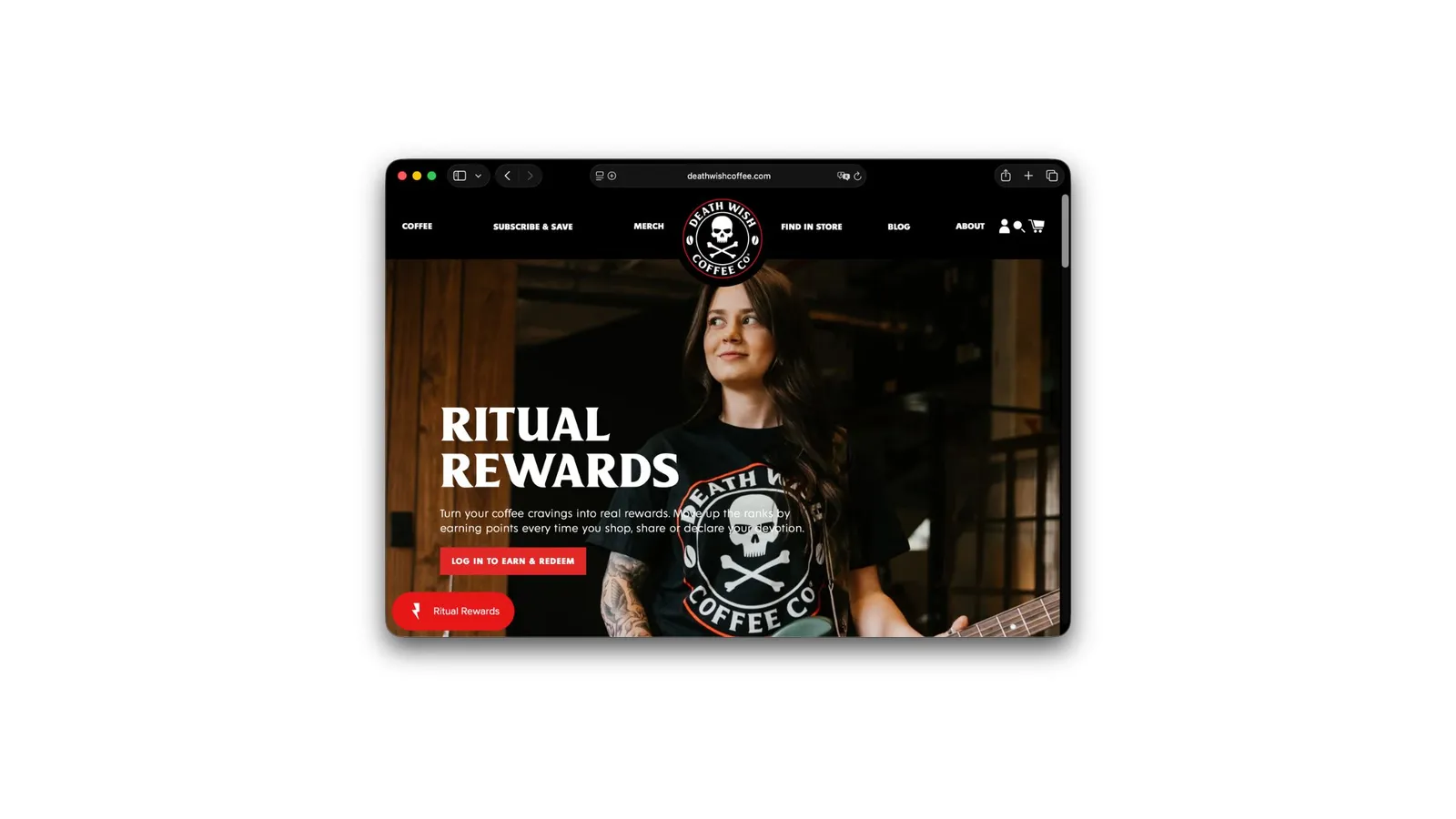
Program model: Points plus subscription club.
Ritual Rewards scales its earn rate by tier — 1 point per dollar at 1st Degree, 3 at 2nd Degree (601 points in a calendar year), 5 at 3rd Degree (1,001) — with points redeemable for free coffee and merch, plus referral and gift-card bonuses. The Society of Strong Coffee subscription layers on top: subscribers get steep order discounts and free shipping, and a members-only rewards tier with double-points days, early access to releases, private merch drops, and a feedback forum.
Coffee is the ideal subscription product, and the design makes each system strengthen the other — subscribing accelerates points, and points milestones reward staying subscribed. Tiers reset each calendar year, keeping status tied to current behavior. The copyable tactic for any replenishable product: give subscribers preferential treatment inside the loyalty program instead of running the two as strangers. The drawback is stacked generosity — subscription discounts plus free shipping plus points is a lot of margin out the door, and it needs modeling before launch.
14. e.l.f. Cosmetics: at low price points, scale and play do the work
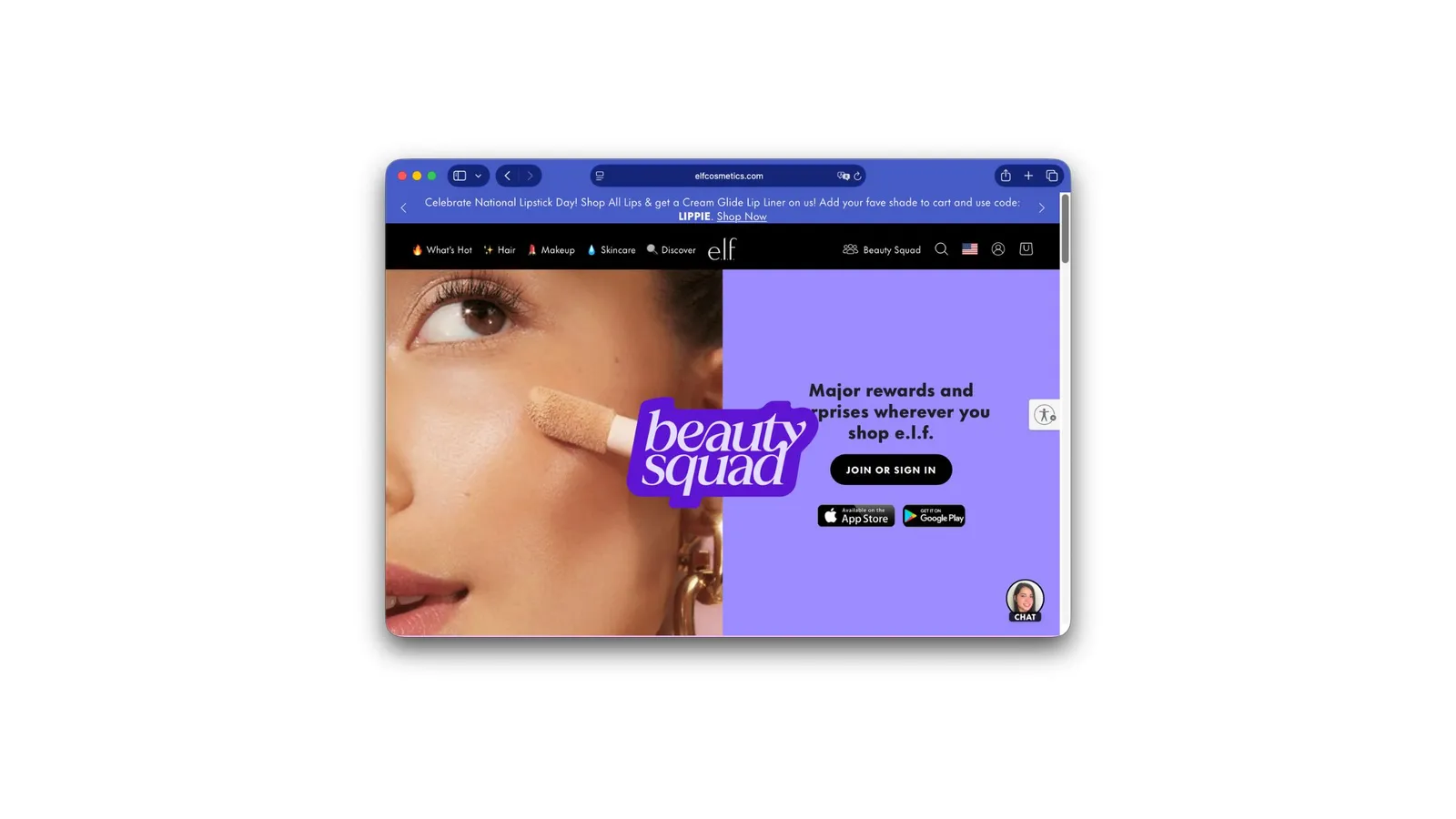
Program model: Points with tiers, gamification, and omnichannel earning.
Beauty Squad awards 10 points per dollar on elfcosmetics.com and — critically for a brand sold in every Target — points for scanned retail receipts. Members climb from Fan to Pro (1,000 points) to Icon (2,000), earning through games and badges along the way. Icon perks go well past discounts: behind-the-scenes product development opportunities, free pre-launch product trials, and a personal beauty advisor. The program works at serious scale: e.l.f. Beauty's CEO himself reported on the company's Q3 2025 earnings call that Beauty Squad had surpassed 5.6 million members, with enrollment growing over 20% year over year!
With products averaging under $15, no single discount moves much — so the program accumulates many small behaviors across every channel instead. The copyable tactic is receipt scanning if you sell through retail. The drawback is that this depth of gamification is genuinely expensive to build and run.
15. OLIPOP: reward the purchases your store can't see
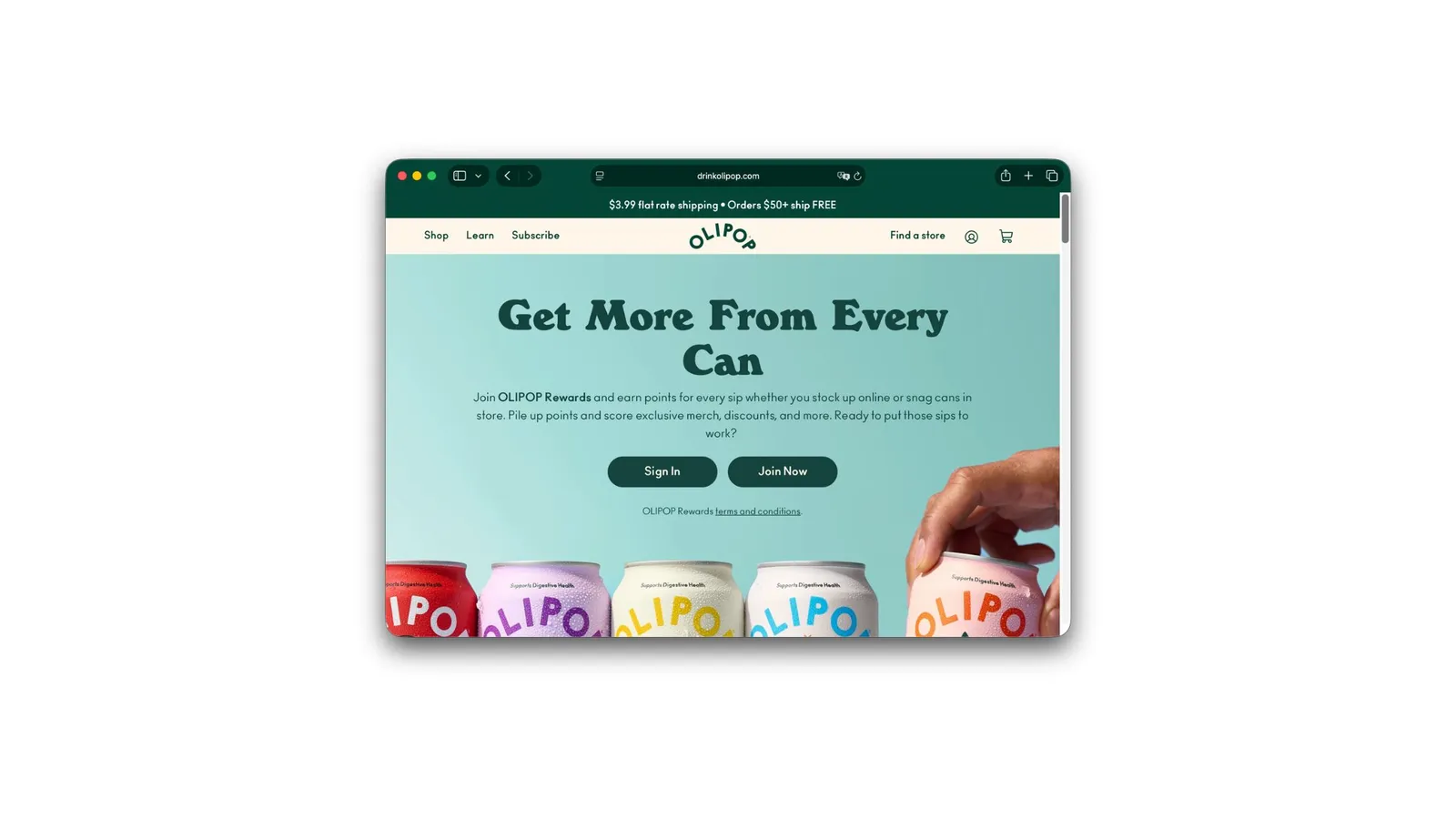
Program model: Points and community hybrid.
OLIPOP Rewards gives 50 points per dollar on drinkolipop.com — and the same rate for receipts uploaded from any retailer, which matters for a soda brand that lives mostly on grocery shelves. Members also earn for social follows, reading blog content, submitting photos to current challenges, and sharing "soda stories," with a leaderboard ranking lifetime points. Redemption goes to money off future orders or a marketplace of OLIPOP merch.
Most OLIPOP purchases happen where the brand's Shopify store can't see them, so the program's job is identification: turn anonymous grocery buyers into known, reachable customers and give them reasons to try DTC bundles. The UGC challenges convert enthusiasm into content and community. The copyable tactic for any retail-heavy brand is receipt-based earning as a customer-data engine. The drawback is verification overhead — receipt processing invites fraud and support tickets in a way on-site points never do.
What the best Shopify loyalty programs have in common
Fifteen programs, five models, and a handful of consistent patterns underneath.
They reward a commercially meaningful behavior
Naturium pays for repurchasing the same product. Death Wish pays for subscribing. OLIPOP and e.l.f. pay for identifying yourself as a retail customer. Girlfriend Collective pays for recycling, which sets up the next order. None of these programs reward vague "engagement" — each one names a behavior that shows up in revenue or data and prices it.
Reward value matches purchase economics
Touchland's $5-per-50-points works because the product costs $12 and gets rebought monthly. The same coupon after a $255 Monos carry-on would feel like a rounding error, which is why Monos leads with launch access and member products instead. Before setting a reward, ask what it feels like next to your AOV — not in your spreadsheet.
The strongest benefits are hard to copy
Any competitor can match 5% back. It is much harder to match K-Swiss early releases, Liquid Death merch, Ouai's community, Brooklinen's priority service, or e.l.f.'s pre-launch trials. Benefits built from your own products, access, and attention create differentiation that a discount war can't erode.
They make progress visible
The programs that publish clear math — Touchland, Eddie Bauer, K-Swiss, Naturium — let customers always know where they stand and what happens next. Tier tables, milestone trackers, and stated conversion rates beat mystery points every time. If your customers can't explain your program to a friend, it's too complicated.
They promote the program throughout the journey
These programs surface in navigation links, site-wide banners (Jaxon Lane's double-points bar), account pages, post-purchase emails, and checkout. A loyalty program that lives only on a forgotten landing page earns exactly what it's given: nothing.
They measure behavior, not membership totals
Enrollment is the easiest number to grow and the least meaningful. The numbers worth watching are second-purchase rate, time between purchases, redemption rate, incremental repeat revenue, margin after reward costs, customer lifetime value, and how many of your loyal members also refer. A program with fewer members and a higher second-purchase rate is winning.
Where ReferralCandy fits
ReferralCandy's Loyalty Campaigns take the cleanest position on this spectrum: they return a percentage of each qualifying purchase as native Shopify store credit, released automatically once the order is fulfilled. There are no points to convert ("how much was a point again?"), no separate balance to manage, and nothing for the customer to sign up for — enrollment and reward fulfillment are automatic, and merchants can set an optional expiry on issued credit.
That makes ReferralCandy a fit for merchants who want a simple repeat-purchase loop, rewards expressed in real currency rather than points, credit that lives natively in Shopify, and loyalty running alongside referral and affiliate campaigns in one platform. To be equally clear about what it is not: ReferralCandy's loyalty product does not currently offer points, VIP tiers, or activity-based earning like the review and social rewards featured above.
If the examples in this article convinced you that you need a full points economy or a multilayer VIP program, choose software built around those mechanics — our guide to choosing a Shopify loyalty program app walks through the options. If you mainly want to give customers an understandable reason to place their next order, Shopify-native store credit may be the simpler answer.
How to apply these examples to your own store
- Define the behavior you want to change. A second purchase within 60 days, a subscription start, a review with a photo. One behavior, stated precisely, before any tool gets picked.
- Calculate what reward margin you can afford. Model gross margin, expected redemption rate, and how many rewarded orders would have happened anyway. The reward budget comes out of this math, not out of what competitors offer.
- Select the simplest mechanic that can change the behavior. If store credit does it, stop there. Add tiers, milestones, or community only when the simpler version demonstrably stalls.
- Promote the program at the moments it's relevant. Post-purchase pages and emails, account login, checkout, packaging. The program should appear whenever the customer is closest to their next order.
- Compare members against a real baseline. Non-members with similar first-purchase behavior, or your own pre-launch cohorts. Member-versus-non-member gaps without that control mostly measure who your best customers already were.
For broader context on where a loyalty program sits among your growth levers, see our guide on how to grow a Shopify store.
Frequently asked questions
What is the best type of loyalty program for Shopify?
There is no universal winner. Simple points and store credit suit frequent, lower-AOV purchases; VIP tiers suit high-AOV stores where perks beat coupons; subscription-linked rewards suit replenishable products; and community programs suit brands whose customers identify with them. Match the model to your purchase frequency, order value, and what your customers value beyond price.
Are points or store credit better?
Store credit is clearer — customers see real currency, and there is no conversion math — and it's simpler to run, especially using Shopify's native store credit. Points are more flexible: they can reward non-purchase behavior like reviews and referrals, and support tiers and merch catalogs. Points also create a liability of outstanding balances that needs managing. Neither wins universally; our comparison of loyalty and referral programs covers the decision in more depth.
Can small Shopify stores run loyalty programs?
Yes. Several brands in this list run lean programs, and the mechanics that matter most — clear rewards, visible progress, promotion at the right moments — cost discipline rather than money. Small stores should start with simple mechanics and clear economics, and add tiers or community features only once the basic loop demonstrably works.
How much should a Shopify loyalty program reward customers?
Model it, don't guess it. Start from gross margin, apply your expected redemption rate, estimate the lift in repeat purchasing, and subtract the rewarded orders that would have happened anyway. The programs above range from roughly 3% back (Eddie Bauer's base tier) to 10% in the richest cases — but the right number for your store falls out of your margin math, not theirs.
Can loyalty and referral programs work together?
Yes, and they reward different things: loyalty rewards a customer's own repeat purchasing, while a referral program rewards bringing in new customers. The same happy customer can do both, and several programs above build referral bonuses directly into their loyalty earning. Once you have a base of satisfied customers, running both gives them two ways to act on the same goodwill — here's how loyalty and referral marketing combine.
How should a Shopify store measure loyalty-program performance?
Track incremental repeat purchases, time to second order, redemption rate, reward cost against margin, and customer lifetime value — compared with a non-member or pre-launch baseline. Enrollment totals and points issued describe activity, not results; a program can grow both while changing nothing about buying behavior.
Want a simpler alternative to building a points economy? ReferralCandy can automatically return a percentage of each qualifying purchase as native Shopify store credit, while keeping referral and affiliate campaigns in the same platform.