Key Takeaways
- Reverse logistics optimization in ecommerce can reduce return processing costs by up to 30% while improving customer satisfaction and retention rates.
- Implementing automated return management systems and clear return policies creates a seamless experience that turns potential losses into opportunities for customer loyalty.
- Strategic approaches like quality inspection automation, restocking optimization, and data analytics help transform returns from a cost center into a competitive advantage.
- Sustainable reverse logistics practices not only reduce environmental impact but also appeal to eco-conscious consumers and can lower disposal costs by up to 40%.
- Integrating reverse logistics with your referral program can turn dissatisfied customers into brand advocates, converting negative experiences into positive word-of-mouth marketing.
Reverse Logistics Optimization Ecommerce: The Complete Guide to Turning Returns Into Profit
Returns are inevitable in ecommerce. With online return rates averaging 20-30% compared to just 8-10% for brick-and-mortar stores, managing the flow of products coming back to your business is just as critical as shipping them out. This is where reverse logistics optimization in ecommerce becomes a game-changer. While many businesses view returns as a necessary evil that drains resources, forward-thinking ecommerce brands are discovering that optimized reverse logistics can actually become a competitive advantage—reducing costs, improving customer satisfaction, and even creating new revenue streams.
In this comprehensive guide, you'll discover proven strategies to transform your reverse logistics operations from a cost center into a strategic asset. Whether you're processing dozens or thousands of returns monthly, these actionable insights will help you streamline operations, reduce expenses, and turn dissatisfied customers into loyal brand advocates.
Understanding Reverse Logistics in Ecommerce
Reverse logistics optimization in ecommerce refers to the process of managing products moving backward through your supply chain—from customers back to your warehouse, manufacturer, or disposal facility. Unlike traditional forward logistics that focuses on getting products to customers, reverse logistics handles returns, exchanges, repairs, recycling, and disposal.
For ecommerce businesses, this process is particularly complex because it involves multiple touchpoints: return authorization, shipping coordination, product inspection, inventory management, refund processing, and disposition decisions. Each step presents opportunities for optimization and potential pitfalls that can erode your profit margins.
The True Cost of Poor Reverse Logistics
Many ecommerce businesses underestimate the financial impact of inefficient returns management. Beyond the obvious costs of shipping and restocking, poor reverse logistics creates hidden expenses that compound over time. Processing a single return can cost your business between $10 to $20, and that's before considering lost revenue from the original sale.
When customers experience friction during the return process—unclear policies, slow refunds, or complicated procedures—the damage extends beyond immediate costs. Research shows that 92% of customers will buy again if the return process is easy, while 79% of consumers expect free return shipping. Your reverse logistics strategy directly impacts customer lifetime value and word-of-mouth marketing.
Building a Strategic Framework for Reverse Logistics Optimization
Optimizing reverse logistics in ecommerce requires a holistic approach that addresses technology, processes, and customer experience simultaneously. The most successful ecommerce brands treat reverse logistics as an integral part of their overall customer journey rather than an afterthought.
Establish Clear Return Policies That Reduce Friction
Your return policy is the foundation of effective reverse logistics optimization. A well-crafted policy balances customer convenience with business protection. Start by making your policy easy to find and understand—display it prominently on product pages, at checkout, and in post-purchase communications.
Consider extending your return window strategically. While a 30-day policy is standard, offering 60 or 90 days can actually reduce return rates by removing purchase anxiety. When customers don't feel rushed to decide, they're more likely to keep products. Zappos famously offers a 365-day return policy, which has become a cornerstone of their customer loyalty strategy.
Be specific about conditions for returns. Clearly state whether items must be unused, in original packaging, or if tags must remain attached. Transparency here prevents disputes and streamlines your inspection process later. For your business, this clarity reduces processing time and the need for customer service intervention.
Implement Automated Return Management Systems
Manual return processing is time-consuming, error-prone, and doesn't scale. Investing in automated return management software is one of the most impactful steps you can take for reverse logistics optimization in ecommerce. These systems create self-service portals where customers can initiate returns, print labels, and track their refund status without contacting your support team.
Look for platforms that integrate with your existing ecommerce system, inventory management, and shipping carriers. The right software should automatically generate return labels, update inventory in real-time, trigger refund processing, and provide analytics on return reasons and patterns.
Automation reduces processing time by up to 80% while improving accuracy. When customers can handle returns independently, your team focuses on exceptions and complex cases rather than routine processing. This efficiency directly translates to cost savings—businesses typically see ROI within 6-12 months of implementing automated systems.
Optimizing the Physical Returns Process
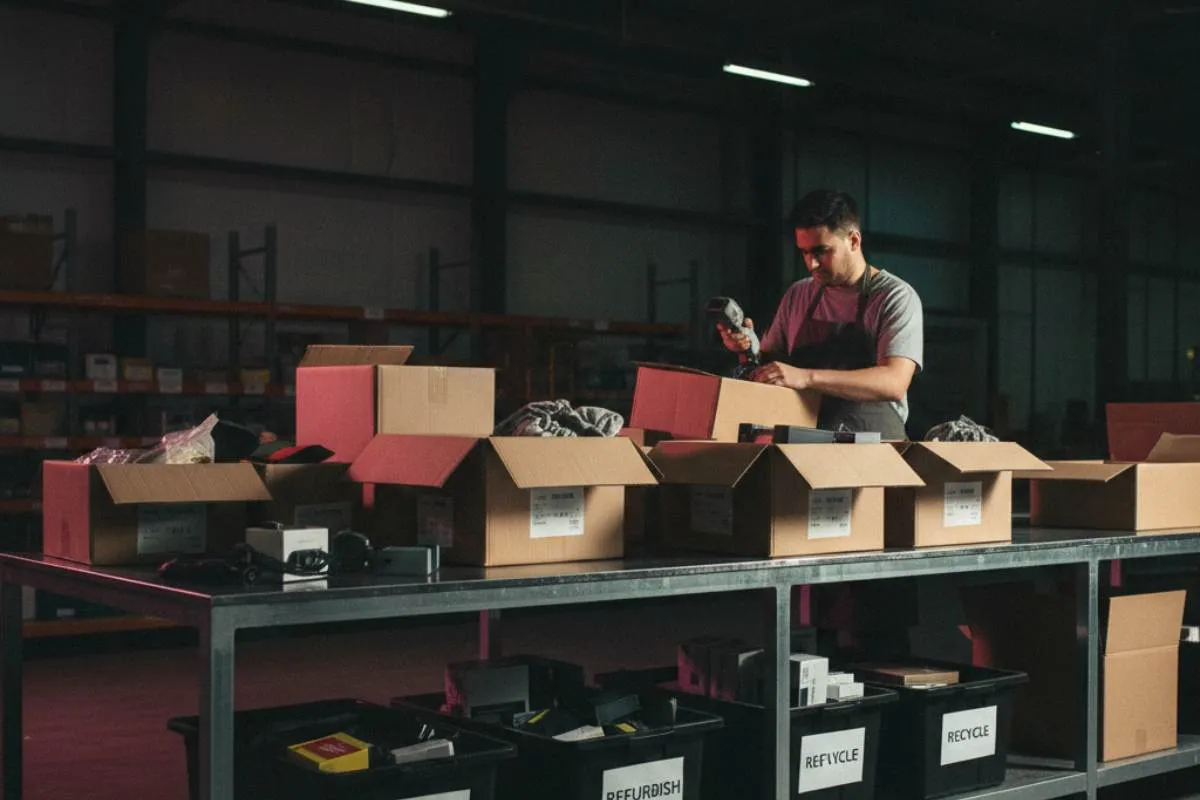
The physical handling of returned merchandise represents a significant operational challenge in reverse logistics optimization for ecommerce businesses. Creating efficient workflows for receiving, inspecting, and dispositioning returned items is essential for controlling costs and maintaining inventory accuracy.
Streamline Receiving and Inspection Workflows
When returned products arrive at your facility, time is money. Develop a standardized receiving process that quickly moves items through inspection and back into available inventory when possible. Create dedicated receiving areas for returns separate from incoming stock to prevent confusion and maintain organization.
Implement a tiered inspection system based on product value and return reason. High-value items or those returned for quality issues require thorough inspection, while unopened items in original packaging can move quickly back to stock. This risk-based approach optimizes your team's time while maintaining quality control.
Train your team to document return conditions consistently using standardized categories. This data becomes invaluable for identifying patterns—perhaps a specific product has sizing issues, or certain suppliers consistently deliver subpar quality. These insights drive product improvements and supplier negotiations that prevent future returns.
Smart Disposition Strategies
Not all returned products follow the same path, and your disposition strategy significantly impacts profitability. For items in perfect condition, immediate restocking maximizes recovery value. However, products with minor defects might be better suited for outlet channels, liquidation partners, or donation programs.
Create clear decision trees for your team that consider product condition, market demand, storage costs, and potential recovery value. For example, seasonal items returned late in the season might be better liquidated immediately rather than stored for next year. Fast-moving products with minor cosmetic issues could be sold as "open box" items at a slight discount.
Partner with specialized reverse logistics providers for categories that require expertise—electronics recycling, refurbishment services, or liquidation. These partnerships often recover more value than attempting to handle everything in-house. Some businesses recover 60-80% of product value through strategic disposition compared to 30-40% with ad-hoc approaches.
Leveraging Technology for Reverse Logistics Excellence
Technology is the backbone of modern reverse logistics optimization in ecommerce. Beyond basic return management systems, innovative technologies are transforming how businesses handle returns, predict patterns, and recover value.
Predictive Analytics and Machine Learning
Advanced analytics help you move from reactive to proactive reverse logistics management. By analyzing historical return data, you can identify patterns that predict future returns. Machine learning algorithms can flag high-risk orders before shipping—perhaps certain product combinations, shipping destinations, or customer profiles correlate with higher return rates.
Use these insights to implement preventive measures. If data shows a specific product has high return rates due to sizing issues, add detailed size guides or customer photos to the product page. If certain customer segments consistently return products, consider adjusting your marketing to set more accurate expectations.
Predictive analytics also optimize inventory planning. When you can forecast return volumes and timing, you maintain appropriate stock levels without over-investing in inventory. This is particularly valuable for seasonal businesses where return patterns fluctuate significantly throughout the year.
Integration Across Your Tech Stack
Siloed systems create inefficiencies that undermine reverse logistics optimization efforts. Your return management system should seamlessly integrate with your ecommerce platform, warehouse management system, customer service software, and accounting tools. This integration ensures data flows automatically, eliminating manual entry and reducing errors.
When a customer initiates a return, integrated systems automatically update inventory forecasts, adjust financial projections, flag potential fraud, and create customer service notes—all without human intervention. This level of automation is essential for scaling your operations efficiently.
Consider implementing API-first solutions that allow custom integrations with your unique tech stack. While pre-built integrations are convenient, custom connections ensure your reverse logistics system works exactly how your business needs it to.
Creating a Customer-Centric Returns Experience
The returns experience is a critical touchpoint that shapes customer perception of your brand. While optimizing costs is important, never lose sight of the customer experience. The most successful reverse logistics optimization in ecommerce balances operational efficiency with customer satisfaction.
Transparent Communication Throughout the Process
Customers experiencing a return are already disappointed—the product didn't meet expectations, or they changed their mind. Clear, proactive communication turns this negative situation into an opportunity to demonstrate your customer commitment.
Send automated updates at every stage: return initiated, package received, inspection completed, refund processed. These touchpoints reassure customers and reduce anxiety about their refund. Include estimated timelines and make it easy for customers to track their return status independently.
When issues arise—perhaps an item doesn't qualify for return or arrives damaged—communicate promptly with empathy and clear explanations. Train your customer service team to view returns as relationship-building opportunities rather than problems to solve quickly.
Offer Flexible Return Options
Different customers have different preferences for how they return items. Some want to drop packages at shipping carriers, while others prefer scheduled pickups. Offering multiple return methods improves convenience and can actually reduce costs—drop-off returns eliminate pickup fees.
Consider partnering with retail locations for in-person returns, even if you're primarily an online business. This approach, called "returnless returns" for low-value items, allows customers to keep products while still receiving refunds. While counterintuitive, this strategy can be more cost-effective than processing returns for items worth less than $10-15.
For high-value customers or premium products, white-glove return services—including home pickup and immediate exchanges—create exceptional experiences that drive loyalty. These VIP services cost more per transaction but generate significantly higher lifetime value from your best customers.
Reducing Return Rates at the Source
The most effective reverse logistics optimization strategy is preventing returns before they happen. While you'll never eliminate returns entirely, strategic interventions can reduce rates by 15-25%, dramatically improving profitability.
Enhance Product Information and Imagery
Many returns stem from mismatched expectations. Customers receive products that look different, fit differently, or function differently than anticipated. Comprehensive product information bridges this gap and sets accurate expectations.
Invest in high-quality product photography from multiple angles, including detail shots and lifestyle images showing scale and context. For apparel, include photos on various body types and detailed measurements. For technical products, create specification sheets and comparison charts.
User-generated content is particularly powerful for reducing returns. Customer photos and videos show products in real-world conditions, providing authentic perspectives that professional photography can't capture. Encourage customers to share their experiences and feature this content prominently on product pages.
Implement Virtual Try-On and AR Technologies
Augmented reality and virtual try-on technologies are revolutionizing how customers evaluate products before purchase. For fashion and accessories, virtual try-on reduces return rates by up to 25% by helping customers visualize how items look on them.
For home goods and furniture, AR apps let customers see products in their actual spaces before buying. This technology eliminates the most common return reason for these categories—"doesn't fit my space" or "doesn't match my decor."
While implementing AR requires upfront investment, the return reduction and increased conversion rates typically generate positive ROI within the first year. Start with your highest-return categories to maximize impact.
Leverage Customer Reviews and Q&A
Customer reviews provide social proof while setting realistic expectations. Encourage detailed reviews that discuss sizing, quality, and use cases. When potential buyers read that a jacket "runs small" or shoes "need breaking in," they make more informed decisions that reduce returns.
Product Q&A sections address specific concerns before purchase. Monitor these questions to identify common confusion points, then update product descriptions to address these issues proactively. This continuous improvement cycle steadily reduces return rates over time.
Sustainability and Reverse Logistics
Environmental consciousness is increasingly important to consumers and businesses alike. Sustainable reverse logistics optimization in ecommerce reduces environmental impact while often lowering costs—a true win-win scenario.
Circular Economy Approaches
The circular economy model keeps products and materials in use as long as possible. For ecommerce businesses, this means exploring refurbishment, resale, and recycling programs instead of defaulting to disposal.
Establish partnerships with refurbishment specialists who can restore returned electronics, appliances, or furniture to like-new condition. These refurbished products can be sold through secondary channels, recovering 50-70% of original value while preventing waste.
Create trade-in programs that incentivize customers to return old products when buying new ones. This approach works particularly well for electronics, fashion, and sporting goods. You gain inventory for resale while building customer loyalty through the trade-in value offered.
Eco-Friendly Packaging and Shipping
Returns generate significant packaging waste—original packaging plus return shipping materials. Optimize your packaging to be reusable for returns, with easy-to-follow instructions for customers. Some brands include return labels inside original packaging, eliminating the need for additional materials.
Consolidate returns shipments when possible to reduce transportation emissions. Instead of processing individual return shipments daily, batch returns to specific regions or use regional return centers that aggregate items before sending to your main facility.
Communicate your sustainability efforts to customers. Eco-conscious consumers appreciate brands that minimize environmental impact, and these efforts can become differentiators in crowded markets. Your commitment to sustainable reverse logistics can actually drive customer acquisition and retention.
Financial Optimization and Cost Management
Understanding the financial implications of reverse logistics is essential for making strategic decisions that protect profitability. Every aspect of your returns process impacts your bottom line, and small optimizations compound into significant savings.
Calculate Your True Cost Per Return
Most businesses underestimate their actual cost per return because they only consider direct expenses like shipping and restocking fees. A comprehensive calculation includes processing labor, inspection time, system costs, storage, customer service, refund processing fees, and opportunity costs from tied-up capital.
Track these metrics rigorously. When you know your true cost per return, you can make informed decisions about policy changes, technology investments, and process improvements. You might discover that offering free returns actually costs less than the customer acquisition cost of losing shoppers who demand this convenience.
Negotiate Strategic Carrier Partnerships
Shipping costs represent the largest single expense in reverse logistics. Negotiate volume discounts with carriers based on your total shipping volume—both outbound and return shipments. Many businesses secure 20-30% discounts on return shipping by bundling these negotiations.
Explore zone-skipping and regional return centers to reduce shipping distances. Instead of returning all items to your main warehouse, establish regional facilities that process returns and redistribute inventory locally. This approach cuts shipping costs while speeding up the entire returns cycle.
Optimize Refund Strategies
How and when you issue refunds impacts cash flow and customer satisfaction. Immediate refunds upon return initiation create exceptional customer experiences but increase fraud risk and cash flow pressure. Refunds after inspection protect your business but frustrate customers.
Consider tiered refund approaches based on customer history and risk profiles. Trusted customers with strong purchase histories receive immediate refunds, while new customers wait for inspection. This risk-based approach balances customer experience with fraud prevention.
Offering store credit instead of refunds can reduce costs while maintaining customer satisfaction. Incentivize store credit with bonuses—perhaps 110% value when choosing credit over refund. This approach retains revenue within your business while giving customers more purchasing power.
Turning Returns Into Referral Opportunities
Here's where reverse logistics optimization in ecommerce gets interesting: returns don't have to be relationship-enders. With the right approach, you can transform dissatisfied customers into brand advocates who actively refer others to your business.
Exceptional Service Creates Word-of-Mouth
When customers experience a seamless, generous return process, they remember. This positive surprise—expecting hassle but receiving convenience—creates emotional responses that drive word-of-mouth marketing. Customers tell friends about brands that "made returns so easy" or "didn't even ask questions."
After processing a return, follow up with customers to ensure satisfaction with the process. This touchpoint demonstrates care and provides an opportunity to address any remaining concerns. More importantly, it's the perfect moment to introduce your referral program.
Integrate Returns With Your Referral Program
Strategic timing matters in referral marketing. A customer who just experienced excellent return service is primed to share their positive experience. Send a personalized message thanking them for their patience during the return and inviting them to refer friends who might enjoy your products.
Offer special referral incentives to customers who've completed returns. This unexpected gesture transforms a negative situation into a positive one. For example: "We're sorry [Product] didn't work out. As a thank you for giving us a try, here's an exclusive referral link worth $20 for you and your friends."
This approach accomplishes multiple goals simultaneously. It recovers potential lost revenue through referrals, demonstrates confidence in your products despite the return, and creates goodwill that may bring the customer back for future purchases.
Leverage Return Data for Targeted Referrals
Return reasons provide valuable insights into customer preferences. If someone returns a product because of size issues, they might be perfect referral sources for friends with different sizing needs. If they return because of color preferences, they clearly care about aesthetics—making them ideal advocates for your design-conscious products.
Use this data to personalize referral messaging. Instead of generic "refer a friend" campaigns, create targeted messages: "We noticed [Product] wasn't quite right for you. Know someone who might love our [Alternative Product]? Share this special offer with them."
Frequently Asked Questions
What is reverse logistics optimization in ecommerce?
Reverse logistics optimization in ecommerce is the strategic process of managing and improving how products move backward through your supply chain—from customers back to your warehouse or disposal facilities. It encompasses returns management, product inspection, inventory restocking, refund processing, and disposition decisions. Optimization focuses on reducing costs, improving customer experience, and recovering maximum value from returned merchandise through efficient processes, automation, and data-driven decision-making.
How much does poor reverse logistics cost ecommerce businesses?
Poor reverse logistics can cost ecommerce businesses between $10-$20 per return when accounting for all direct and indirect expenses. This includes shipping costs, processing labor, inspection time, restocking fees, customer service resources, and lost revenue from the original sale. For businesses with high return volumes, these costs quickly compound—a company processing 1,000 returns monthly could spend $120,000-$240,000 annually just on returns management. Hidden costs like lost customer lifetime value and negative word-of-mouth can add significantly more to this figure.
What technology should I use for reverse logistics optimization?
Essential technologies for reverse logistics optimization include automated return management systems (like Loop Returns, Returnly, or AfterShip Returns), warehouse management software with reverse logistics capabilities, predictive analytics tools, and integrated customer service platforms. Look for solutions that offer self-service return portals, automatic label generation, real-time inventory updates, and comprehensive analytics. The best technology stack integrates seamlessly with your existing ecommerce platform, accounting software, and shipping carriers to eliminate manual data entry and reduce errors.
How can I reduce return rates in my ecommerce business?
Reduce return rates by improving product information quality with detailed descriptions, multiple high-quality images, size charts, and customer reviews. Implement virtual try-on or augmented reality tools for applicable products. Set accurate customer expectations through transparent product specifications and user-generated content. Enhance your product Q&A sections to address common concerns before purchase. Additionally, analyze return reasons to identify patterns—if specific products have high return rates, investigate whether product quality, descriptions, or photography need improvement. Most businesses can reduce returns by 15-25% through these strategies.
Should I offer free returns to customers?
Offering free returns depends on your business model, margins, and competitive landscape. Research shows 79% of consumers expect free return shipping, and 92% will buy again if returns are easy. Free returns can increase conversion rates by 20-30% and customer lifetime value significantly. However, they also increase costs and can encourage wardrobing or serial returners. Consider a hybrid approach: offer free returns to loyalty program members, on orders above a certain threshold, or as a promotional tool during peak seasons. Calculate your cost per return and customer acquisition cost to determine if free returns generate positive ROI for your business.
What are the best practices for sustainable reverse logistics?
Sustainable reverse logistics practices include implementing refurbishment and resale programs for returned items, partnering with recycling specialists for proper disposal, using reusable packaging designed for returns, consolidating return shipments to reduce transportation emissions, and establishing regional return centers to minimize shipping distances. Create trade-in programs that keep products in circulation longer, and explore circular economy models where returned items become raw materials for new products. Communicate your sustainability efforts to customers—eco-conscious consumers increasingly favor brands with responsible reverse logistics practices. These approaches typically reduce environmental impact by 30-50% while often lowering costs simultaneously.
How do I handle fraudulent returns in ecommerce?
Combat fraudulent returns through multi-layered approaches: implement return authentication systems that verify items match what was originally shipped, use serialized tracking for high-value items, establish clear return windows and conditions, analyze customer return patterns to flag suspicious behavior, and maintain detailed photographic records during inspection. Consider risk-based refund policies where trusted customers receive immediate refunds while new or high-risk customers wait for inspection. Use machine learning tools to identify fraud patterns like wardrobing (wearing items once and returning), or bracketing (ordering multiple sizes with intent to return most). Balance fraud prevention with customer experience—overly restrictive policies can alienate legitimate customers.
What metrics should I track for reverse logistics optimization?
Key metrics for reverse logistics optimization include return rate (percentage of orders returned), cost per return, time from return initiation to refund processing, restocking rate (percentage of returns that go back to sellable inventory), recovery rate (value recovered from returned items), return reasons and categories, customer satisfaction with the returns process, and fraud rate. Also track operational metrics like inspection time per item, warehouse space dedicated to returns, and carrier performance for return shipments. Establish benchmarks for your industry and monitor trends over time. These metrics help identify improvement opportunities and measure the impact of optimization initiatives.
Conclusion: Transform Returns From Cost Center to Competitive Advantage
Reverse logistics optimization in ecommerce is no longer optional—it's a strategic imperative that separates thriving businesses from struggling ones. As return rates continue climbing and customer expectations evolve, your ability to manage returns efficiently, cost-effectively, and customer-centrically directly impacts profitability and growth.
The businesses winning in today's competitive ecommerce landscape view reverse logistics as an opportunity rather than a burden. They invest in technology that automates routine processes, freeing their teams to focus on strategic initiatives. They analyze return data to improve products and prevent future returns. They create exceptional return experiences that transform disappointed customers into loyal brand advocates. And they integrate reverse logistics with their broader customer retention and referral strategies, turning potential losses into relationship-building opportunities.
Start your reverse logistics optimization journey by assessing your current state. Calculate your true cost per return, analyze your return patterns, and identify your biggest pain points. Then prioritize improvements based on potential impact—perhaps implementing automated return management software, enhancing product information to reduce returns, or establishing strategic carrier partnerships to cut shipping costs.
Remember that optimization is an ongoing process, not a one-time project. Continuously monitor your metrics, test new approaches, and stay informed about emerging technologies and best practices. The investment you make in reverse logistics optimization today will pay dividends for years to come through reduced costs, improved customer satisfaction, and sustainable competitive advantages.
Ready to turn your returns process into a revenue driver? Start by mapping your current reverse logistics workflow, identifying bottlenecks, and implementing the strategies outlined in this guide. Your future self—and your bottom line—will thank you.