
Yotpo is a real platform. Loyalty, reviews, SMS, subscriptions -- if you want one vendor to own a big slice of your retention stack, it does a lot, and it does it for large brands that have the team to run it.
So when merchants tell me they're leaving Yotpo, it's almost never because Yotpo is bad at what it's for. It's because they bought a suite to run one thing. And that one thing was the referral program.
The tool was built for loyalty. They wanted referral.
The clearest version of this came from a merchant who put it plainly: "We're moving off of Yotpo, looking for kind of a more streamlined, simple referral program, not quite with all the loyalty bells and whistles."
That sentence does a lot of work. The bells and whistles aren't a bonus when you don't want them. They're weight. Another merchant told me they "didn't really utilize their loyalty services" at all -- "we don't rely on a loyalty program." They were paying for and configuring a loyalty platform to get at a referral feature sitting inside it.
This is the pattern. Yotpo sells the suite. Referral is one module in it. If referral is the part you actually care about, you're navigating around four products you didn't need to reach the one you did.
"Complicated, expensive, and it didn't bring anything."
Here's the quote I think about most. A merchant describing their last attempt: "The one we tried to set up about two years ago through Yotpo was a referral program which was a technical disaster. It was complicated, expensive, it didn't bring really anything."
Three failures in one breath. Hard to set up. Costly. And it didn't move the number. Those usually travel together. When a referral program is a feature inside a larger system, the setup carries the complexity of the whole system, and the thing you're trying to launch gets buried. By the time it's live, the merchant's enthusiasm is gone, the configuration is half-right, and the program quietly underperforms. Then it gets blamed on referrals as a channel, when the real problem was the tool.
The discount stacking problem.
This one is concrete, and more common than people expect. A merchant told me they'd "had issues with using discount codes with Yotpo and Friendbuy that didn't stack well with our other discounting. There was a real friction point there."
If you already run promotions -- and most Shopify brands do -- your referral incentive has to coexist with everything else at checkout. When it doesn't stack cleanly, you get one of two bad outcomes. Customers can't redeem the reward they were promised, or they stack things you never meant to allow and your margin takes the hit. Either way, support tickets. This is the kind of friction that looks small in a feature list and turns into a weekly headache in practice.
When the placement fights your design.
The last beat is about control. A merchant going through a website redesign told me they couldn't use their Yotpo loyalty points anymore "because of their constraint of where the point shows up on the screen -- it's conflicting with our design." Same merchant, on the referral side: "I had the referral thing, but I don't think the placement of it is working."
Placement sounds cosmetic. It isn't. If customers don't see the referral ask at the right moment, the program doesn't run, no matter how good the mechanics are. When the tool dictates where the ask lives and your brand has to bend around it, you've lost the one decision that determines whether anyone refers at all.
Where ReferralCandy is actually different.
I'm not going to pretend ReferralCandy replaces a loyalty-plus-reviews-plus-SMS suite. It doesn't, and if you need that suite, Yotpo is a reasonable place to get it.
What ReferralCandy does is the opposite bet. Referral and affiliate are the product, not a module. That changes the experience in the places the quotes above keep pointing to: setup is the referral program rather than the whole platform, and the configuration that matters is the configuration you actually use.
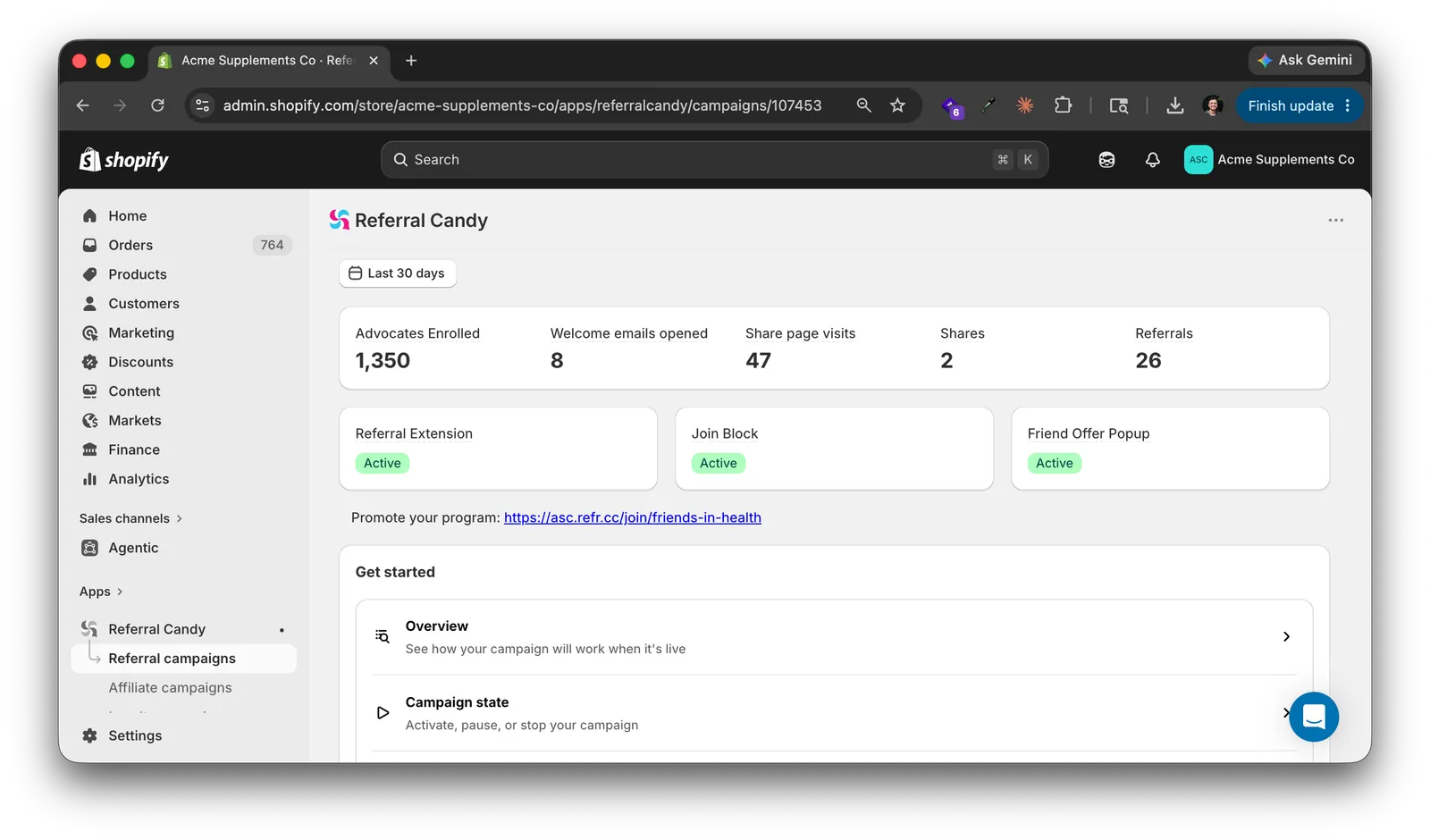
The merchants who are happiest after switching tend to be the ones who realized they were managing a suite to run a single program. Once referral is the main thing the tool does, the setup gets shorter, the thing actually launches, and the program gets a fair shot at working.
So who should pick which.
If you want one vendor for loyalty, reviews, SMS, and referrals aren't your priority, as well as having the team to run all of it, Yotpo is built for you. That's a real use case and I won't talk you out of it.
But if you keep hearing yourself say some version of "I just want a referral and an affiliate program program" -- if loyalty is a someday and referral is a now, if you're tired of configuring around features you don't use, if your last attempt was complicated and expensive and didn't bring anything -- then you don't need a bigger suite. You need a tool that treats referral as the whole job.
That's the line I'd draw. Pick the suite when you'll use the suite. Pick the focused tool when referral is the point.