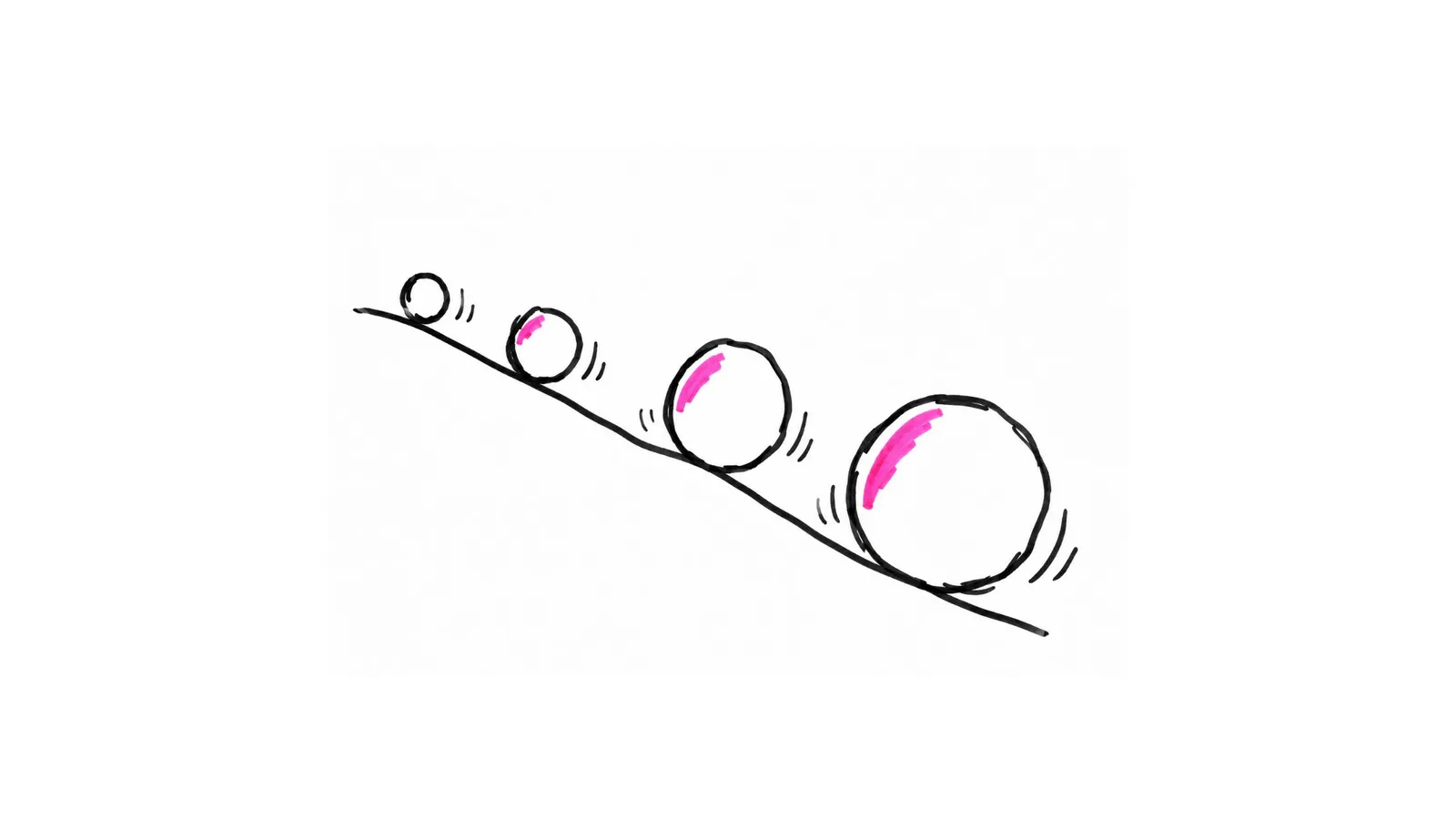
Most Shopify stores do not have a growth problem. They have a campaign habit.
A sale here. A paid push there. A burst of content, a giveaway, a holiday promo. Each one moves the numbers for a week, and then the line settles back to where it was. The store stays busy and stays flat at the same time, which is the most exhausting place a brand can live.
Lasting growth does not come from running more campaigns. It comes from building loops. A campaign spends energy once and ends. A loop takes the output of one thing and feeds it back into the input of the next, so the same effort keeps paying out. That is the difference between a store that has to be pushed every month and a store that starts to pull.
So the real question is not how to grow a Shopify store this quarter. It is how to build a store where growth compounds.
Campaigns spend. Loops compound.
Picture two stores with the same ad budget and the same product.
The first store runs acquisition like a faucet. Money goes in, customers come out, and the moment the spend stops, so does the growth. Every new month starts from zero. Every flat week gets answered with another discount.
The second store treats a new customer as the start of something, not the end. That customer has a good first experience, comes back, and eventually tells someone. The store earns a second sale and a referral from a single acquisition. The cost to acquire the next customer quietly drops, because existing customers are doing part of the work.
Same ad spend. Completely different trajectory. The second store built a loop, and loops are where compounding lives.
This is also why a healthy growth system never rests on one channel. A channel you rent can change its rules overnight. A loop you own keeps running.
The growth system: four loops that feed each other
Think of store growth as four loops feeding into one another, not four separate to-do lists.
Acquisition brings new people in. This is the loop most owners obsess over, and it is the only one that gets more expensive the harder you lean on it. On its own, acquisition is a faucet, not a system.
Retention turns a first purchase into a relationship. A returning customer costs almost nothing to reach again and tells you the product was actually worth buying. Retention is what makes acquisition spend worth it, because it decides whether a customer is a one-time transaction or the beginning of a loop.
Advocacy turns happy customers into a voice. A retained customer who genuinely likes what you sell will say so, and that word carries weight no ad can buy. Advocacy is the bridge between keeping a customer and earning the next one.
Brand is the loop underneath the other three. It is what people expect before they ever click. A clear brand makes acquisition cheaper, retention more natural, and advocacy easier to give, because customers know what they are recommending and why.
The point is the arrows between them. Acquisition feeds retention. Retention feeds advocacy. Advocacy feeds acquisition again, at a lower cost and with more trust. Brand wraps the whole thing and makes every loop turn a little easier. Miss one loop and the others leak.
Build them in order
You cannot build four loops at once, and you should not try.
Start with retention, even though acquisition feels more urgent. Pouring traffic into a store that cannot keep customers is the most expensive mistake in ecommerce, because you pay full price for every sale and never collect the second one. Get the post-purchase experience right first: the product lands well, the follow-up feels human, the second order is easy to make. A loyalty reward can reinforce that second order: ReferralCandy's Loyalty Campaigns gives returning customers store credit toward their next purchase and can be aimed at repeat buyers, so it strengthens the retention loop instead of discounting orders you would have won anyway. When a meaningful share of customers come back on their own, you have a base worth building on.
Then earn advocacy. This is where word-of-mouth becomes a system instead of an accident. Customers already recommend brands they love. A referral program just gives that instinct a structure and a reason, turning a private good feeling into a measurable channel. This is the loop that quietly closes the circle, because it takes the customers you retained and uses them to bring the next ones in.
It works because the trust travels with the recommendation. That is the whole idea behind referral marketing: a customer is not just sending traffic, they are handing over their own credibility. If you are setting one up for the first time, the referral programs 101 guide for Shopify merchants walks through the mechanics, and most of the early lift comes from simply promoting the program where satisfied customers already pay attention. Affiliates and creators can extend the same idea outward, which is where an affiliate program starts to make sense once the customer loop is healthy. ReferralCandy runs both the referral and affiliate side in one place, so this advocacy loop has a single engine rather than two disconnected tools.
Only then should you press hard on acquisition. Once retention holds customers and advocacy brings some back for free, every paid customer is worth more, because each one feeds the loops instead of leaking out of them. Your Shopify marketing apps should be chosen to support these loops, not to add another disconnected channel to babysit.
And keep working brand the entire time. It is not a one-time project. Every email, package, and reply either sharpens what people expect from you or blurs it.
The near-term tactics still matter — raising average order value, lifting conversion, winning back lapsed buyers. Those are real levers, and they are worth their own focus. But they sit inside the loops. Without retention and advocacy underneath them, they are just better campaigns, and campaigns still end.
Relationships are the engine
Strip away the framework and one thing is doing the real work in every loop: the relationship between the store and the customer.
Retention is a relationship that survived the first purchase. Advocacy is a relationship strong enough to put a name behind. Brand is that relationship at scale, the reputation you earn one customer at a time. Genuine relationships grow brands, and growth is what falls out the other side when you get them right.
That reframes the original question. Growing a Shopify store is less about finding a new tactic and more about deciding to treat customers as people you want to keep, then building the loops that let those relationships compound. Campaigns will always have a place. Run them. Just make sure they are feeding a loop, not standing in for one. Your Shopify ecommerce attribution software should be chosen to support these loops, not to add another disconnected channel to babysit.
FAQ
What is the difference between a growth loop and a campaign?
A campaign is a one-time push that spends effort and ends, like a sale or a paid burst. A growth loop takes the output of one action and feeds it back as the input to the next, so retention feeds advocacy and advocacy feeds acquisition. Campaigns give you spikes. Loops give you compounding.
Which growth loop should a Shopify store build first?
Retention. Sending traffic to a store that cannot keep customers means paying full price for every sale and never earning the second one. Once a meaningful share of customers come back on their own, advocacy and acquisition become far more efficient.
How does referral fit into Shopify store growth?
Referral is the loop that turns existing customers into new ones. It gives the natural instinct to recommend a brand a structure and a reason, so word-of-mouth becomes a measurable channel that lowers the cost of acquiring the next customer.
Do paid ads still matter if I focus on loops?
Yes. Acquisition is one of the four loops. The point is sequence: build retention and advocacy first so every paid customer feeds the system instead of leaking out of it. Ads work better when the loops underneath them hold.
How long does it take to see compounding growth?
Loops compound slowly at first and then noticeably. The early weeks of building retention and advocacy can feel flat compared to a discount spike. The payoff is a trajectory that keeps climbing without constant pushing, rather than a spike that fades.