The interesting thing about merchants comparing ReferralCandy with LoyaltyLion is that they usually are not angry at LoyaltyLion.
That matters. This is not a story about a bad product. LoyaltyLion is a loyalty platform, and for brands that want a points-based loyalty program, that can make sense. One merchant I spoke to was explicit about that. They were happy to keep LoyaltyLion for loyalty. The problem was referral.
The examples below come from more than one merchant conversation. One merchant was already using LoyaltyLion and wanted to separate referral from their loyalty program. Another was still evaluating tools and asked how ReferralCandy differed from loyalty apps like LoyaltyLion and Smile.io. Different situations, same underlying question: should referral live inside a loyalty platform, or should it run as its own program?
The active LoyaltyLion customer wanted something much simpler: a clean give-get program, separated from points, separated from the loyalty rebuild, and easy enough to launch without turning the whole customer account area into a project.
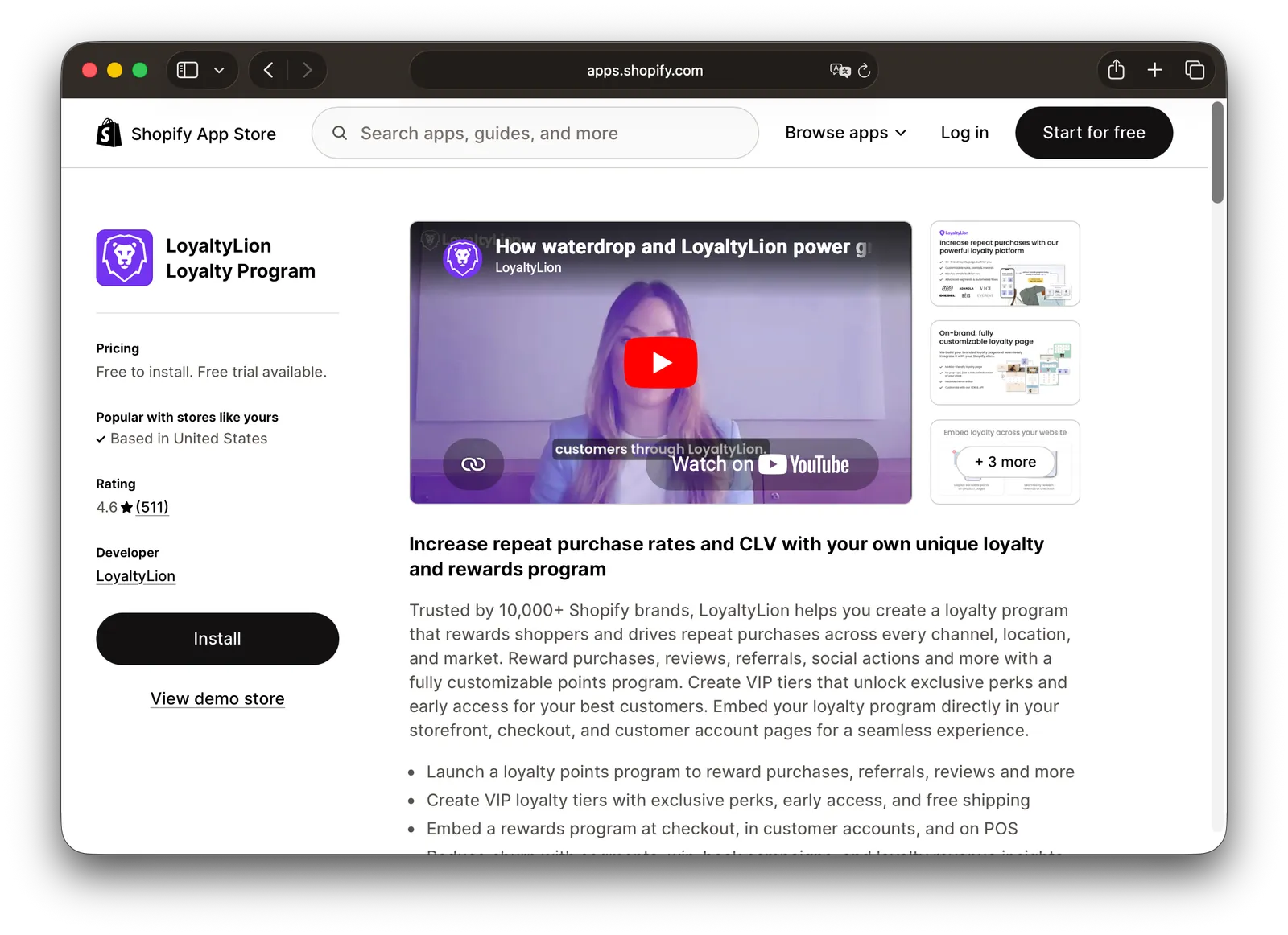
That is the real comparison. LoyaltyLion starts from loyalty. ReferralCandy starts from referral.
The issue is not always the tool. Sometimes it is what the tool is built around.
The clearest version came from the first conversation: a merchant who was already using LoyaltyLion and going through a larger process of rebuilding the loyalty side of the business. Here is how they described it:
"We have a loyalty program and a referral program that are tied together. We use LoyaltyLion for that. We're currently going through a process of revamping and rebuilding the loyalty piece. What we want to do, certainly in the short term, is uncouple referral from loyalty."
That word, uncouple, is the whole story.
They were not trying to rip out their loyalty program. They were trying to stop the referral program from being trapped inside it. The loyalty work could take time. The referral offer should not have to wait for it.
Later in that same conversation, they put the desired program in very plain terms: "You get £5, I get £5, something like that" and then said they wanted to move "away from the points-based system that we're locked to because with LoyaltyLion, they're tied together."
That is a common merchant instinct. When someone is referring a friend, the offer should be immediately understandable. Give £5, get £5. Give $20, get $20. Share this link, your friend gets something, you get something. Points can work well for repeat purchase behavior, but they can make referral feel like it belongs to the loyalty ledger instead of a customer-to-customer recommendation.
Referral has to be simple enough to run while loyalty is messy.
Loyalty programs often have a lot of moving parts. Tiers, points, VIP rules, birthday rewards, account pages, earn rules, redemption rules. None of that is wrong. But it means the program becomes a system.
Referral usually needs the opposite. The moment a customer is ready to recommend you, the path should be short.
The merchant said the current setup "just doesn't work for what we need in the short term, which is a quick-and-dirty, super simple give-get mechanism."
I would not have chosen "quick-and-dirty" as the product copy, but I understand exactly what they meant. The business did not need a full loyalty redesign before it could ask happy customers to bring in friends. It needed the referral piece to move on its own.
That is where loyalty-first platforms can become awkward for referral-first work. The referral program inherits the shape of the loyalty program. If loyalty is being rebuilt, referral waits. If loyalty is points-based, referral becomes points-based. If the account area is the center of the experience, the referral ask lives there too, even when a simpler flow would do the job better.
Even happy LoyaltyLion customers may want referral somewhere else.
The fairest part of the conversation is that the merchant did not frame LoyaltyLion as the enemy. They said:
"We're happy with LoyaltyLion as a loyalty tool. The issue is how we use it, not with the tool."
That is the distinction merchants should pay attention to. A tool can be good at loyalty and still not be the right place to run referral.
In fact, their likely path was not to replace LoyaltyLion entirely. It was to keep LoyaltyLion for the loyalty piece and "turn off the referral part of LoyaltyLion."
That is a very normal decision. You do not have to make one platform responsible for every customer growth motion just because it technically can. If the loyalty program needs points, tiers, and account-area mechanics, use a loyalty tool. If the referral program needs a simple give-get offer that can be launched, tested, and understood quickly, use a referral tool.
The cost feels different when referral is only one part of the bill.
Price came up too, as it usually does.
In that same conversation, the merchant estimated the LoyaltyLion setup at about £1,100 a month, roughly $1,300 or a bit more, for "the whole loyalty and referral piece." They also described it as an annual contract billed monthly.
That may be a reasonable price for a brand that is getting real value from the whole loyalty program. The problem is when referral is the part you are trying to fix. Then the merchant is not just asking, "Is this platform worth the money?" They are asking, "Why is the referral program tied to a bigger loyalty contract when all I want is a simple give-get flow?"
That is a different kind of cost. It is not only the monthly number. It is the fact that the referral decision becomes bundled into the loyalty decision.
This is why the comparison comes up early.
In a separate conversation, another merchant was still evaluating options and asked the question directly. Other founders had mentioned Smile.io and LoyaltyLion. The question was simple: what is the main difference with ReferralCandy?
My answer on those calls is usually some version of this: Smile and LoyaltyLion are loyalty apps that have a referral component. If you want to build a loyalty program, they are serious options. If you want to focus on referral, ReferralCandy is built around that job first.
That sounds obvious, but it saves a lot of confusion. A founder shopping for "referrals" can end up looking at loyalty platforms, affiliate platforms, influencer platforms, and review suites, because all of them have some version of a referral feature. The category gets blurry fast. The better question is not, "Does this product have referrals?" It is, "What does this product assume I am really trying to build?"
LoyaltyLion assumes loyalty is the center. ReferralCandy assumes referral is the center.
Where ReferralCandy is actually different.
ReferralCandy is not trying to be the same kind of points-based loyalty platform as LoyaltyLion. That is the point.
The core job is to help a merchant turn happy customers into new customers through referral. The offer can be simple. The program can stand on its own. The merchant can change the reward, share the campaign, see the people referring, and understand what the program is doing without treating referral as one tab inside a larger loyalty rebuild.
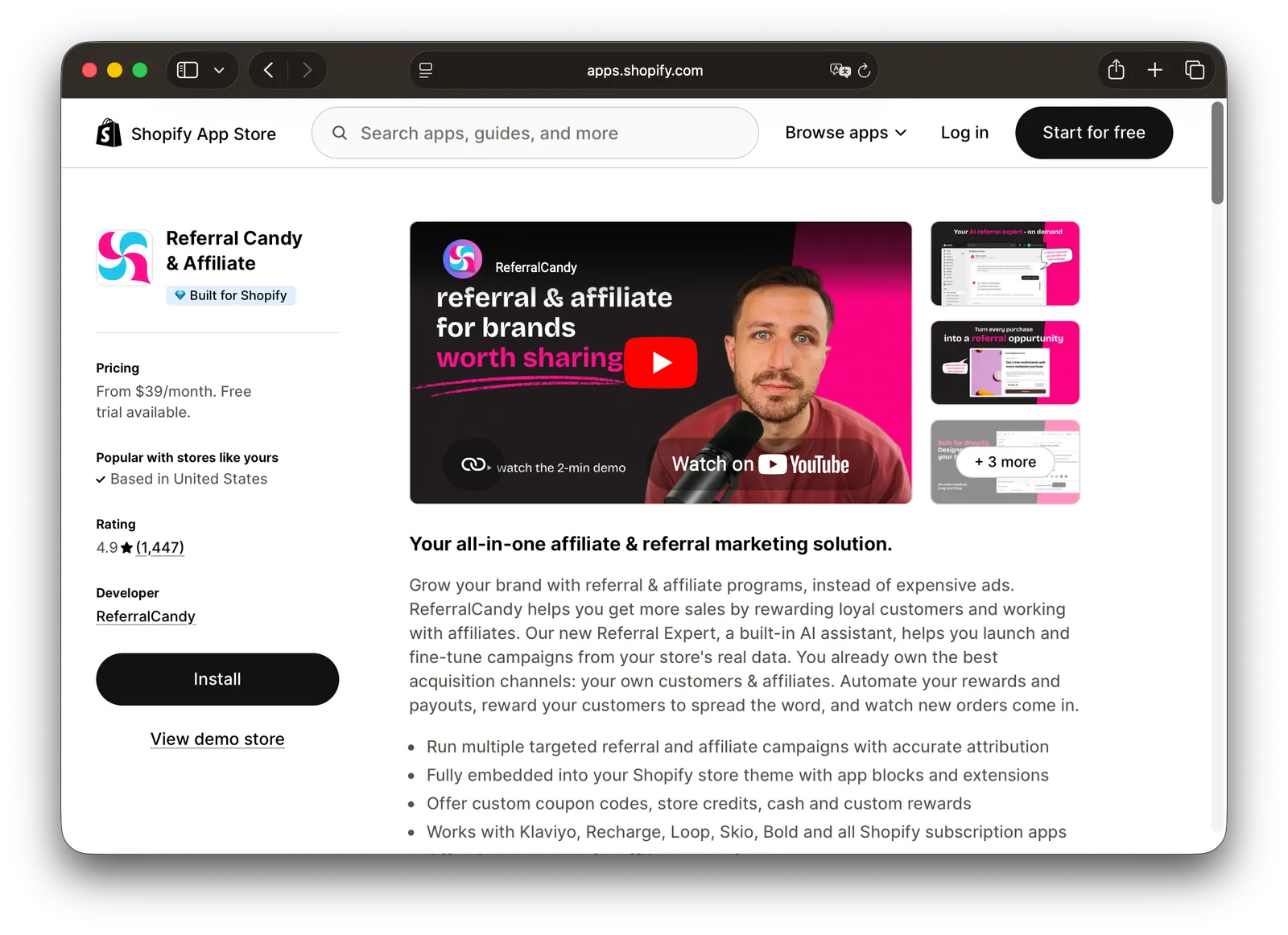
It is also built for the kind of Shopify merchant who wants to launch quickly and stay in control. Pricing is public and starts at $39 a month. There is no annual contract. You do not need to commit to a year of a referral setup before you know whether it works.
The deeper difference is ownership. If you want to run referral as its own growth channel, it should not depend on whether your points program is ready, whether your account area is being redesigned, or whether your loyalty contract makes sense for the next twelve months.
So who should pick which?
If you want a points-based loyalty program, and referral is mostly there to support that larger loyalty strategy, LoyaltyLion can be a good fit. The merchants I spoke with did not dispute that. One of them was happy to keep it for loyalty.
But if what you really want is a referral program, especially a simple give-get program that does not need to be tied to points, tiers, or a wider loyalty rebuild, that is where ReferralCandy makes more sense.
The merchants who compare the two are not always trying to leave LoyaltyLion completely. Sometimes they are trying to make a more precise decision: keep loyalty where loyalty belongs, and give referral a tool that treats referral as the main event.