
Key Takeaways
- Ecommerce brands need Shopify-native apps with automated rewards. SaaS and B2B companies need embeddable widgets and CRM integrations -- different business models require different tools.
- All-in-one loyalty suites bundle referrals with points and reviews, but standalone referral platforms typically offer deeper customization for the referral program itself.
- Most tools offer free trials or free tiers. Test with your actual customers before committing to annual pricing.
- The best referral app is the one your customers will actually use. Complexity kills participation rates.
Every ecommerce brand, SaaS company, and B2B firm knows referrals work. Wharton research puts it at 16% higher lifetime value for referred customers. The problem is picking the right tool from a market that's gotten crowded.
There are dozens of referral apps available in 2026, and they're not interchangeable. Some are built for Shopify stores. Others are designed for SaaS products or B2B services. A few try to do everything. We evaluated 12 tools based on platform fit, ease of setup, reward flexibility, and how well they actually serve the business model they claim to support.
1. ReferralCandy
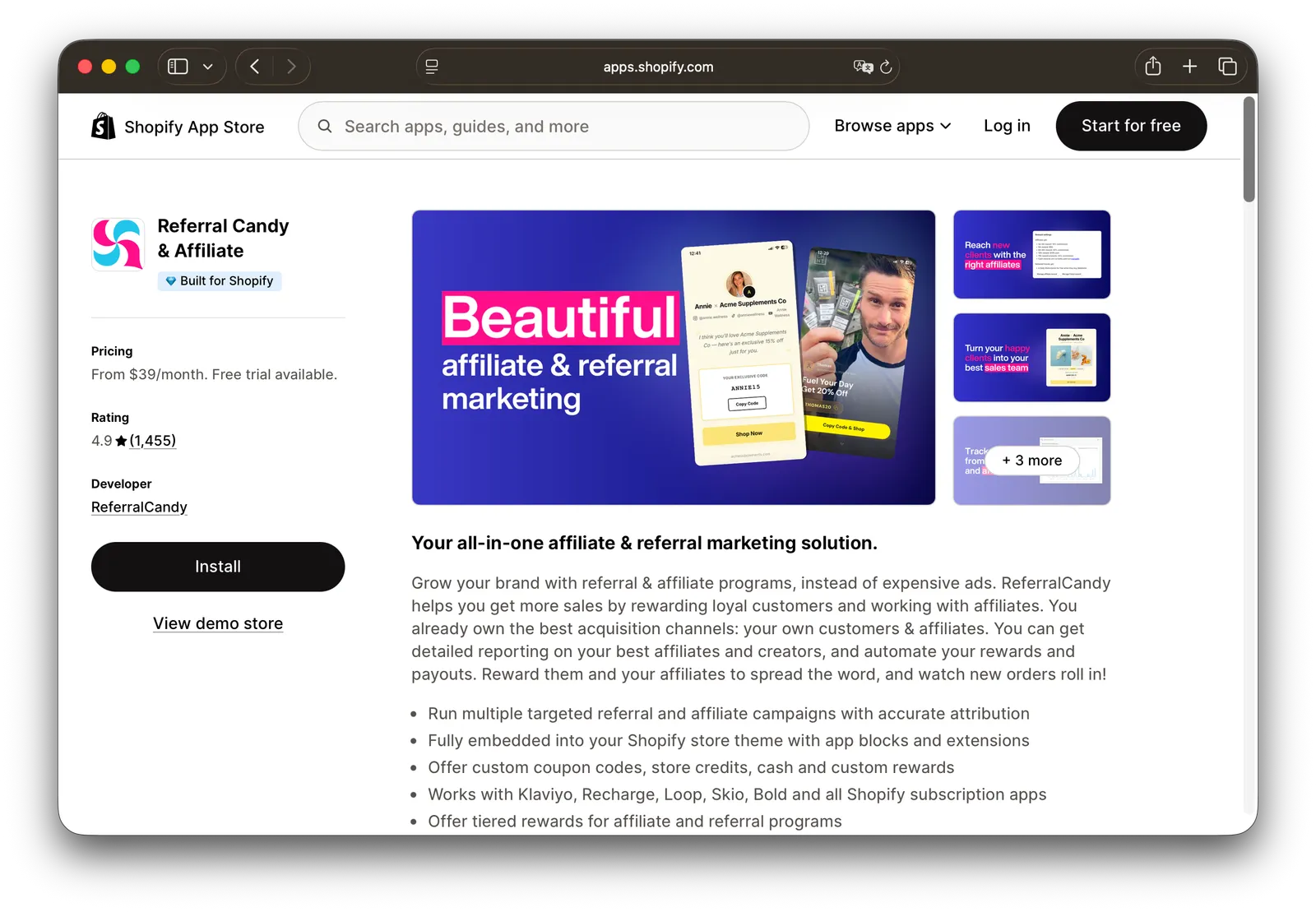
Best for: Ecommerce brands on Shopify, BigCommerce, WooCommerce and custom built stores that want referral and affiliate programs running from one platform.
ReferralCandy handles both sides of word-of-mouth growth. The referral program automates the post-purchase flow -- customers get unique links, share them, and both parties get rewarded automatically. Cash, store discounts, or custom rewards. No manual approval queues unless you want them.
ReferralCandy's affiliate program software lets you recruit influencers, content creators, and brand ambassadors alongside your customer referrals. You set commission structures (flat fee or percentage), manage affiliate applications, and track performance -- all from the same dashboard. Affiliates get their own portal with links, assets, and payout history. This means you don't need separate tools for customer referrals and affiliate partnerships.
Other features that matter: automated fraud detection flags suspicious referrals before payouts go out. A/B testing on referral widgets and landing pages lets you optimize conversion rates over time. The analytics dashboard breaks down revenue by channel so you can see exactly what customers vs. affiliates are driving.
Setup is straightforward. Install the Shopify app, configure your reward and commission structures, customize the emails and landing pages, and you're live.
2. Friendbuy
Best for: Mid-market and enterprise DTC brands that need advanced segmentation and A/B testing.
Friendbuy positions itself as an enterprise referral and loyalty platform. It supports both referral programs and loyalty programs, which appeals to larger brands that want a single vendor for both. The A/B testing capabilities let you test different reward amounts, creative, and flows to optimize conversion.
The tradeoff is complexity. Setup takes longer than simpler tools, and pricing reflects the enterprise positioning. If you're a smaller store, you're probably paying for features you won't use.
3. Yotpo
Best for: Brands already using Yotpo for reviews or SMS that want referrals in the same platform.
Yotpo started as a reviews platform and expanded into loyalty, referrals, SMS, and subscriptions. The referral product is part of their broader loyalty suite. The advantage is data sharing across products -- your referral program can draw on review data, purchase history, and SMS engagement all in one dashboard.
The disadvantage: referrals aren't Yotpo's core product. If you only need a referral program and nothing else, you're buying a suite to use one feature.
4. Smile.io
Best for: Small to mid-size Shopify stores that want a points-based loyalty program with referral functionality built in.
Smile.io is primarily a loyalty platform. Customers earn points for purchases, social follows, birthdays -- and referrals. The referral piece is one component of a broader points economy. This works well if you want referrals integrated into a larger retention strategy rather than as a standalone channel.
Smile offers a free tier, which makes it accessible for stores still testing whether loyalty and referrals make sense for their business.
5. LoyaltyLion
Best for: Shopify and BigCommerce stores focused on customer retention, with referrals as one piece of the loyalty puzzle.
LoyaltyLion is another loyalty-first platform with referral capabilities. Points, tiers, and referral rewards all live inside the same widget, so customers see referrals alongside their points balance and available rewards.
Where LoyaltyLion stands out is its analytics. The platform shows how loyalty and referral activities correlate with repeat purchase behavior. If you're trying to understand the long-term value of your referred customers -- not just the initial conversion -- that data is useful.
6. Referral Rock
Best for: B2B companies, service businesses, and non-ecommerce brands that need a referral program outside the Shopify world.
Most referral tools are built for ecommerce. Referral Rock is one of the few that works well for B2B, professional services, and SaaS. It supports multiple program types -- one-sided, two-sided, tiered, and multi-step rewards. The platform integrates with CRMs like HubSpot and Salesforce, which matters for B2B where the sales cycle is longer and tracking needs to connect to your pipeline.
If you're running a referral program for a consulting firm, agency, or B2B SaaS product, start here.
7. GrowSurf
Best for: SaaS companies and tech startups that want to embed referral mechanics directly into their web app.
GrowSurf is purpose-built for SaaS referral programs. Instead of post-purchase flows (which don't apply to subscription software), it provides embeddable widgets and webhooks that integrate into your product's user experience. Referral prompts can appear inside your app, at signup, or after key actions.
No loyalty points. No reviews. No extras. Just referrals. For SaaS companies that want to add a referral channel without adopting an entire marketing suite, that focus is a strength.
8. Viral Loops
Best for: Product launches, waitlists, and pre-launch campaigns that use referral mechanics to build buzz.
Viral Loops specializes in viral campaigns and pre-launch referral programs. Waitlist leaderboards where people move up by referring friends. Early access programs that reward sharing. The platform offers campaign templates designed for specific launch scenarios.
This isn't a tool for ongoing referral programs. It's designed for moments -- launching a product, building a waitlist, running a contest. If you need a one-time viral push rather than a persistent referral channel, Viral Loops is purpose-built for that.
9. Mention Me
Best for: Enterprise brands, particularly in the UK and Europe, that want referrals driven by offline word-of-mouth.
Mention Me's differentiator is "name sharing." Instead of requiring customers to share a link or code, advocates simply tell friends to mention their name at checkout. The platform matches the referral using the name. It reduces friction for word-of-mouth that happens in person or over the phone, where sharing a URL feels awkward.
Pricing is enterprise-level, and the platform is strongest in European markets.
10. Extole
Best for: Large enterprises that need compliance controls and multi-channel referral support.
Extole is an enterprise advocate marketing platform. It supports referral programs, influencer programs, and brand ambassador initiatives. The platform includes fraud detection, compliance features, and detailed analytics -- requirements for larger companies operating across multiple markets.
This is not a self-serve tool you set up in an afternoon. Extole involves onboarding, strategy sessions, and dedicated support. The investment matches the scale.
11. Prefinery
Best for: Startups managing beta access or waitlists who want referral-driven prioritization.
Prefinery combines waitlist management with referral mechanics. People sign up for early access and move up the list by referring others. Specific use case, but one that Prefinery handles well -- the platform manages the queue, referral tracking, and access distribution.
Once your product launches and the waitlist phase ends, you'll need a different tool for ongoing referrals. This is a launch tool, not a long-term platform.
12. Talkable
Best for: Ecommerce brands that want granular A/B testing and segmentation in their referral program.
Talkable is a referral platform for ecommerce with a strong focus on optimization. A/B testing across referral offers, creative, and user flows. You can segment customers and show different referral offers based on purchase history, order value, or customer tier.
The segmentation capabilities make Talkable appealing for brands that have outgrown simpler tools and want to squeeze more performance out of their referral channel. Setup is more involved than plug-and-play options, but the testing capabilities can justify the effort.
Frequently Asked Questions
What's the difference between a referral app and a loyalty app?
A referral app focuses on acquiring new customers through word-of-mouth -- existing customers share links or codes and earn rewards for each successful referral. A loyalty app rewards repeat purchase behavior with points, tiers, and perks. Some platforms combine both, but the core mechanics are different. Apps like ReferralCandy approach customer loyalty by allowing customers to earn store credit they can use in future purchases when they refer a friend.
Can I run a referral program without a dedicated app?
You can try with spreadsheets, manual tracking, and custom discount codes. In practice, this breaks down fast. Automated referral apps handle link generation, attribution, fraud detection, and reward fulfillment -- the time savings alone justify the cost for most businesses.
How do I choose between a standalone referral tool and an all-in-one suite?
If referrals are your primary growth channel, a dedicated tool gives you more control and deeper features. If you already use a platform like Yotpo for reviews and want to add referrals without another vendor, a suite makes sense. Don't pay for a suite if you only need one feature. Apps like ReferralCandy that are 100% dedicated to word-of-mouth marketing are your best choice if you want to combine affiliate and referral marketing in one app.
What referral reward structure works best?
Two-sided rewards (both the referrer and the friend get something) consistently outperform one-sided ones. Cash and store credit tend to drive more sharing than percentage discounts. Test different amounts -- the optimal reward isn't always the most generous one.
How long does it take to set up a referral program?
Self-serve ecommerce tools can be live in a few hours. Enterprise platforms like Extole or Mention Me involve longer onboarding-- typically weeks, including strategy and integration work. On the other hand, ReferralCandy allows brands to go live almost immediately. Match the tool's complexity to your team's capacity.
Do referral apps work for B2B companies?
Yes, but you need a tool built for longer sales cycles and CRM integration. Referral Rock and GrowSurf are better fits for B2B than ecommerce-focused apps. B2B referral rewards also shift -- account credits, gift cards, or cash rather than product discounts.
Conclusion
The right referral app depends on what you sell and how your customers buy. Ecommerce brands on Shopify should start with a platform built for that workflow. SaaS companies need in-app embeddable tools. B2B businesses need CRM-connected platforms that handle longer sales cycles.
Pick the tool that fits your business model, start with a simple reward structure, and optimize from there. A basic referral program that's live today will outperform a perfect one that's still in planning next quarter.