Key Takeaways
- Lifecycle email marketing ecommerce strategies nurture customers through every stage of their journey, from awareness to advocacy, delivering personalized messages that drive engagement and revenue.
- Automated email sequences can generate 320% more revenue than standalone campaigns, with properly segmented lifecycle emails achieving open rates up to 50% higher than generic broadcasts.
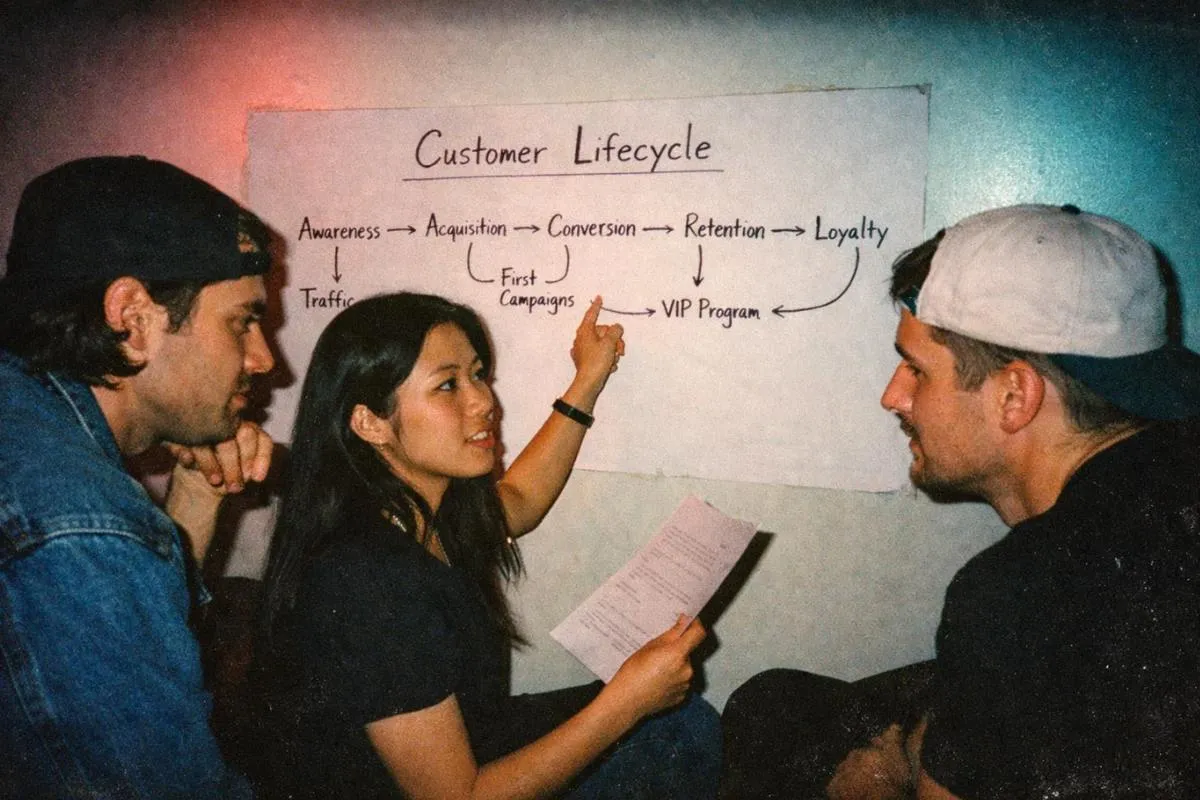
- The seven critical stages of ecommerce lifecycle marketing include awareness, consideration, conversion, onboarding, retention, loyalty, and advocacy—each requiring tailored messaging and timing.
- Advanced personalization using behavioral triggers, purchase history, and predictive analytics can increase conversion rates by 202% while reducing customer acquisition costs.
- Integration with referral programs and loyalty initiatives amplifies lifecycle marketing effectiveness, turning satisfied customers into brand advocates who generate sustainable growth.
Lifecycle Email Marketing Ecommerce: The 2026 Complete Guide to Maximizing Customer Value
Lifecycle email marketing ecommerce has evolved from a nice-to-have tactic into the backbone of profitable online retail operations. In 2026, successful ecommerce brands understand that customer relationships don't begin and end with a single transaction—they unfold across a carefully orchestrated journey that transforms first-time browsers into loyal brand advocates. Unlike traditional email blasts that treat every subscriber identically, lifecycle email marketing delivers the right message to the right person at precisely the right moment in their customer journey.
The numbers tell a compelling story: ecommerce businesses implementing comprehensive lifecycle email strategies report average revenue increases of 45-60% within the first year, with some high-performing brands seeing even more dramatic results. These automated yet personalized email sequences work tirelessly in the background, nurturing relationships, recovering abandoned carts, re-engaging dormant customers, and turning one-time buyers into repeat purchasers. This guide will walk you through everything you need to build, optimize, and scale a lifecycle email marketing program that drives measurable results for your ecommerce business.
Understanding Lifecycle Email Marketing for Ecommerce
Lifecycle email marketing ecommerce represents a strategic approach to customer communication that recognizes where each individual stands in their relationship with your brand. Rather than sending the same promotional message to your entire list, you're creating targeted email sequences that align with specific customer behaviors, purchase patterns, and engagement levels.
Think of it as a conversation that evolves naturally over time. A brand-new subscriber receives welcome emails introducing your value proposition and best-selling products. A customer who just made their first purchase gets onboarding content and complementary product suggestions. Someone who hasn't ordered in six months receives a re-engagement campaign with special incentives. Each touchpoint builds upon the previous one, creating a cohesive experience that feels personal rather than transactional.
Why Lifecycle Marketing Outperforms Traditional Email Campaigns
Traditional batch-and-blast email campaigns operate on the assumption that all subscribers have identical needs and interests. Lifecycle marketing acknowledges the reality that your audience exists in different stages of awareness, consideration, and commitment. This fundamental shift in perspective yields substantial improvements across key metrics:
Relevance drives engagement. When emails address the recipient's current situation—whether they're researching options, ready to buy, or considering a repeat purchase—open rates increase by an average of 47% compared to generic campaigns. Click-through rates see similar improvements, often doubling or tripling when content matches the customer's lifecycle stage.
Automation ensures consistency. Once configured, lifecycle email sequences run automatically based on triggers like sign-ups, purchases, or inactivity periods. This means every customer receives timely, appropriate communication without requiring manual intervention from your marketing team. The result is better customer experiences and more efficient resource allocation.
Data-driven optimization becomes possible. Because lifecycle campaigns follow predictable patterns, you can systematically test and refine each stage. A/B testing subject lines, send times, content variations, and offers reveals what resonates at each point in the customer journey, enabling continuous improvement that compounds over time.
The Seven Stages of Ecommerce Customer Lifecycle
Effective lifecycle email marketing ecommerce strategies address seven distinct stages that customers progress through. Understanding these stages allows you to map appropriate email sequences to each phase of the journey.
Stage 1: Awareness
At the awareness stage, potential customers have just discovered your brand. They might have signed up for your newsletter, downloaded a resource, or engaged with your content on social media. Your email objectives here focus on education and relationship building rather than immediate sales.
Welcome email sequences perform exceptionally well during this stage, with open rates averaging 68%—significantly higher than standard promotional emails. A strong welcome series typically includes three to five emails sent over 7-14 days, introducing your brand story, highlighting your unique value proposition, showcasing social proof, and offering a first-purchase incentive.
The key is setting proper expectations while building trust. Let subscribers know what type of content they'll receive and how often. Share customer testimonials and user-generated content that demonstrates real people achieving real results with your products. Provide valuable information that helps them solve problems, even if they're not ready to buy yet.
Stage 2: Consideration
During consideration, prospects are actively evaluating whether your products meet their needs. They're browsing your website, reading product descriptions, comparing options, and possibly checking out competitor offerings. Your emails should facilitate this research process while gently guiding toward purchase.
Browse abandonment emails work particularly well here. When someone views multiple products but doesn't add anything to their cart, you can send targeted messages showcasing those specific items along with complementary products, customer reviews, and comparison information. These emails achieve conversion rates of 8-12% when sent within 24 hours of the browsing session.
Educational content also shines during consideration. Buying guides, product comparison charts, video demonstrations, and FAQ resources help prospects make informed decisions. By positioning yourself as a helpful advisor rather than a pushy salesperson, you build the trust necessary for conversion.
Stage 3: Conversion
The conversion stage represents the critical moment when consideration transforms into action. Cart abandonment emails are the workhorse of this stage, recovering an average of 15-20% of abandoned purchases when properly implemented.
A high-performing cart abandonment sequence typically includes three emails: the first sent 1-2 hours after abandonment, reminding customers of items left behind and addressing common objections; the second sent 24 hours later, perhaps including customer reviews or social proof for the abandoned items; and the third sent 48-72 hours after abandonment, potentially offering a time-limited discount or free shipping to overcome price resistance.
Checkout optimization emails also matter here. If customers repeatedly abandon at the same checkout step, you can send targeted messages addressing specific concerns—whether that's shipping costs, return policies, or payment security. Real-time personalization based on abandonment behavior can increase recovery rates by an additional 30%.
Stage 4: Onboarding
Congratulations—you've made the sale! But the lifecycle journey is just beginning. The onboarding stage focuses on ensuring customers get maximum value from their purchase, reducing buyer's remorse, and laying the foundation for future purchases.
Post-purchase email sequences should start immediately after order confirmation. Send shipping updates, delivery notifications, and product care instructions. Once the product arrives, provide setup guides, usage tips, and troubleshooting resources. For complex products, consider a drip sequence of educational content that helps customers discover advanced features over time.
This is also the perfect time to request reviews and feedback. Customers who have just received and started using your product are in the ideal mindset to share their experiences. Review request emails sent 7-14 days after delivery achieve response rates 3-4 times higher than requests sent at other times. This user-generated content becomes valuable social proof for future customers in the awareness and consideration stages.
Stage 5: Retention
Retention focuses on transforming one-time buyers into repeat customers. This stage is where customer retention strategies become crucial, as acquiring new customers costs 5-7 times more than retaining existing ones.
Replenishment reminders work brilliantly for consumable products. If you sell items that need regular replacement—skincare products, supplements, pet food, coffee—you can predict when customers will run low and send timely reorder reminders. These emails achieve conversion rates of 25-40% because they arrive exactly when customers need them.
Cross-sell and upsell sequences leverage purchase history to recommend complementary products. If someone bought a camera, suggest lenses, bags, and memory cards. If they purchased winter boots, showcase waterproofing spray and warm socks. The key is relevance—recommendations should genuinely enhance the customer's experience with their original purchase.
Win-back campaigns target customers who haven't purchased in an unusually long time based on your typical purchase cycle. A "We miss you" email with a special offer can re-engage 10-15% of dormant customers, bringing them back into the active customer fold.
Stage 6: Loyalty
Loyal customers represent your most valuable asset. They purchase more frequently, spend more per transaction, and cost less to serve. The loyalty stage focuses on recognizing and rewarding these valuable relationships while deepening emotional connections to your brand.
VIP program communications should make top customers feel genuinely special. Early access to new products, exclusive discounts, birthday rewards, and surprise gifts all reinforce that their loyalty matters. Segment your most valuable customers and create premium experiences that aren't available to everyone.
Milestone emails celebrate customer achievements—their first anniversary as a customer, their tenth purchase, or reaching a spending threshold. These moments create emotional touchpoints that transcend transactional relationships. Including a special offer or unexpected reward amplifies the positive feelings associated with these milestones.
Integrating loyalty programs for ecommerce into your email strategy creates a virtuous cycle where customers earn rewards for purchases, engagement, and referrals, then receive targeted emails encouraging them to redeem those rewards, driving additional transactions.
Stage 7: Advocacy
The final stage transforms satisfied customers into active brand advocates who promote your products to their networks. This is where lifecycle email marketing ecommerce intersects powerfully with referral marketing, creating sustainable growth engines.
Referral program invitation emails should target your happiest customers—those with high satisfaction scores, multiple purchases, or positive review history. The timing matters: send these invitations after a positive interaction, like receiving a 5-star review or completing a successful purchase. When customers are already feeling good about your brand, they're much more receptive to sharing it with friends.
Social sharing campaigns encourage customers to post about their purchases on social media. User-generated content campaigns, photo contests, and hashtag initiatives all provide reasons for customers to create and share content featuring your products. Emails that make sharing easy—with pre-written captions, direct social media links, and incentives for participation—can increase social mentions by 200-300%.
Building an effective referral program that integrates seamlessly with your lifecycle email strategy ensures you're systematically converting satisfied customers into active promoters who drive new customer acquisition at a fraction of traditional marketing costs.
Building Your Lifecycle Email Marketing Infrastructure
Implementing lifecycle email marketing ecommerce requires the right technology foundation, clear processes, and ongoing optimization. Let's break down the essential components.
Choosing the Right Email Marketing Platform
Your email service provider (ESP) needs specific capabilities to support sophisticated lifecycle marketing. Look for platforms that offer robust automation workflows, behavioral triggering, advanced segmentation, dynamic content personalization, and comprehensive analytics.
Integration capabilities are equally important. Your ESP should connect seamlessly with your ecommerce platform (Shopify, WooCommerce, BigCommerce, etc.), customer data platform, analytics tools, and referral program software. These integrations enable the data flow necessary for truly personalized lifecycle campaigns.
Popular options in 2026 include Klaviyo, which specializes in ecommerce with powerful predictive analytics; GetResponse, offering omnichannel capabilities beyond just email; and Drip, known for its sophisticated automation builder. Evaluate options based on your specific needs, technical resources, and budget constraints.
Data Collection and Segmentation Strategy
Effective lifecycle marketing depends on comprehensive customer data. Beyond basic information like name and email address, you need behavioral data (browsing history, purchase patterns, email engagement), demographic data (location, age, preferences), and transactional data (order value, frequency, product categories).
Implement progressive profiling to gradually collect information over time rather than overwhelming new subscribers with lengthy forms. Each interaction—whether a purchase, survey response, or preference center update—adds to the customer profile, enabling increasingly personalized communication.
Create dynamic segments that automatically update based on customer behavior. Rather than manually managing lists, set up segments like "purchased in last 30 days," "high lifetime value," "engaged but never purchased," or "at risk of churning." These segments ensure customers always receive emails appropriate to their current lifecycle stage.
Creating Compelling Email Content
Content quality makes or breaks lifecycle email campaigns. Every email should provide value—whether that's education, entertainment, exclusive offers, or helpful information. Generic, sales-focused messages get ignored; valuable, relevant content gets opened, read, and acted upon.
Personalization extends beyond inserting first names in subject lines. Use purchase history to recommend relevant products. Reference browsing behavior to highlight items customers have shown interest in. Acknowledge customer milestones and preferences. In 2026, customers expect this level of personalization—generic emails feel lazy and impersonal. As more ecommerce brands use AI to draft lifecycle sequences at scale, it becomes equally important to rewrite AI content in an authentic human tone to ensure messages retain warmth, emotional nuance, and authentic brand voice across every stage of the customer journey.
Visual design matters too. Mobile optimization is non-negotiable, with 65-70% of emails now opened on mobile devices. Use responsive templates that look great on any screen size. Keep subject lines under 40 characters for mobile visibility. Use clear, tappable calls-to-action that work easily on touchscreens.
Automation Workflows and Trigger Setup
Automation transforms lifecycle marketing from a manual, labor-intensive process into a scalable system. Map out the customer journey and identify trigger points where automated emails should deploy.
Common triggers include: email subscription (welcome series), first purchase (onboarding sequence), cart abandonment (recovery emails), product view without purchase (browse abandonment), time since last purchase (replenishment or win-back), milestone achievement (loyalty emails), and referral program qualification (advocacy invitation).
Build workflows that feel like natural conversations rather than robotic sequences. Include conditional logic that adapts based on customer actions. If someone makes a purchase after receiving a cart abandonment email, remove them from that sequence and move them into the post-purchase flow. This prevents awkward situations like sending cart abandonment reminders to customers who already bought.
Advanced Lifecycle Email Marketing Tactics for 2026
Beyond the fundamentals, sophisticated ecommerce brands are implementing advanced tactics that maximize the effectiveness of their lifecycle email marketing ecommerce programs.
Predictive Analytics and AI-Powered Personalization
Artificial intelligence and machine learning have revolutionized lifecycle marketing capabilities. Predictive analytics can forecast which customers are likely to churn, which are ready for upsell offers, and which products individual customers are most likely to purchase next.
These predictions enable proactive rather than reactive marketing. Instead of waiting for a customer to become dormant before sending win-back emails, you can identify early warning signs and intervene with retention-focused content before they disengage. Instead of guessing which products to recommend, AI analyzes purchase patterns across your entire customer base to suggest items with the highest conversion probability.
Optimal send time prediction uses individual engagement patterns to determine when each customer is most likely to open and act on emails. Rather than sending all emails at the same time, the system staggers delivery based on when each recipient typically engages with email. This simple optimization can improve open rates by 15-25%.
Omnichannel Integration
While this guide focuses on email, the most effective lifecycle marketing programs integrate multiple channels into cohesive customer experiences. Email works in concert with SMS, push notifications, social media retargeting, and direct mail to create consistent messaging across touchpoints.
For example, a cart abandonment campaign might start with an email after two hours, followed by an SMS reminder after 24 hours if the email wasn't opened, then a retargeting ad on social media if the cart remains abandoned after 48 hours. Each channel reinforces the others, increasing overall recovery rates.
The key is maintaining message consistency while leveraging each channel's unique strengths. Email excels at detailed information and storytelling. SMS works for urgent, time-sensitive messages. Push notifications deliver real-time updates. Social retargeting provides visual reminders. Together, they create a comprehensive communication ecosystem.
Zero-Party Data Collection
With increasing privacy regulations and the deprecation of third-party cookies, zero-party data—information customers intentionally share with brands—has become invaluable. Lifecycle emails provide natural opportunities to collect this data through preference centers, surveys, quizzes, and interactive content.
A beauty brand might send a skin type quiz that helps customers identify their ideal products while simultaneously collecting data that enables better personalization. A pet supply store could ask about pet breeds, ages, and dietary restrictions. This information makes future emails dramatically more relevant.
The value exchange must be clear: customers share information in return for better recommendations, exclusive content, or personalized experiences. When positioned correctly, customers willingly provide detailed information that enables superior lifecycle marketing.
Dynamic Content Blocks
Rather than creating entirely separate emails for different segments, dynamic content blocks allow you to customize portions of a single email based on recipient characteristics. This approach reduces production time while maintaining personalization.
A monthly newsletter might include different product recommendations for men and women, different content for customers in different regions, and different offers based on purchase history—all within the same email template. The recipient sees a fully personalized message, but you're managing one campaign instead of dozens.
Dynamic content works particularly well for lifecycle stages that have some overlap. A retention email might include different product recommendations based on past purchases, different messaging based on customer lifetime value, and different calls-to-action based on engagement level—all automatically populated based on customer data.
Measuring and Optimizing Lifecycle Email Performance
Data-driven optimization separates good lifecycle email marketing ecommerce programs from great ones. Consistent measurement and testing enable continuous improvement that compounds over time.
Key Performance Indicators to Track
Different lifecycle stages require different success metrics. Welcome emails should be measured on engagement rates and first purchase conversion. Cart abandonment focuses on recovery rate and recovered revenue. Retention campaigns track repeat purchase rate and time between orders. Advocacy emails measure referral generation and social sharing.
Overall program health requires monitoring: email deliverability rate (aim for 95%+), list growth rate, engagement rate by segment, revenue per email sent, customer lifetime value by acquisition source, and churn rate by cohort.
Attribution modeling helps understand how lifecycle emails contribute to conversions. While a cart abandonment email might get last-click credit, earlier lifecycle touchpoints like welcome emails and educational content played crucial roles in the customer journey. Multi-touch attribution provides a more complete picture of email impact.
A/B Testing Framework
Systematic testing reveals what resonates with your specific audience. Test one variable at a time to isolate what drives results: subject lines, send times, email copy, calls-to-action, offers, visual design, and personalization elements.
Prioritize tests based on potential impact. Subject line tests affect open rates across all recipients. Offer tests influence conversion rates. Design tests impact engagement and click-through rates. Start with high-impact areas before optimizing smaller details.
Document test results and learnings in a centralized location. Over time, you'll build a knowledge base of what works for your audience, enabling better decision-making and faster optimization. Patterns emerge that inform strategy beyond just email—customer preferences revealed through testing often apply across marketing channels.
Continuous Improvement Process
Establish a regular review cadence—monthly or quarterly—to assess lifecycle program performance. Analyze metrics, identify underperforming sequences, and develop hypotheses for improvement. Implement changes, measure results, and iterate.
Customer feedback provides qualitative insights that complement quantitative data. Send surveys asking what content subscribers find valuable, what they'd like to see more or less of, and how their experience could improve. This direct input often reveals opportunities that data alone might miss.
Stay current with industry benchmarks to contextualize your performance. While your primary comparison should be against your own historical performance, understanding how you stack up against industry averages helps identify areas of strength and opportunities for improvement.
Common Lifecycle Email Marketing Mistakes to Avoid
Even experienced marketers sometimes fall into traps that undermine lifecycle email effectiveness. Awareness of these common mistakes helps you avoid them.
Over-Automation Without Personalization
Automation is powerful, but it shouldn't feel robotic. Emails that read like they came from a machine rather than a human damage brand perception. Balance efficiency with authenticity by using conversational language, acknowledging the automated nature when appropriate, and ensuring emails provide genuine value rather than just checking a marketing box.
Ignoring Email Fatigue
More emails don't always equal more revenue. There's a point where additional messages annoy rather than engage, leading to unsubscribes and decreased engagement across all emails. Implement frequency caps that limit how many emails individual customers receive within specific timeframes. Respect customer preferences—if someone indicates they want weekly rather than daily emails, honor that preference.
Failing to Clean Your Email List
Continuing to email inactive subscribers hurts deliverability and skews performance metrics. Implement sunset policies that remove or suppress subscribers who haven't engaged in 6-12 months after sending re-engagement campaigns. A smaller, engaged list outperforms a large, unengaged one every time.
Neglecting Mobile Optimization
With the majority of emails opened on mobile devices, mobile optimization isn't optional. Test every email on multiple devices before sending. Ensure buttons are large enough to tap easily, text is readable without zooming, and images load properly on cellular connections.
Inconsistent Branding and Messaging
Lifecycle emails should feel like they come from the same brand at every stage. Inconsistent design, tone, or messaging creates confusion and erodes trust. Develop email templates and style guidelines that ensure consistency while allowing flexibility for different lifecycle stages and campaigns.
Frequently Asked Questions
What is lifecycle email marketing ecommerce and how does it differ from regular email marketing?
Lifecycle email marketing ecommerce is a strategic approach that sends targeted, automated emails based on where customers are in their relationship with your brand—from first awareness through advocacy. Unlike regular email marketing that sends the same message to everyone, lifecycle marketing delivers personalized content that matches each customer's specific stage, behaviors, and needs. For example, a new subscriber receives welcome emails, while a repeat customer gets loyalty rewards and exclusive offers. This targeted approach generates significantly higher engagement rates, conversion rates, and customer lifetime value compared to generic batch-and-blast campaigns.
How many emails should be in a lifecycle marketing sequence?
The optimal number varies by lifecycle stage and customer behavior. Welcome sequences typically include 3-5 emails over 7-14 days. Cart abandonment sequences usually contain 3 emails sent over 3-4 days. Post-purchase onboarding might include 5-7 emails over 30 days. Retention and loyalty sequences can be ongoing with monthly or quarterly touchpoints. The key is providing value at each touchpoint rather than overwhelming customers with excessive emails. Test different frequencies with your audience and monitor engagement metrics to find the sweet spot where you're staying top-of-mind without causing fatigue.
What open rates and conversion rates should I expect from lifecycle emails?
Lifecycle emails consistently outperform broadcast campaigns. Welcome emails average 60-70% open rates with 15-25% click-through rates. Cart abandonment emails typically see 40-50% open rates and convert 15-20% of abandoned carts. Post-purchase emails achieve 50-60% open rates. Win-back campaigns see lower open rates (20-30%) but can re-engage 10-15% of dormant customers. These are general benchmarks—your actual results depend on industry, email quality, list health, and how well you've segmented and personalized your campaigns. Focus on improving your own metrics over time rather than fixating on industry averages.
How do I prevent lifecycle emails from feeling too automated or impersonal?
Make automated emails feel human by using conversational language, writing from a real person rather than a generic company address, including relevant personalization beyond just first names, and providing genuine value in every message. Reference specific customer actions or purchases to show you're paying attention. Use dynamic content to ensure recommendations are truly relevant. Include storytelling elements that create emotional connections. Allow customers to reply to emails and have someone actually respond. The goal is automation that scales personal attention, not automation that replaces human connection entirely.
What's the best way to integrate referral marketing with lifecycle email campaigns?
Referral program invitations work best when sent to satisfied customers at high-engagement moments. Include referral invitations in post-purchase sequences after customers have received and used their products (typically 7-14 days after delivery). Add referral CTAs to loyalty milestone emails celebrating customer anniversaries or achievement thresholds. Create dedicated advocacy campaigns for your highest-value customers with exclusive referral bonuses. The key is timing—invite customers to refer friends when they're already feeling positive about your brand, not randomly or when they're dealing with issues. Make sharing easy with pre-populated messages, direct sharing links, and clear value propositions for both the referrer and their friends.
How often should I update and optimize my lifecycle email sequences?
Review your core lifecycle sequences quarterly to ensure they remain relevant and effective. Analyze performance metrics, identify underperforming emails, and implement improvements. Conduct A/B tests monthly on high-impact elements like subject lines, offers, and calls-to-action. Update seasonal references, product recommendations, and promotional offers as needed—at minimum, review these elements monthly. Make immediate updates when you launch new products, change policies, or identify significant performance issues. The most successful programs treat lifecycle emails as living systems that require ongoing attention rather than "set it and forget it" automations.
Can small ecommerce businesses benefit from lifecycle email marketing, or is it only for large retailers?
Lifecycle email marketing actually provides even greater benefits for small ecommerce businesses because it maximizes the value of every customer relationship. Small businesses can't afford to waste opportunities or let customers slip away after a single purchase. Modern email platforms make sophisticated automation accessible at all budget levels—you don't need enterprise software to implement effective lifecycle campaigns. Start with the fundamentals: welcome sequences, cart abandonment, and post-purchase emails. These three alone can significantly impact revenue. As you grow, add retention, loyalty, and advocacy sequences. The personalized attention that lifecycle marketing enables helps small businesses compete effectively against larger competitors with bigger marketing budgets.
What role does AI play in lifecycle email marketing in 2026?
AI has become integral to advanced lifecycle email marketing, powering predictive analytics that forecast customer behavior, optimal send time algorithms that deliver emails when individuals are most likely to engage, product recommendation engines that suggest items based on complex purchase patterns, and automated content generation that personalizes email copy at scale. AI also enables dynamic segmentation that continuously updates based on real-time behavior, churn prediction that identifies at-risk customers before they disengage, and performance optimization that automatically adjusts campaigns based on results. However, AI works best when combined with human creativity and strategic thinking—use it to enhance rather than replace the human elements that create authentic customer connections.
Conclusion: Building Your Lifecycle Email Marketing Foundation
Lifecycle email marketing ecommerce represents one of the highest-ROI marketing strategies available to online retailers in 2026. By delivering the right message to the right customer at the right time, you transform email from an interruptive broadcast channel into a valuable communication system that customers actually appreciate and engage with.
The journey from basic email campaigns to sophisticated lifecycle marketing doesn't happen overnight. Start with the fundamentals—welcome sequences, cart abandonment, and post-purchase emails—then progressively add retention, loyalty, and advocacy programs as you build confidence and see results. Each stage you implement compounds the value of previous stages, creating a comprehensive system that nurtures customers from first awareness through active advocacy.
Remember that technology and tactics matter, but they're tools in service of a larger goal: building genuine relationships with customers. The most successful lifecycle email programs balance automation efficiency with authentic human connection, data-driven optimization with creative storytelling, and revenue generation with value creation.
Ready to transform your email marketing from random acts of communication into a strategic lifecycle system? Start by mapping your customer journey, identifying the critical touchpoints where email can add value, and implementing your first automated sequence. The customers you nurture today become the loyal advocates who drive sustainable growth tomorrow.
Want to maximize the impact of your lifecycle marketing by turning satisfied customers into active promoters? Explore how ReferralCandy can integrate seamlessly with your email sequences to create a powerful advocacy engine that drives new customer acquisition while rewarding your most loyal fans.