Key Takeaways
- Ecommerce attribution models help you understand which marketing channels and touchpoints drive conversions, enabling smarter budget allocation and strategy optimization.
- Multi-touch attribution models provide a more accurate picture of the customer journey than single-touch models by crediting multiple interactions along the path to purchase.
- Choosing the right attribution model depends on your business goals, sales cycle length, and the complexity of your customer journey.
- Modern attribution solutions leverage AI and machine learning to provide data-driven insights that adapt to your unique customer behavior patterns.
- Implementing proper attribution tracking requires technical setup, cross-platform data integration, and ongoing optimization to deliver actionable insights.
Ecommerce Attribution Models: The 2026 Guide to Understanding Your Customer Journey
You're spending thousands on Facebook ads, Google Shopping campaigns, email marketing, and influencer partnerships. But which channels are actually driving sales? More importantly, how do these channels work together to convert browsers into buyers?
This is where ecommerce attribution models become essential. In 2026, with customers interacting with brands across an average of 8-10 touchpoints before purchasing, understanding attribution isn't just helpful—it's critical for survival. Attribution models reveal the true value of each marketing channel and customer interaction, helping you allocate your budget to the strategies that actually generate revenue.
In this comprehensive guide, we'll explore the different types of ecommerce attribution models, how to choose the right one for your business, and how to implement attribution tracking that delivers actionable insights. Whether you're a growing DTC brand or an established ecommerce retailer, mastering attribution will transform how you approach marketing strategy and budget allocation.
What Are Ecommerce Attribution Models?
Ecommerce attribution models are frameworks that assign credit to different marketing touchpoints along the customer journey. Think of them as the rules that determine which channels get recognition (and budget) for driving a sale.
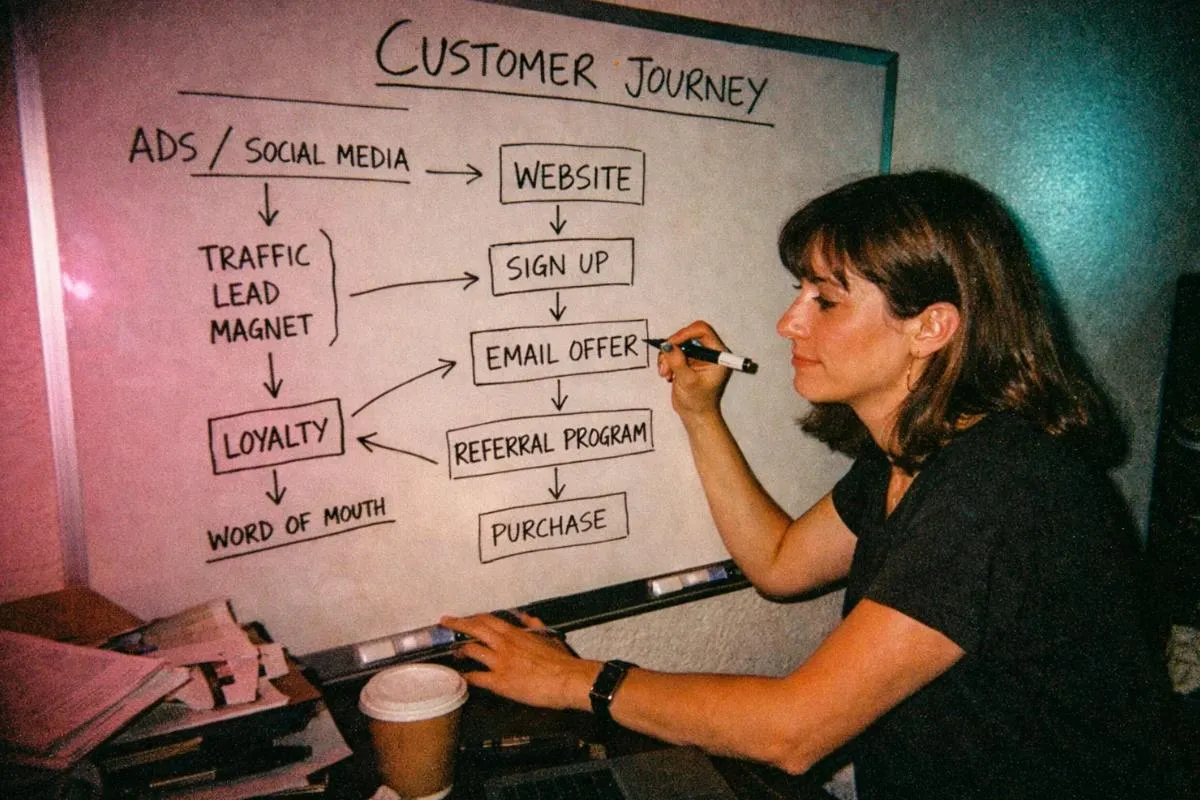
Here's a simple example: A customer discovers your brand through an Instagram ad, clicks but doesn't buy. Three days later, they search for your brand on Google and click your organic listing. A week later, they receive your email newsletter, click through, and make a purchase. Which channel "caused" the sale? Instagram for awareness? Google for consideration? Email for conversion?
The answer depends on your attribution model. Different models distribute credit differently, and choosing the right one fundamentally changes how you understand your marketing performance.
Why Attribution Matters More Than Ever in 2026
The ecommerce landscape has evolved dramatically. Privacy regulations like iOS tracking restrictions and cookie deprecation have made traditional tracking more challenging. Simultaneously, customers now use more channels than ever—social media, search engines, comparison sites, review platforms, and word-of-mouth recommendations all play crucial roles.
Without proper attribution, you're essentially flying blind. You might cut budget from a channel that's actually driving significant assisted conversions, or pour money into a channel that only captures customers already ready to buy. Attribution models provide the visibility needed to make informed decisions in this complex environment.
Types of Ecommerce Attribution Models
Attribution models fall into two main categories: single-touch models and multi-touch models. Let's explore each type and when they're most useful.
Single-Touch Attribution Models
Single-touch models assign 100% of the credit for a conversion to one touchpoint. While simplistic, they're easy to understand and can be useful for specific business scenarios.
First-Touch Attribution
First-touch attribution gives all credit to the initial interaction that introduced the customer to your brand. If someone first discovered you through a TikTok ad, that channel gets full credit regardless of what happened afterward.
Best for: Businesses focused on brand awareness and top-of-funnel growth. If you're a new brand trying to understand which channels are best at introducing new customers to your products, first-touch attribution provides clear insights.
Limitations: Completely ignores the nurturing and conversion touchpoints that actually closed the sale. This can lead to over-investing in awareness channels while neglecting the middle and bottom of your funnel.
Last-Touch Attribution
Last-touch attribution is the opposite—it assigns 100% credit to the final touchpoint before conversion. This is the default model in many analytics platforms, including Google Analytics' standard reports.
Best for: Businesses with short sales cycles or those primarily focused on direct response marketing. If customers typically buy within one or two sessions, last-touch can be reasonably accurate.
Limitations: Ignores all the awareness and consideration touchpoints that brought the customer to the point of purchase. This often over-credits branded search and direct traffic while undervaluing awareness channels.
Multi-Touch Attribution Models
Multi-touch models recognize that customer journeys involve multiple interactions and distribute credit accordingly. These models provide a more nuanced understanding of how your marketing channels work together.
Linear Attribution
Linear attribution distributes credit equally across all touchpoints in the customer journey. If a customer interacted with five different channels before purchasing, each channel receives 20% of the credit.
Best for: Businesses that want to value all customer interactions equally, particularly those with longer sales cycles where every touchpoint matters for building trust and consideration.
Limitations: Treats all touchpoints as equally important, which isn't realistic. Your first awareness touchpoint and final conversion touchpoint likely have different impacts on the purchase decision.
Time-Decay Attribution
Time-decay attribution gives more credit to touchpoints closer to the conversion. The most recent interaction gets the most credit, with earlier touchpoints receiving progressively less.
Best for: Ecommerce businesses with defined promotional periods or those where recency matters significantly. This model recognizes that interactions closer to purchase often have more influence on the final decision.
Limitations: Can undervalue important early touchpoints that created initial interest and consideration, particularly for considered purchases.
Position-Based (U-Shaped) Attribution
Position-based attribution assigns 40% credit to the first touchpoint, 40% to the last touchpoint, and distributes the remaining 20% among middle interactions. This model recognizes that introduction and conversion moments are particularly important.
Best for: Businesses that want to balance awareness and conversion insights. This model works well when both customer acquisition and conversion optimization are strategic priorities.
Limitations: The 40-40-20 split is arbitrary and may not reflect your actual customer journey dynamics. Middle touchpoints might deserve more or less credit depending on your specific business.
Data-Driven Attribution
Data-driven attribution uses machine learning algorithms to analyze your actual conversion data and assign credit based on each touchpoint's statistical impact on conversion likelihood. Rather than using predetermined rules, this model learns from your specific customer behavior patterns.
Best for: Businesses with sufficient conversion volume (typically 300+ conversions per month) and complex customer journeys. This is considered the most accurate attribution approach in 2026, as it adapts to your unique business dynamics.
Limitations: Requires significant data volume to be accurate. Also functions as a "black box"—you may not fully understand why certain touchpoints receive specific credit allocations, making it harder to explain to stakeholders.
How to Choose the Right Attribution Model for Your Ecommerce Business
Selecting the appropriate ecommerce attribution model isn't one-size-fits-all. Your choice should align with your business goals, customer journey complexity, and available data. Here's how to make the right decision.
Consider Your Sales Cycle Length
The time between first interaction and purchase significantly impacts which model works best. For impulse purchases or low-consideration products with same-day conversions, simpler models like last-touch may suffice. However, if your average customer takes weeks or months to convert—common with higher-priced items or B2B ecommerce—multi-touch models become essential.
Analyze your typical customer journey length. If most customers interact with your brand multiple times across several days or weeks, you need a model that captures this complexity.
Align with Your Business Objectives
Your current business goals should drive your attribution choice. If you're in growth mode focused on acquiring new customers, first-touch or position-based models help you understand which channels are best at introducing new audiences. If you're optimizing conversion rates from existing traffic, last-touch or time-decay models might be more relevant.
For businesses focused on customer retention strategies, attribution becomes even more nuanced. You'll want to track not just first purchase attribution but also repeat purchase attribution to understand which channels drive long-term customer value.
Evaluate Your Data Volume
Data-driven attribution requires substantial conversion volume to generate reliable insights. If you're processing fewer than 300 conversions monthly, you likely don't have enough data for algorithmic models to work effectively. In this case, rule-based multi-touch models like position-based or time-decay are more appropriate.
As your business scales, you can transition to more sophisticated data-driven approaches that provide increasingly accurate insights.
Account for Channel Diversity
Consider how many marketing channels you actively use. If you're primarily focused on one or two channels, attribution modeling is less critical. However, if you're running integrated campaigns across paid social, paid search, organic search, email, referral programs, affiliate marketing, and influencer partnerships, you need multi-touch attribution to understand how these channels interact.
The more channels you use, the more important it becomes to understand their complementary roles in your customer journey.
Implementing Attribution Tracking in Your Ecommerce Store
Understanding attribution models theoretically is one thing; implementing them effectively is another. Here's your practical roadmap for setting up attribution tracking that delivers actionable insights.
Set Up Proper Technical Infrastructure
Accurate attribution starts with comprehensive tracking. In 2026, this means implementing:
- UTM parameters: Consistently tag all marketing campaigns with source, medium, campaign, term, and content parameters. Create a standardized naming convention and enforce it across your team.
- Cross-domain tracking: If customers move between multiple domains (like from a blog subdomain to your store), ensure tracking continues seamlessly.
- Server-side tracking: With browser-based tracking becoming less reliable due to privacy measures, implement server-side tracking to capture more complete data. To ensure the underlying infrastructure remains secure, reliable, and performant, businesses can also benefit from using an AI-powered server management tool to monitor server health, optimize resources, and proactively detect issues that could affect tracking accuracy.
- Customer ID tracking: Connect anonymous sessions to known customers when they log in or make purchases to build complete journey maps.
Integrate Your Data Sources
Attribution requires connecting data from multiple platforms. Your ideal setup includes:
- Your ecommerce platform (Shopify, WooCommerce, BigCommerce, etc.)
- Google Analytics 4 or alternative analytics platform
- Advertising platforms (Meta Ads, Google Ads, TikTok Ads, etc.)
- Email marketing platform
- CRM system
- Referral and loyalty program platforms
Consider using a customer data platform (CDP) or attribution software that consolidates data from these sources into a unified view. Popular solutions in 2026 include platforms like Segment, Northbeam, Triple Whale, and Rockerbox.
Define Your Conversion Windows
Attribution models need defined timeframes for counting touchpoints. Your conversion window determines how far back you look when attributing a sale. Common approaches include:
- Click-through window: Typically 7-30 days after someone clicks an ad
- View-through window: Usually 1-7 days after someone views but doesn't click an ad
- Overall journey window: 30-90 days for the complete customer journey
Your windows should reflect your actual sales cycle. Analyze how long customers typically take from first interaction to purchase, then set windows that capture most journeys without being so long that attribution becomes meaningless.
Test and Validate Your Tracking
Before relying on attribution data for major decisions, validate your tracking accuracy. Create test purchases through different channels and verify that touchpoints are recorded correctly. Check for common issues like:
- Missing UTM parameters in URLs
- Tracking breaking during checkout
- Duplicate transaction recording
- Attribution to "direct" traffic that should be credited elsewhere
Regular audits ensure your attribution data remains reliable as your marketing stack evolves.
Common Attribution Challenges and How to Overcome Them
Even with proper setup, ecommerce attribution presents ongoing challenges. Understanding these obstacles helps you work around them effectively.
The Privacy and Tracking Limitation Challenge
iOS tracking restrictions, cookie deprecation, and privacy regulations have made traditional attribution more difficult. You're likely experiencing significant "dark traffic"—conversions you can track but can't attribute to specific sources.
Solutions: Implement first-party tracking wherever possible. Use server-side tracking to capture more data. Consider privacy-compliant solutions like Google's Enhanced Conversions. Accept that perfect attribution is impossible in 2026 and focus on directional insights rather than absolute precision.
Additionally, supplement digital attribution with surveys and post-purchase questions asking customers how they discovered your brand. This qualitative data provides context that tracking gaps miss.
The Cross-Device Journey Challenge
Customers regularly switch between devices—discovering products on mobile, researching on desktop, and purchasing on tablet. Without proper cross-device tracking, you'll see these as separate journeys rather than one connected path.
Solutions: Implement user ID tracking that connects sessions when customers log in. Use probabilistic matching (when privacy-compliant) to connect likely same-user sessions across devices. Focus on logged-in experiences that provide definitive cross-device data.
The Offline-to-Online Challenge
Many customer journeys include offline touchpoints—seeing a product in a store, hearing about your brand from a friend, or seeing outdoor advertising. These interactions influence online purchases but are nearly impossible to track directly.
Solutions: Use unique promo codes for offline channels to create trackable conversion paths. Implement post-purchase surveys. Monitor branded search volume and direct traffic spikes after offline campaigns launch. While imperfect, these methods provide directional insights into offline impact.
The Attribution Window Challenge
Standard attribution windows may not capture your full customer journey. Some customers research extensively over months before purchasing, while others buy impulsively within hours.
Solutions: Analyze your conversion lag reports to understand typical journey lengths. Consider using different attribution windows for different product categories or customer segments. For high-consideration products, extend windows to 90+ days. For impulse purchases, shorter windows of 7-14 days may be more accurate.
Advanced Attribution Strategies for 2026
Once you've mastered basic attribution, these advanced strategies can provide even deeper insights.
Incremental Attribution Testing
Traditional attribution shows correlation but not necessarily causation. Incremental attribution testing uses controlled experiments to measure the actual lift a channel provides.
Run geo-holdout tests where you turn off specific channels in certain regions and measure the impact on sales. Compare performance in test regions versus control regions to understand true incremental value. This approach is particularly valuable for channels that appear successful in last-touch attribution but may simply be capturing demand created elsewhere.
Customer Lifetime Value Attribution
Most attribution focuses on first purchase, but customer lifetime value tells a more complete story. Attribute not just initial conversions but also repeat purchases, average order value, and retention rates to different acquisition channels.
You may discover that customers acquired through certain channels—like referrals or organic search—have significantly higher lifetime value than those from other sources. This insight should influence your budget allocation even if those channels show lower first-purchase conversion rates. Need inspiration for building a high-LTV referral channel? See how 47 successful brands structure their referral programs.
Segment-Specific Attribution
Different customer segments often follow different journeys. New customers might need more touchpoints than returning customers. High-value customers might engage differently than bargain shoppers.
Create separate attribution models for different segments. Analyze how new versus returning customers convert. Compare attribution patterns for different product categories or price points. This segmented approach reveals nuances that aggregate attribution masks.
Making Attribution Insights Actionable
Attribution data is only valuable if it drives better decisions. Here's how to translate insights into action.
Optimize Budget Allocation
Use attribution insights to shift spending toward channels delivering the best returns. If your data shows that YouTube ads drive significant assisted conversions even though they rarely get last-click credit, increase investment there.
Conversely, if a channel consistently gets last-click credit but shows minimal assisted conversions, it may be capturing demand created elsewhere. Consider whether you're over-investing in that channel.
Improve Campaign Sequencing
Attribution reveals how channels work together in sequence. Use these insights to create intentional customer journey orchestration. If data shows customers typically discover you through social media, research via organic search, and convert through email, build campaigns that support this natural flow.
Create awareness campaigns on social platforms, ensure strong organic search presence, and implement email nurture sequences that move prospects toward purchase.
Refine Creative Strategy
Attribution data can inform creative decisions. If certain ad creative drives high awareness (first-touch credit) but low conversion (last-touch credit), it's effective at introducing your brand but may need stronger calls-to-action or conversion messaging.
Conversely, creative that gets high last-touch credit might be excellent at converting warm audiences but ineffective at cold prospecting.
Enhance Channel Integration
Use attribution insights to identify gaps in your customer journey. If many customers interact with your brand on social media but don't convert until weeks later via email, ensure you're capturing email addresses from social visitors. Implement exit-intent popups, offer lead magnets, or create social-specific landing pages with email capture. Similarly, if attribution shows referrals driving high-value conversions, focus on strategies to get more referrals from your existing customer base.
The Future of Ecommerce Attribution
Attribution continues evolving as technology and privacy regulations change. Here's what's shaping attribution in 2026 and beyond.
AI-Powered Predictive Attribution
Current attribution is retrospective—it tells you what happened. Emerging AI-powered attribution is becoming predictive, forecasting which touchpoints will likely drive future conversions based on historical patterns.
These systems can recommend optimal channel mix and budget allocation in real-time, automatically adjusting as performance changes. While still developing, predictive attribution represents the future of marketing optimization.
Privacy-First Attribution Solutions
As third-party tracking continues declining, privacy-first attribution solutions are gaining prominence. These approaches use aggregated, anonymized data, differential privacy techniques, and first-party data to provide insights while respecting user privacy.
Google's Privacy Sandbox and similar initiatives are creating new attribution frameworks designed for a cookieless future. Staying current with these developments ensures your attribution capabilities remain robust.
Integration with Marketing Mix Modeling
Forward-thinking brands are combining bottom-up attribution with top-down marketing mix modeling (MMM). Attribution provides granular, user-level insights while MMM captures broader market dynamics and offline impacts.
Together, these approaches create a comprehensive understanding of marketing effectiveness that neither provides alone. As MMM tools become more accessible and faster, this integrated approach will become standard practice.
Frequently Asked Questions
What's the difference between attribution models and attribution windows?
Attribution models determine how credit is distributed among touchpoints (like first-touch, last-touch, or linear), while attribution windows define the timeframe for counting those touchpoints. For example, you might use a position-based attribution model with a 30-day click window, meaning you'll credit the first and last touchpoints within 30 days of conversion, giving them 40% credit each. The model is the rule for distributing credit; the window is the timeframe you're analyzing.
How much data do I need before attribution modeling becomes useful?
For rule-based attribution models (linear, time-decay, position-based), you can start with any amount of data, though insights become more reliable with at least 50-100 conversions per month. For data-driven attribution that uses machine learning, you typically need at least 300-400 conversions per month to generate statistically significant patterns. If you're below these thresholds, start with simpler models and graduate to more sophisticated approaches as your volume increases.
Should I use the same attribution model for all my marketing channels?
While you'll typically use one primary attribution model for overall analysis and budget decisions, it can be valuable to analyze your data through multiple attribution lenses. Compare first-touch and last-touch views to understand which channels are better at awareness versus conversion. Some businesses also use different models for different objectives—first-touch for new customer acquisition analysis and last-touch for conversion optimization. The key is consistency within each analysis to ensure fair comparison.
How do I attribute sales from word-of-mouth and referrals?
Direct word-of-mouth is challenging to track unless you implement a formal referral program with tracking links. When customers share your brand organically, those conversions often appear as direct traffic or branded search, making them difficult to attribute accurately. To better understand word-of-mouth impact, implement a referral program with unique links, use post-purchase surveys asking "How did you hear about us?", and monitor branded search volume as an indirect indicator. Platforms that facilitate referral programs provide built-in attribution for referred customers. Learn how to measure and optimize your referral channel performance with our guide to referral analytics.
What's the best attribution model for a new ecommerce store?
For new stores with limited data and simple marketing strategies, start with last-touch attribution to understand which channels are directly driving conversions. As you grow and add more channels, transition to position-based (U-shaped) attribution, which balances awareness and conversion insights. This model helps you understand both which channels introduce new customers and which channels close sales. Once you're processing 300+ conversions monthly and running campaigns across multiple channels, consider upgrading to data-driven attribution for more accurate insights.
How often should I review and adjust my attribution model?
Review your attribution model quarterly, or whenever you make significant changes to your marketing strategy. If you launch new channels, significantly change your budget allocation, or notice your customer journey evolving, reassess whether your current model still provides accurate insights. However, avoid changing models too frequently—consistency over time allows you to identify trends and measure the impact of optimizations. When you do change models, analyze historical data with both the old and new models to understand how the change affects your interpretation.
Can attribution models account for offline marketing like billboards or TV ads?
Traditional attribution models struggle with offline channels because they can't directly track interactions. However, you can measure offline impact indirectly through several methods: use unique promo codes or URLs in offline campaigns, monitor spikes in branded search and direct traffic after offline campaigns launch, implement market-level testing where you run offline campaigns in some regions but not others, and use post-purchase surveys. Marketing mix modeling (MMM) is specifically designed to incorporate offline channels and can complement your digital attribution data.
How do I handle attribution when customers use multiple devices?
Cross-device attribution requires connecting user sessions across devices, which you can achieve through user ID tracking when customers log in to your site. Implement a login system or account creation process that allows you to definitively connect sessions. For anonymous users, some attribution platforms use probabilistic matching based on behavioral signals, though this is less accurate and faces privacy restrictions. Accept that some cross-device journeys will remain untrackable, and focus on creating seamless experiences that encourage customers to identify themselves through account creation or newsletter signup.
Conclusion
Ecommerce attribution models are essential tools for understanding your customer journey and optimizing your marketing investments. While the landscape has become more complex with privacy regulations and multi-device behaviors, proper attribution implementation provides the insights needed to compete effectively in 2026.
Start by choosing an attribution model aligned with your business goals, sales cycle, and data volume. Implement comprehensive tracking infrastructure that captures touchpoints across channels. Regularly analyze attribution data to identify optimization opportunities, then act on those insights through budget reallocation, improved campaign sequencing, and enhanced customer journey orchestration.
Remember that attribution is not about perfect precision—it's about directional accuracy that drives better decisions. Even with tracking limitations, understanding which channels work together to drive conversions gives you a significant competitive advantage over businesses flying blind.
Ready to optimize your ecommerce marketing strategy? Start by auditing your current attribution setup, identify gaps in your tracking, and implement the model that best fits your business needs. The insights you gain will transform how you allocate budget, measure success, and grow your ecommerce business.
Want to better understand how referral marketing fits into your attribution model? Explore our library of ecommerce marketing guides to learn how word-of-mouth and customer referrals can become your most valuable acquisition channel.