Affiliate programs fit industries where partners have something to explain
A creator can show a skincare routine, review a piece of specialist gear, or teach an audience how to use a new ingredient. The product gives the partnership a story. Other categories ask the partner to work harder for the same attention.
That difference appears in the data, but it needs careful handling. Individual affiliate industries were too small to rank safely, so we widened the analysis into five broad, non-overlapping ecommerce families. We looked across meaningful live merchants on Shopify and other ecommerce platforms, then required an affiliate campaign to have been active during the measurement window with at least one enrolled partner.
The window covers the twenty-four completed months from July 2024 through June 2026. We measured how much of each merchant’s new-customer mix came through affiliate referrals, then compared the typical result in each industry family.
Where affiliates contribute more to customer acquisition
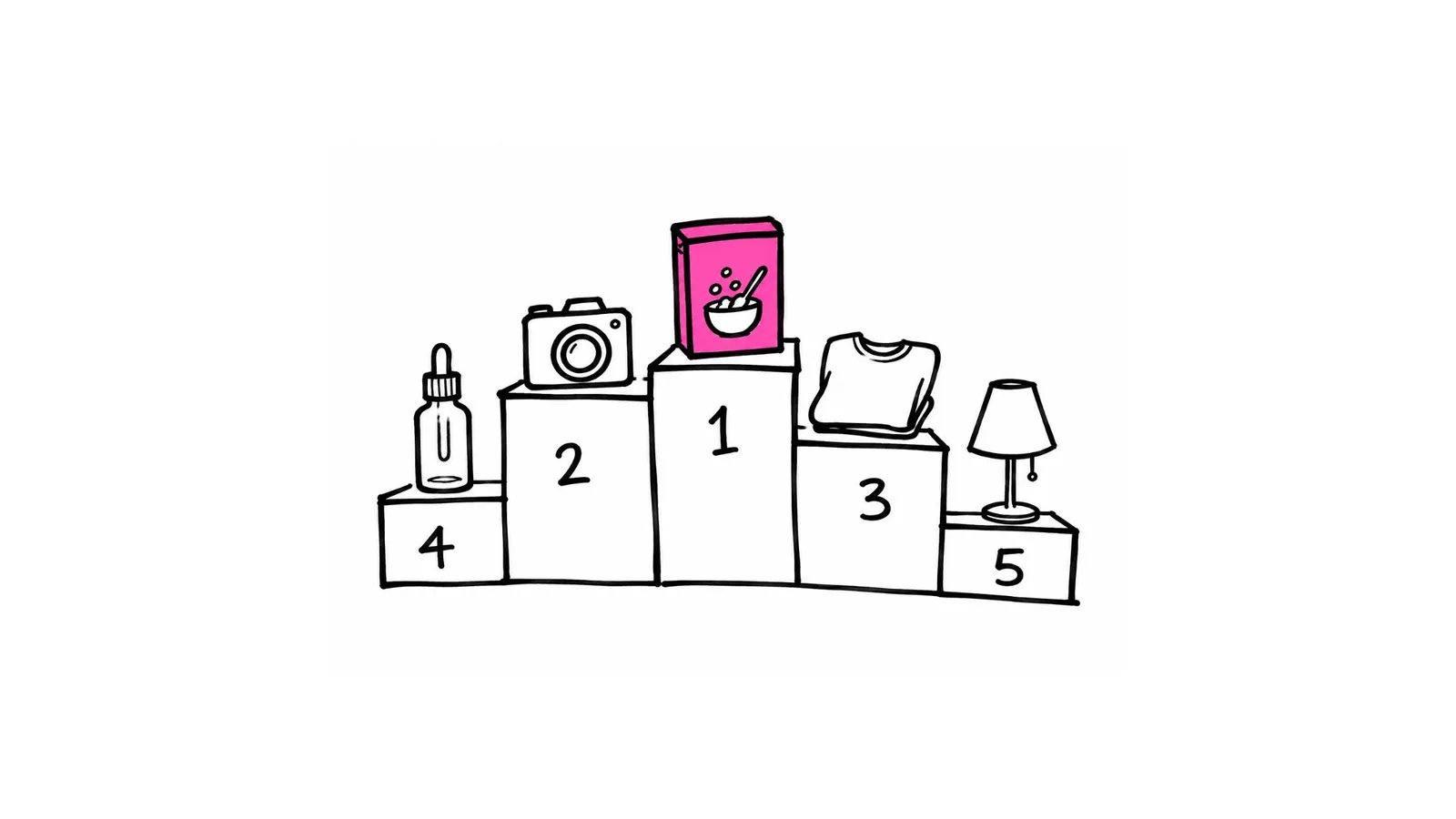
To compare industries without publishing private merchant benchmarks, we used Home—the fifth-ranked family—as the reference point. A 14.9x result means that affiliate referrals accounted for 14.9 times as much of the new-customer mix for a typical Health and Beauty merchant as for a typical Home merchant. It does not mean Health and Beauty merchants acquired 14.9 times as many customers or earned 14.9 times as much revenue.
1. Health & beauty
- Affiliate share of new customers, compared with Home: 14.9x
2. Specialty & hobby
- Affiliate share of new customers, compared with Home: 8.9x
3. Food
- Affiliate share of new customers, compared with Home: 6.3x
4. Apparel
- Affiliate share of new customers, compared with Home: 2.4x
5. Home
- Affiliate share of new customers: Reference point
Affiliate referrals made up the largest share of new-customer acquisition for the typical Health and Beauty merchant in this study. Specialty and Hobby followed, then Food, Apparel, and Home.
The size of that spread needs context. All five families were within roughly 1.2 times one another on the likelihood of recording any affiliate-referred customer. Industry did not decide whether a program could produce traction. It changed how deeply affiliate customers contributed to acquisition at the median.
Health and beauty gives creators material to work with
Health and Beauty has several qualities that suit creator-led selling: routines, visible demonstrations, ingredient education, progress over time, and strong questions before purchase. A partner can teach something useful while introducing the product.
The warehouse shows the outcome, not the cause, so this explanation is an inference rather than a measured mechanism. Still, the pattern is commercially familiar. Affiliate content works best when the recommendation needs context and the partner can supply it with credibility.
That does not mean any influencer with a large audience will work. The relationship still needs product fit, an audience with the right problem, and enough trust for the recommendation to carry weight. Category creates the material. The creator decides whether it becomes a persuasive story.
Specialty products turn expertise into distribution
The Specialty and Hobby family combines categories such as gadgets, sports equipment, crafts, books, and software. These products often reward expertise. Buyers search for reviews, demonstrations, comparisons, and advice from people already inside the hobby.
That gives publishers, reviewers, educators, and niche creators a reason to keep the product in their content. A useful tutorial can continue sending qualified customers after the campaign brief has been forgotten. The partner is not borrowing attention for a day. They are building a piece of guidance that can keep earning trust.
Food has repetition; apparel has reach
Food ranks third. Taste is personal, but it is easy to demonstrate, easy to incorporate into routines, and often purchased repeatedly. Those qualities give affiliates more than one chance to introduce the brand and more than one angle for content.
Apparel ranks fourth. It is highly visual and naturally present on creator channels, but visibility also brings competition. A partner can feature ten brands in the same month. The merchant still needs a distinctive product, a credible match, and a commission structure that gives the relationship room to continue.
Home rounds out the five. Home products can generate excellent creator content, especially around design and renovation, but purchases tend to be less frequent and more situational. A beautiful room can earn attention long before the viewer needs a new sofa.
Use the ranking as a fit test, not a forecast
This study uses broad families because the individual affiliate cohorts were too thin to publish safely. It also spans two years and multiple ecommerce platforms to clear the same bar. The sample is strong enough to show a pattern, not to promise a result for every merchant inside a category.
The more useful question is whether the product gives a partner something valuable to do. Can a creator demonstrate it, teach with it, compare it, or build it into a routine? Does the audience already look to that person for guidance on the purchase? Can the merchant support the relationship after the first post?
Health and Beauty answers those questions naturally, which helps explain its lead. Other categories can create the same conditions deliberately. Affiliate growth begins when a partner has more to offer than a link—and the customer has a reason to listen.