
Shopify Collabs can be a good place to find out whether affiliate marketing works for your store. You can recruit creators, track their sales, and pay commissions while you learn which partnerships are worth developing. For a first program, that may be exactly what you need.
Once those affiliates are bringing in customers, though, I’d start looking seriously at what you need to grow the program. Affiliate marketing is too important to keep working around a free app’s limitations just because it’s free.
That’s where I’d consider ReferralCandy: you can manage affiliate commissions, customer referrals, and loyalty in one app, with all product features available from the beginning. If you’re looking at Shopify Collabs alternatives, I’ll walk you through where that would help and what it would cost.
Your affiliate program is working. What is getting harder?
When you’re testing an affiliate program, the immediate question is whether partners can bring you sales. When they do, the questions become more specific.
Can you bring existing partners into the program without a lengthy application process? Can they find their links and understand what they’ve earned? Can your team use the program’s data in the systems it already works with?
I’d start with the work your team repeats and the requests you keep postponing. Maybe your developer needs access to program data, or you want to give customers a different offer from the one your creators receive. Those are specific things a new app should help you do.
Bring them to the demo. If you were on a call with me, I’d want to work through the task that’s taking up your time, because you’ll still have to do it next month if the new app doesn’t help, and a longer feature list on its own doesn’t tell you much.
Which Collabs limitations are worth switching for?
The Shopify App Store reviews for Collabs include specific requests from merchants who otherwise like the app:
- More automation. Armato Inc.’s October 22, 2026 review asks for additional automations and ways to add collaborations manually.
- API access. WAIHANA’s October 5 review describes the lack of Collabs API access as its main drawback.
- A clearer creator experience. Arber’s September 8 review asks to see what creators see, reporting that some creators struggle to access and track their commissions.
What I find useful about these reviews is how specific they are. These merchants want to automate work, access data, or make the program easier for creators to use. They’re individual experiences, but if you’re dealing with one of the same problems, you have something concrete to investigate.
Collabs already supports direct invitations, applications, gifts, sales tracking, and automatic commission payments so it’s important to be clear about the part you’re outgrowing. If your team has to chase information or maintain a workaround every week, include that time in the comparison too. Someone still has to do the work.
When ReferralCandy is the right upgrade
The strongest reason I’d give you to consider ReferralCandy is that you can develop these programs together. The creators who sell your products, the customers who recommend you to friends, and the customers you want to bring back can all have an offer that suits them.
And you can use all of those features from day one. Our plans change the combination of base fee and success-fee rate, so you can choose around your program’s sales without upgrading just to unlock another feature. Here’s what that means in practice.
Bring your partners into the program
You can invite an affiliate directly or upload a batch through CSV. Invited affiliates skip the application approval queue. For people who apply through your join page, you can choose whether to review them before they join through that route.
For partners you’ve already chosen, you can get on with the move without asking them to apply again. You can still review new applicants who come through your join page.
Give affiliates clear terms and a place to check earnings
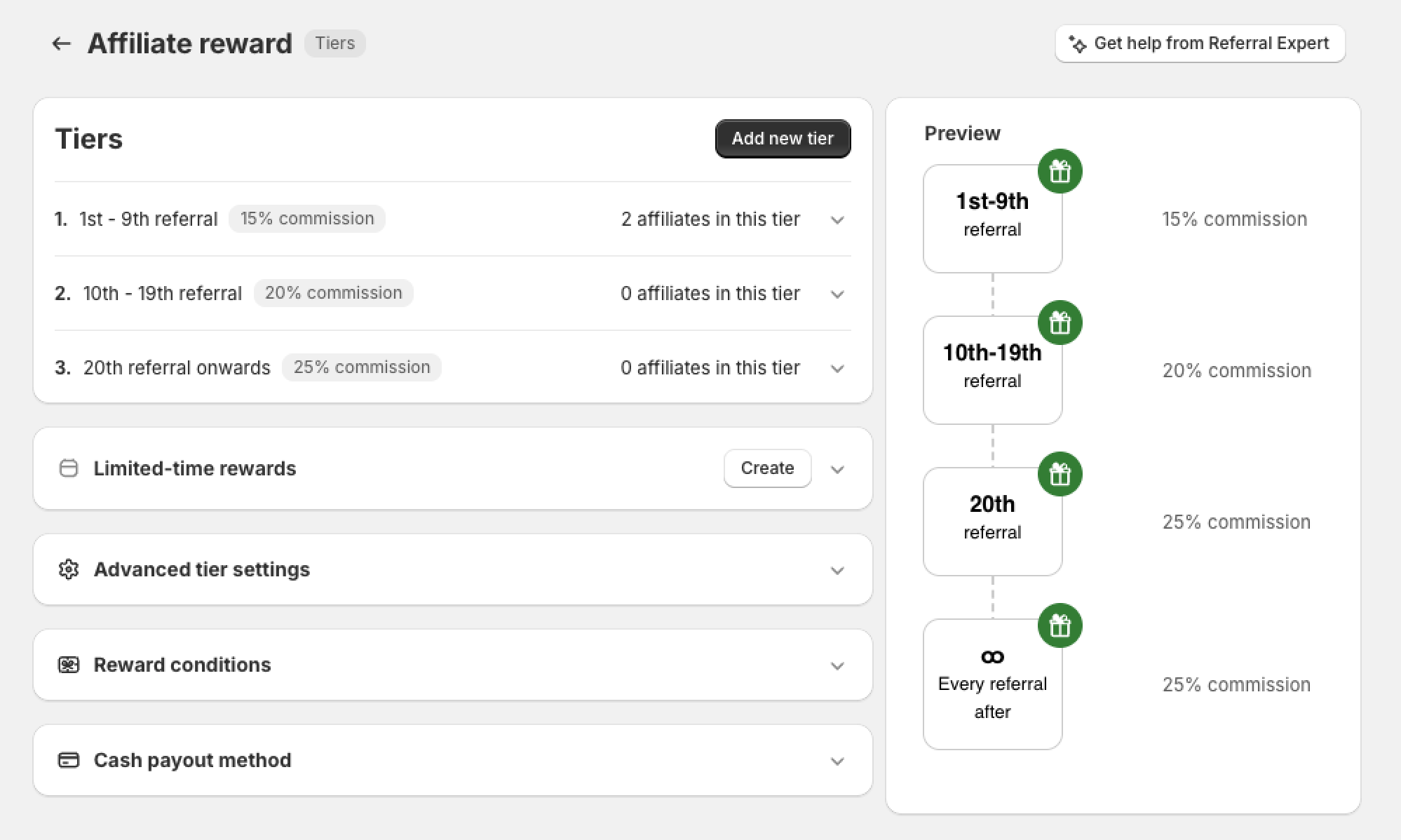
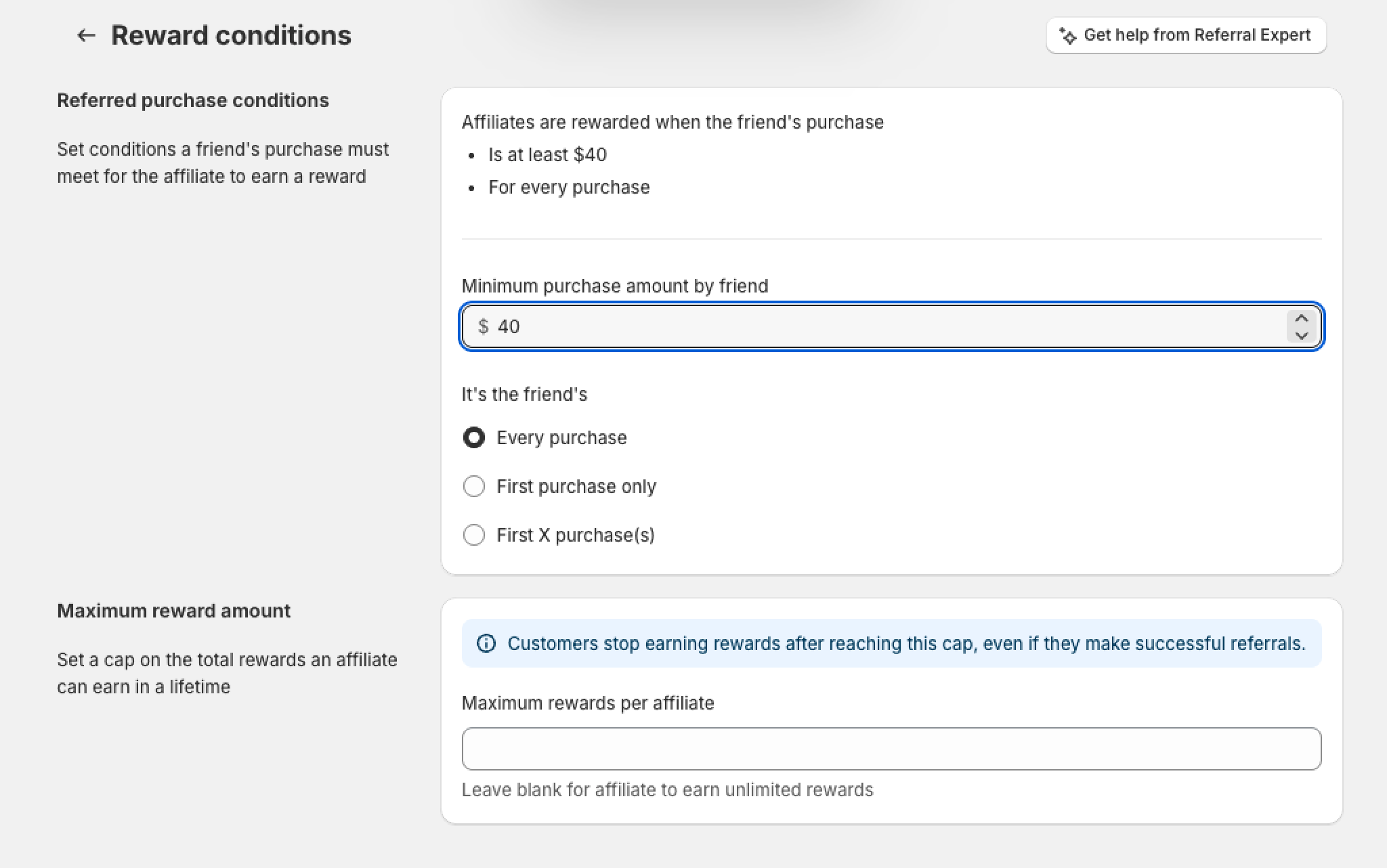
ReferralCandy tracks affiliate activity through links and discount codes. You set the commission offer and which referred purchases qualify, including whether rewards apply to the first purchase, every purchase, or a specified number of purchases.
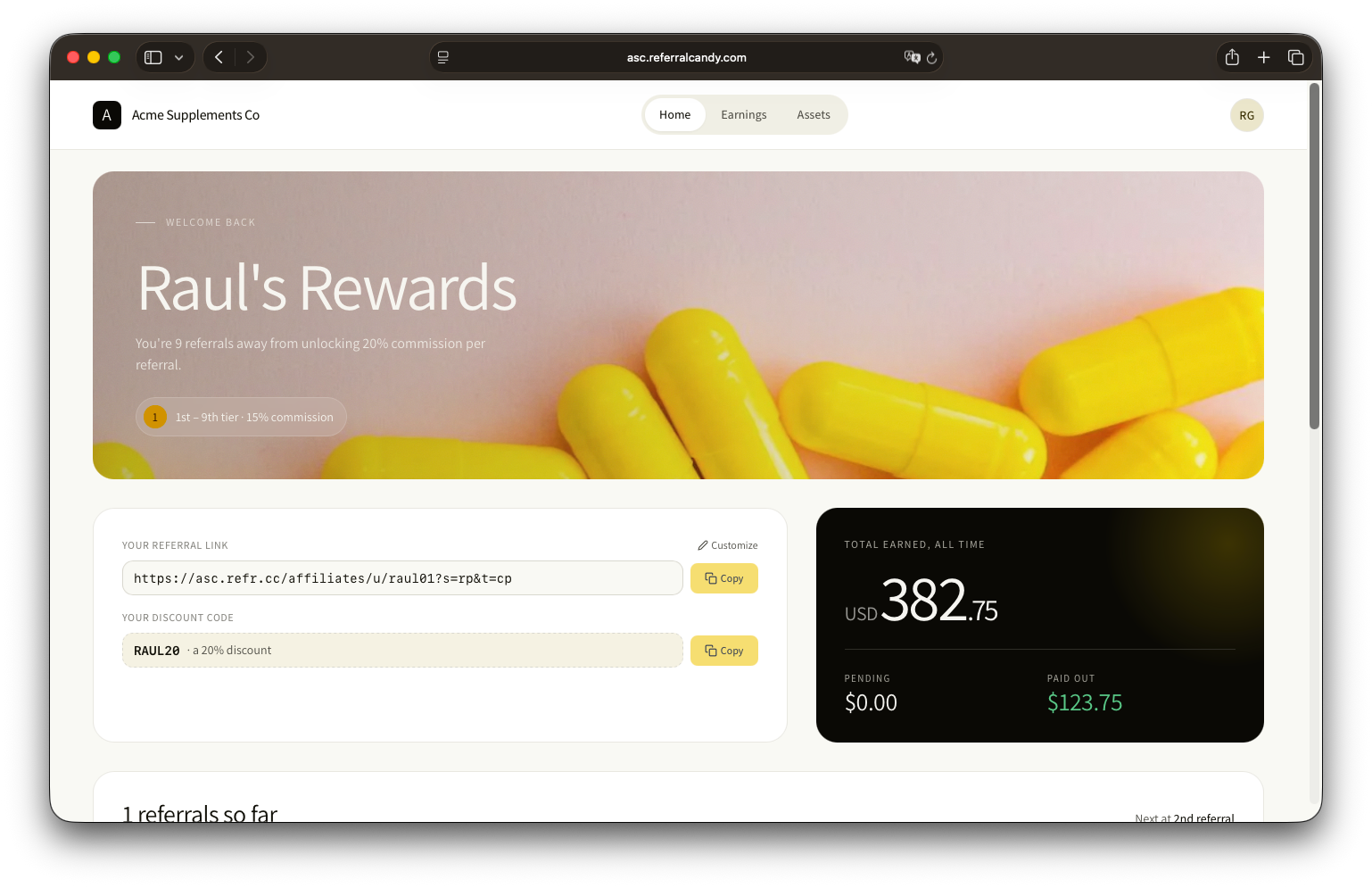
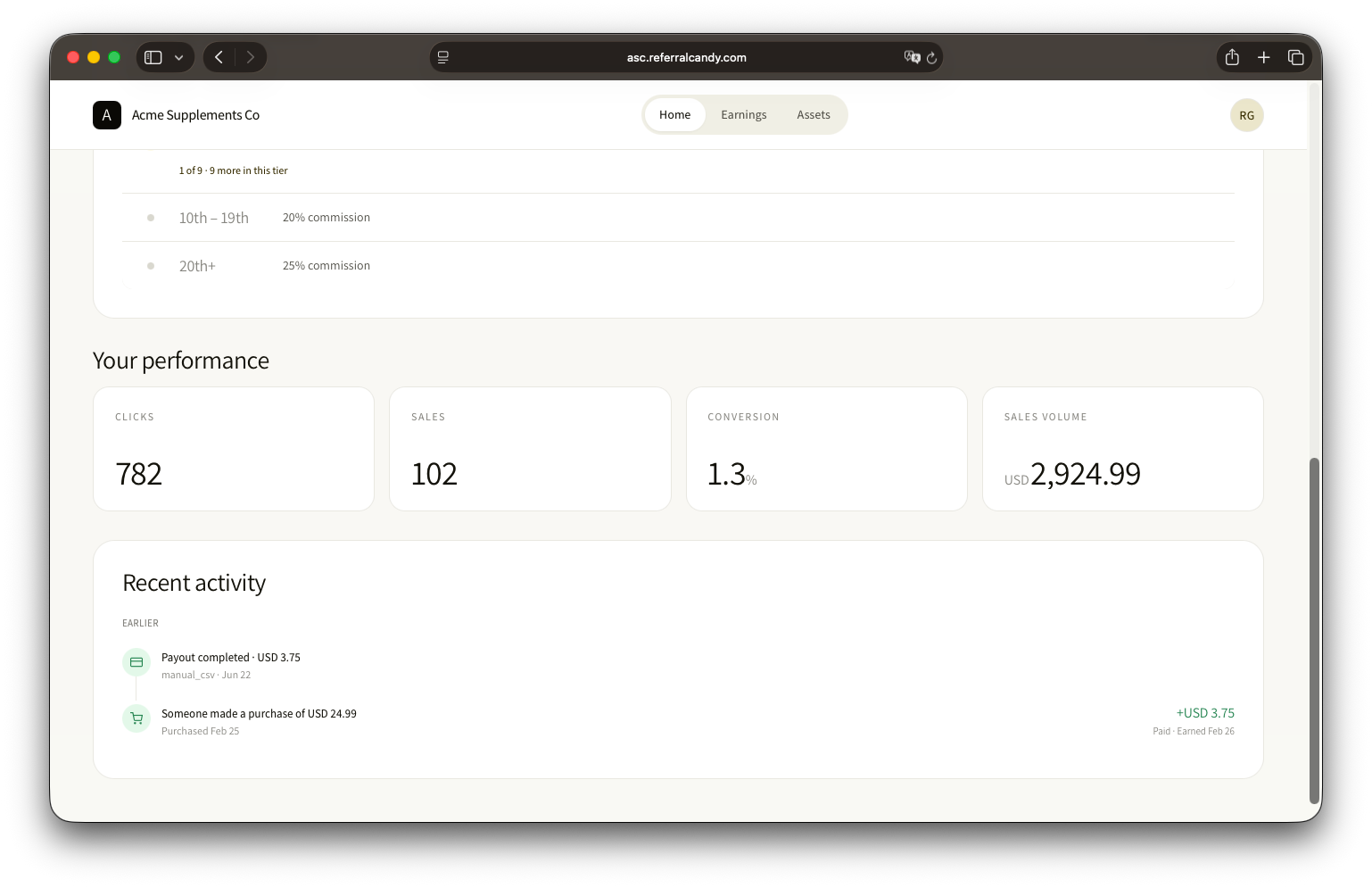
Now put yourself in the affiliate’s position. You’ve recommended the product and want to see whether anyone bought it, what you’ve earned, and which payments are still pending. ReferralCandy’s affiliate portal puts their link, performance, pending commissions, and payout history in one place, so they can check those details themselves. Spend some time in that view when you try the app.
For payment, ReferralCandy supports PayPal, Tremendous, and self-managed payouts – check the method and timing you intend to use before promising them to creators.
Connect the program to your own systems
If access to data is holding you back, ReferralCandy has a documented API, including access to contacts enrolled in a campaign, and our API access is included across its pricing plans.
If this is the reason you’re moving, bring your developer’s requirements with you. Check the exact data and actions they need before committing to the integration (they’ll still need to build it).
Run customer referrals and loyalty alongside affiliates
A creator earning commissions and a customer recommending you to a friend don’t need the same offer or enrollment process.
With ReferralCandy, you can set up separate referral and affiliate campaigns. You can also run Shopify loyalty campaigns that give customers store credit from qualifying purchases to spend on a future order.
This is the part I’d spend time on before recommending a move. If you want customers to introduce friends and come back for another purchase, you can build those programs alongside your affiliate relationships, with separate reward rules for each. You get more ways to work with the people who already know your products.
Compare the full cost of running the channel
Collabs is free to install, with a 2.9% processing fee on automatic commission payments. Pay attention to what that percentage applies to: the commission you pay the creator.
ReferralCandy charges a monthly base fee plus a success fee on eligible referral and affiliate sales. Its success fee applies to a newly referred customer’s first three orders, using the subtotal after discounts and before taxes and shipping. Creator commissions are a separate expense. The pricing guide explains the fee and when changing plans reduces the bill.
Here’s an illustrative monthly comparison. Assume $10,000 in affiliate sales, all from new customers’ first orders, with a 10% creator commission. The sales figure is after customer discounts, before taxes and shipping.
| Charge | Shopify Collabs | ReferralCandy Scale |
|---|---|---|
| Creator commissions | $1,000 | $1,000 |
| App charges shown | $29 processing fee | $249 base fee + $150 success fee |
| Subtotal before other applicable fees | $1,029 | $1,399 |
Collabs’ processing fee is $1,000 × 2.9%. ReferralCandy Scale’s success fee is $10,000 × 1.5%, using its published monthly pricing. Additional payout-provider charges, currency conversion, and taxes are excluded; check the payment method you choose. This example includes no loyalty rewards.
Under these assumptions, ReferralCandy’s listed app charges are $370 higher. I’d want you to know what you’re getting for that additional cost before you move. If you’ll use customer referrals, loyalty, or API access to do something you can’t do today, evaluate what that is worth to your business. If you only need the affiliate setup that’s already working in Collabs, the lower cost is a good reason to stay.
Switch, keep Collabs, or add customer referrals
Switch when the extra capabilities support what you want to do next. Take one of your existing partners, set up their commission arrangement, and check the reporting you need. Work through that before moving the whole roster.
Keep Collabs when it meets your needs. If recruitment, tracking, and payments work for your team, keep developing those partnerships. You’ll still need to find suitable creators and give them a reason to recommend your products, whichever app you use.
Add customer referrals when that’s the missing piece. In an April 2026 call with our team, one merchant explained that they already used Collabs for affiliates. They wanted a simpler way for customers to join a referral program and share an offer with friends. In that situation, I’d focus on getting customer referrals running. Moving the affiliates can wait until there’s a reason to do it.
If you run both apps, decide which audience belongs in each program and test what happens when someone interacts with both. Check attribution and rewards before promoting overlapping offers.
When you do decide to move, prepare the transition:
- Save your partner roster, agreed terms, and historical reports.
- Reconcile commissions still owed in Collabs and plan how to settle them.
- Prepare the new links or codes and explain the change to partners.
- Test a referred purchase, reward eligibility, and the payout process before expanding the rollout.
Plan to retain historical reporting separately and confirm which links and codes can be reused. Importing a partner list doesn’t establish that its tracking history transfers with it.
If Collabs helped you prove that affiliates can bring in customers, you have something worth investing in. My advice is to choose the tools around the program you now want to build, and make sure you can see that program working before you move.